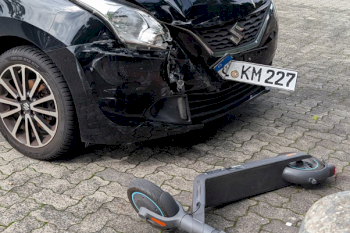


The seconds right after a collision rarely feel clear-headed. Adrenaline floods in fast, thoughts scatter, and somewhere in that chaos, a decision has to be made: stay and deal with whatever just happened, or keep driving and hope it disappears. Unfortunately, leaving the scene of an accident can turn an otherwise civil traffic matter into a criminal case.
Panic makes that second option feel tempting in a way it never would in a calmer moment. Fear of consequences, confusion about what actually happened, and the instinct to get away from an overwhelming situation can all push someone toward driving away.
That split-second choice carries weight most people do not fully appreciate in the moment, since leaving can end up mattering considerably more than whatever the original collision involved.
Whatever caused the original collision exists as its own separate issue, evaluated according to its own facts and circumstances. A hit-and-run charge, on the other hand, can result from the decision made afterward—an entirely different legal problem layered on top of the original issue.
That layering matters considerably, since someone who might have faced relatively minor consequences for the collision itself can end up facing a more serious situation because of the decision made in the panicked moments immediately following impact.
The exact charge and possible penalties depend on the jurisdiction, the driver’s knowledge of the collision, and whether the crash caused property damage, injury, serious physical harm, or death.
Recognizing this reality helps clarify why staying at the scene, even when it feels genuinely difficult, matters far more than people may appreciate while living through that moment. The instinct to flee may be understandable, but it almost never serves the person acting on it.

Following a collision involving property damage or injury, drivers generally have specific responsibilities. These commonly include stopping, exchanging identifying and vehicle information, contacting law enforcement when required, and obtaining assistance for anyone who appears to be injured.
In Ohio, a driver who knows that a collision involving a person or property occurred on a public road must stop and provide the information required by Ohio Revised Code Section 4549.02. Related duties also apply to collisions occurring on other public or private property.
These requirements exist for practical reasons: ensuring injured people receive help promptly and giving everyone involved the information needed to determine what happened, rather than leaving them with an empty road and unanswered questions.
Understanding these basic responsibilities beforehand, instead of trying to determine them during a panicked moment, helps prevent instinct from overriding what is legally expected after a collision. Gauge Magazine’s guide to the immediate steps to take after a car accident provides a broader checklist for handling the scene safely.
Leaving the scene does not necessarily mean disappearing without a trace, even though it might feel that way in the moment. Witness statements may include a partial license plate or enough vehicle details to narrow down identification considerably.
Cameras can add another layer of evidence, including traffic cameras, nearby business security systems, dashcams, and doorbell cameras from surrounding homes. Vehicle debris left behind may sometimes be connected to a particular make or model, while damage patterns can help investigators compare a suspected vehicle with the collision evidence.
This combination of evidence means an unidentified vehicle is not necessarily unidentifiable. Drivers who assume leaving guarantees anonymity may be working from a mistaken belief about what investigators can piece together afterward.
Gauge Magazine’s explanation of how investigations work in hit-and-run cases examines several types of evidence that may help identify a vehicle and driver.
Reconsidering the decision to leave and returning to the scene later does not necessarily erase what already happened during those initial moments. The departure remains a relevant fact, although the timing, reason for leaving, knowledge of the collision, return to the scene, and other circumstances may all matter legally.
That reality can surprise people who assume a quick return automatically undoes the original decision and allows it to be treated as though it never happened. Whether an offense occurred depends on the applicable law and the complete facts, not simply on whether the driver eventually came back.
Anyone who has already left a collision scene should avoid guessing about the legal effect of returning or reporting the crash. Contacting emergency services when someone may be injured and obtaining advice from a qualified local attorney are safer than relying on assumptions about what will erase the departure.
A few seconds of panic in the rearview mirror can transform an ordinary accident into a separate and potentially more serious legal situation—one shaped considerably by the decision made after the collision.
Understanding what is expected after a crash, and recognizing that leaving rarely guarantees anonymity, helps explain why staying at the scene matters so much more than instinct may suggest.
Recognizing this beforehand, rather than discovering it only after making a panicked decision, gives drivers the clarity needed to handle an already difficult moment without making it considerably more complicated.
This article provides general information and is not legal advice. Duties, charges, defenses, and penalties depend on the applicable law and the specific facts of the collision.
The post The Rearview Mirror Decision That Can Turn a Crash Into a Criminal Case appeared first on Gauge Magazine.