

The Trump Administration released a rule on Monday to roll back Biden-era fuel economy standards, saying that the Biden Administration “previously broke the law by setting standards that went far beyond the requirements mandated by Congress” and arguing that they pushed for electric vehicles that Americans did not want.
The announcement, which came from Transportation Secretary Sean Duffy, said that the previous regulations had been costly for automakers. The changes are meant to reduce their costs and encourage manufacturers to expand production in the U.S. Duffy claimed that, by extension, the rollbacks would make new cars more affordable for Americans.
Read More: How Communities Thrive When City Streets Ditch Cars
When it was first proposed in December 2025, the rule was divisive, drawing ire from environmental advocates while garnering praise from auto-industry trade groups. The Administration finalized it last week with a signoff from President Donald Trump.
The President commented on the forthcoming rule Sept. 26, saying the new standards would “take the waste out of building cars in America.”
“That means LOWER PRICES, saving families thousands on a new, beautiful, and safe car,” he wrote on Truth Social.
The claim that the revisions will pass down cost savings to American buyers, however, relies on several factors, including automakers’ pricing decisions, fuel costs, and broader economic conditions.
Former President Joe Biden’s regulations were put in place in 2024 to reduce car-based greenhouse gas emissions, decrease dependence on fossil fuels, and spur a transition to electric and hybrid vehicles. The Trump Administration has claimed that its revisions are more focused on bolstering the auto industry and making safer, newer cars more accessible.
The rollback reduces pressure on automakers to improve fuel efficiency or sell more hybrids and electric vehicles to meet fleetwide standards.
Two federal agencies have traditionally set rules that shape how much fuel vehicles use and how much pollution they produce. The Environmental Protection Agency (EPA) regulates vehicle pollution and, until this year’s rollback, also limited vehicle greenhouse gas emissions. The Department of Transportation (DOT) sets fuel economy standards—how far vehicles must travel on a gallon of fuel.
The DOT’s Corporate Average Fuel Economy (CAFE) standards apply to the average fuel economy of an automaker’s new cars and light trucks. They ensure that if an automaker sold an inefficient vehicle, it would also need to sell efficient vehicles to reach the average standard.
It is these standards that sit at the center of the latest rollbacks: The Biden Administration projected its standards would bring average fleet fuel economy to approximately 50.4 mpg by model year 2031. The Trump Administration projects 34.9 mpg under its revised standards.
Environmental advocates have pointed out that the change reflects the Trump Administration’s wider deprioritization of environmental protection policies, since electric vehicles give off fewer greenhouse gas emissions than traditional gas-powered vehicles.
Trump’s “One Big Beautiful Bill” in July 2025 axed the $7,500 electric vehicle tax credit. That same month, the Administration eliminated fines for automakers that failed to meet federal fuel-efficiency requirements. And the EPA in February 2026 repealed vehicle greenhouse gas emissions standards.
TIME has reached out to the White House and the Department of Transportation for comment.
The Trump Administration believes that Biden-era CAFE standards overestimated consumer demand for electric vehicles. Sam Fiorani, the Vice President of Global Vehicle Forecasting at AutoForecast Solutions, says the story is more complicated.
“Americans have been less interested in the shift to electric vehicles than much of the rest of the world, but that's not to say nobody wants it,” he tells TIME. “The success of Tesla has been built on the back of millions of Americans looking for a practical EV.”
An August report from Kelley Blue Book (KBB) showed that new EV sales in the U.S. were down some 47% from 2025; however, the sales of used EVs were on the rise, with a nearly 15% increase.
The issue is that automakers “need to be incentivized” to produce electric vehicles, Fiorani adds—something that the second Trump Administration has deprioritized.
“Removing the federal incentives did not remove the demand, but it made the transition for the supply of EVs less profitable,” Fiorani says. “Demand for EVs will continue to grow, and manufacturers investing in the technology will ultimately take advantage of it.”
That reflects a trend that can already be seen playing out on the global scale: The International Energy Agency projects that electric vehicles will account for 29% of new-car sales worldwide in 2026.
According to the DOT’s announcement, the Trump Administration’s reduced fuel economy standards will save Americans $138 billion over the next five years and reduce the average cost of a new car by $1,300.
It’s “certainly true,” says Mark Jacobsen, a professor of economics at the University of California, San Diego, that making “a lower-technology car using ultra-gasoline engines” is cheaper for the manufacturer.
That is a key reason that trade groups representing automobile manufacturers support the change.
“NHTSA made the right call to better align fuel economy standards with the law and current market conditions,” John Bozzella, the President and CEO of the Alliance for Automotive Innovation, said in a statement. “The standards finalized under the previous administration effectively required a switchover to electric vehicles that was out of step with market realities and customer demand.”
Read More: Trump Says Tariffs Saved the U.S. Auto Industry. The Data Tells a Different Story
But reducing the cost of production for automakers does not necessarily mean that cost-savings will be passed along to the customer, Jacobsen says, explaining that long-term savings for the average driver would need to take into account myriad additional economic factors.
One is the cost of gasoline. James Michael Sallee, an economist and professor at University of California, Berkeley, explains that customers may wind up paying less for a vehicle that is less fuel efficient—but ultimately spend more over the car’s lifetime.
“Fuel economy standards will tend to put upward prices—but a lot of that is offset, if not all of it, by future fuel cost savings that consumers enjoy over the course of the life of a vehicle,” Sallee says.
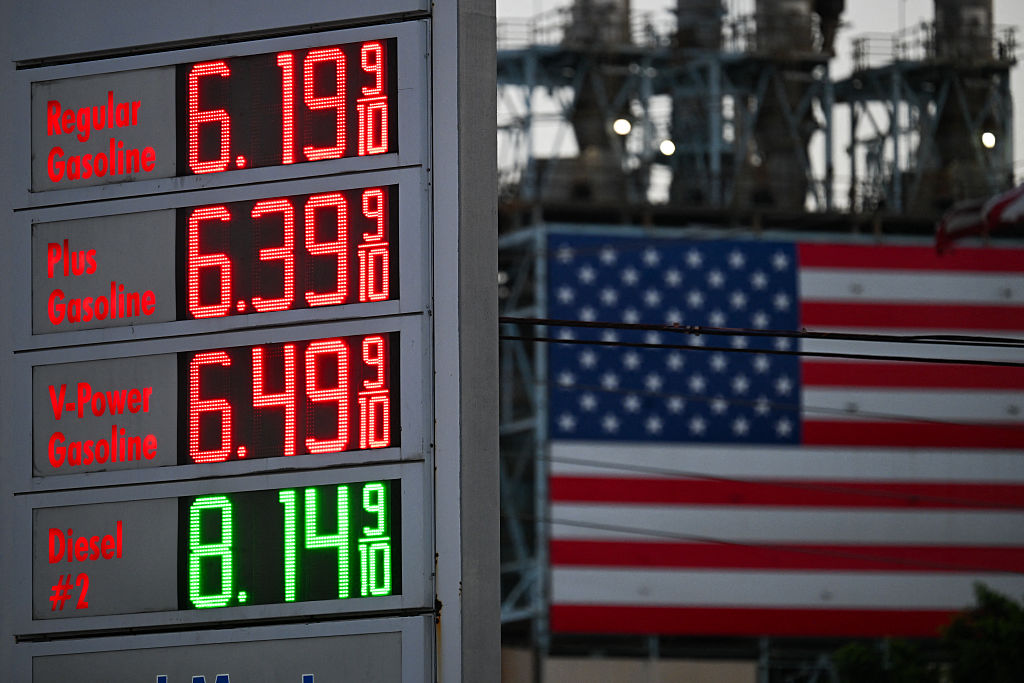
This question is especially pertinent as the world deals with a global oil shortage, with a barrel of Brent crude oil surpassing $108 on Monday. The U.S. has experienced a surge in gas prices in 2026, peaking around $4.56 per gallon after the start of the U.S.-Iran conflict in February. Even if negotiations proceeded and a deal to reopen the Strait of Hormuz were reached, economists predict that it would take months for gas prices to drop back to prewar baselines.
“If you look at the analysis the Administration has done, they're projecting very low gasoline prices in the future,” Jacobsen says. “That needs to be true in order to save the consumer money.”
New-car prices are also higher in 2026: Buyers paid an average of $50,089 in August, up 1.9% from a year earlier, according to KBB. Sallee says it is reasonable for the Trump Administration to try to address affordability. “The price of new vehicles is a real issue,” he says.
But there is reason to doubt that it will play out exactly as the Administration seems to suggest, according to Anna Stefanopoulou, a professor of mechanical engineering at the University of Michigan. She “highly doubts” that lower costs for auto manufacturers will trickle down into lower prices for consumers.
Many manufacturers will just be selling more “larger and more profitable trucks,” she says, once they no longer have to contend with “stringent” CAFE standards of average fuel economy.
The new rule will take effect 60 days after its publication in the Federal Register. Whether drivers ultimately save money will depend on how much automakers lower prices—and how much buyers spend on fuel. With standards extending through model year 2031, and the conflict in the Middle East adding uncertainty to future pump prices, the full impact on consumers’ wallets may take years to become clear.