
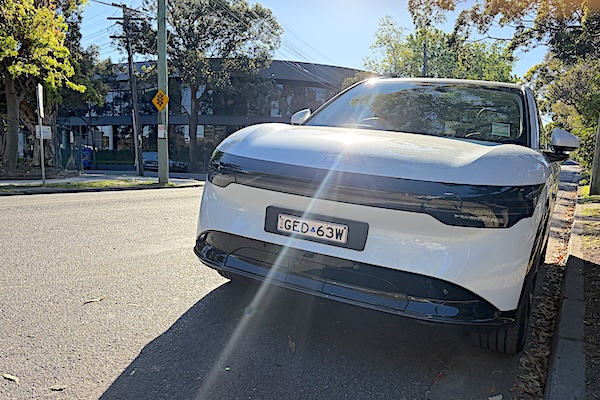
Today we test drive the Zeekr 7X. It has been an instant success here in Australia, even ranking inside the Top 10 in Australia in July and August. The brand sold a record 2,120 units in August for a 15th place overall and 1.9% share, outselling such carmakers as Subaru, Nissan, Mercedes, Volkswagen and Honda. Time to check out what the fuss is all about.
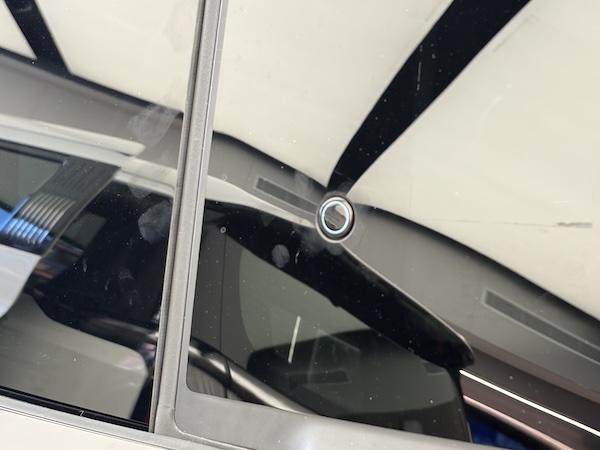
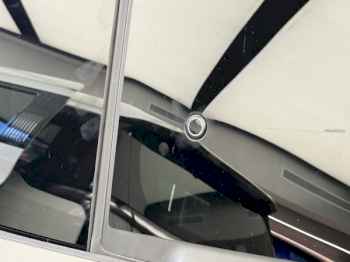
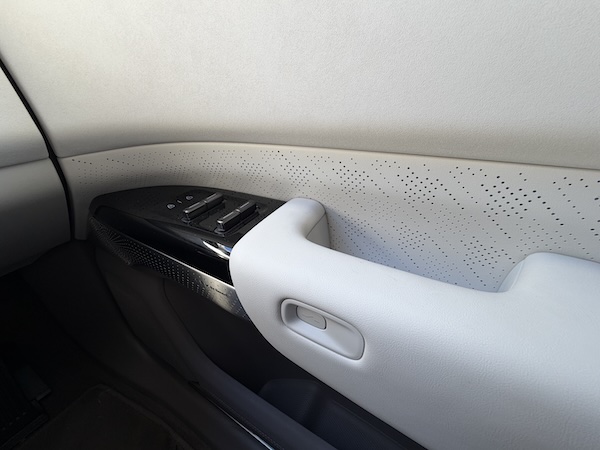 The door opening and closing mechanisms are innovative.
First of all, a big issue. I can’t open the car as the flush door handles are closed. In fact, the door opening is electric and automatic, triggered by a button on the pillar. This is the first time I see this on a car. The door even has a sensor so it doesn’t hit a vehicle parked next to you when it opens. It’s an interesting gimmick albeit a little disconcerting to start with. To open the door from the inside, here too there’s no handles but a simple button that does the trick. We’ve seen this on other Chinese cars before. Note the automatic opening doors are only available on the top-spec Performance AWD variant.
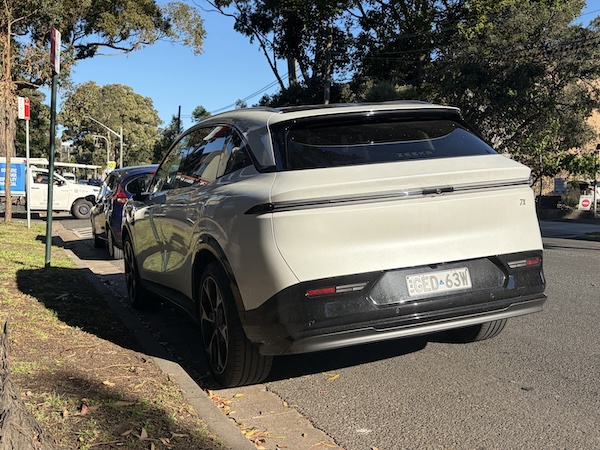
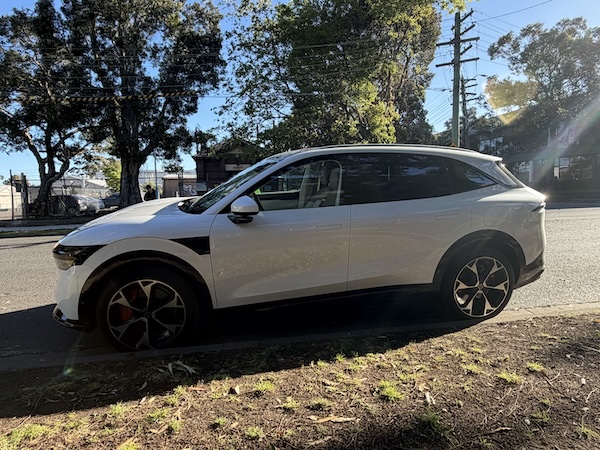
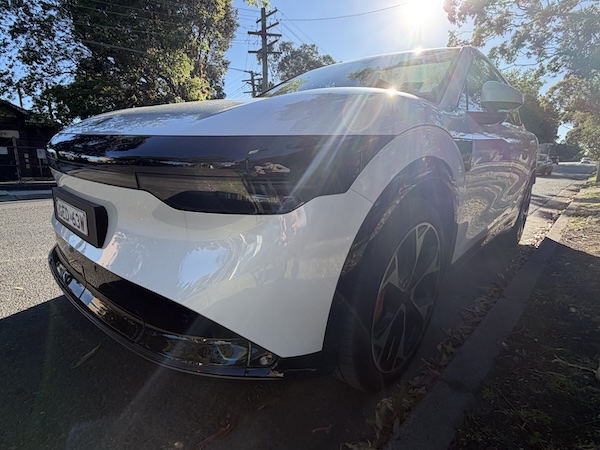
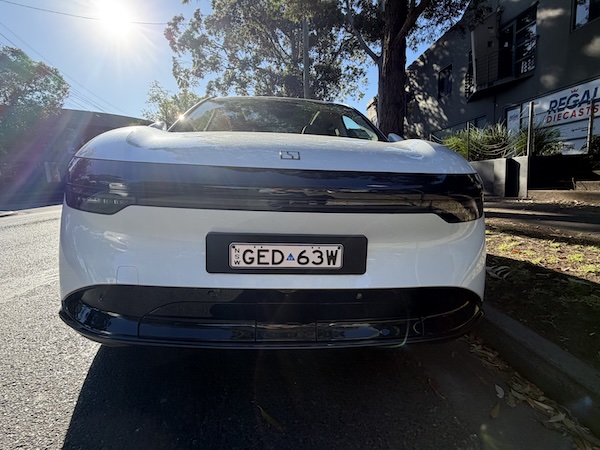
The exterior design is impressive and stylish, unlike anything else around and standing out in a sea of similar-looking Chinese electric SUVs I particularly like the back on the car with its elongated tail lights.
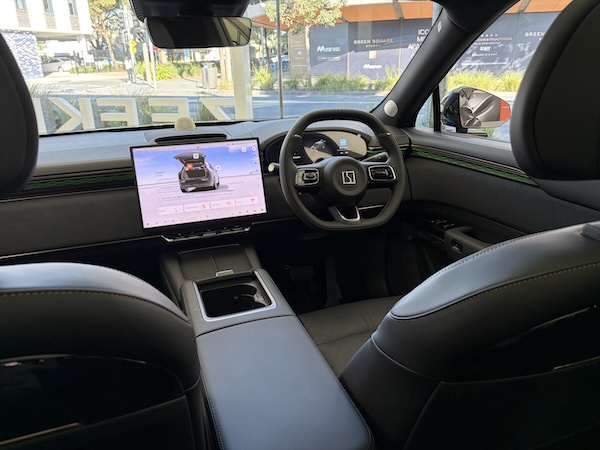
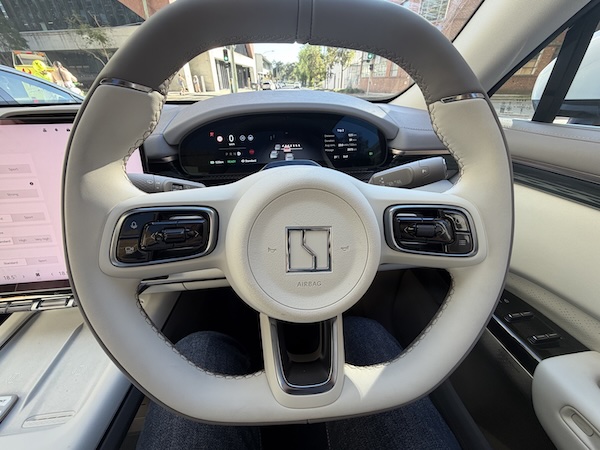
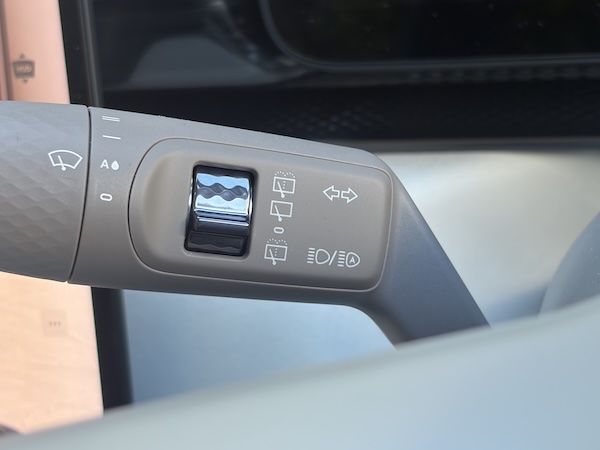
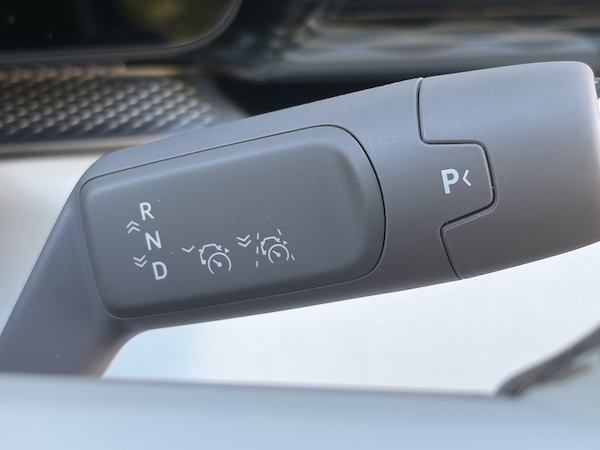
Inside, we are welcomed with a plush environment. There’s ambient lighting (green when tested). The steering wheel is adjustable electrically (as are the front seats) and is easy to handle straight away. The left-hand stalk commands wipers and blinkers. When driving, I constantly engaged the “constant blinker” as there are no static different positions and had a hard-time stopping it, which was pretty annoying. A slight push enables the blinkers for two or three rounds and may not be enough. The right-hand stalk operates the gear selector. Pushing it engages the Parking mode and stops the car.
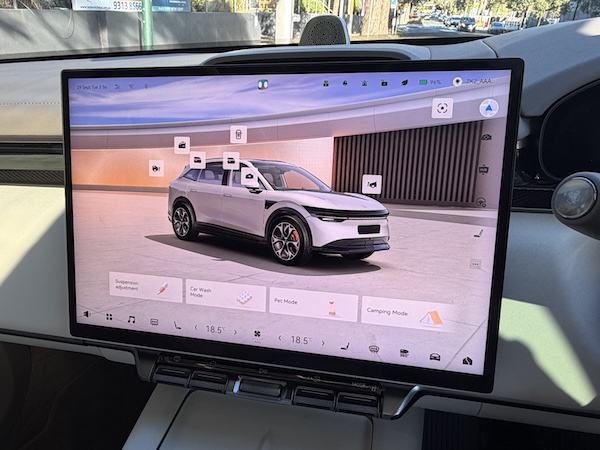
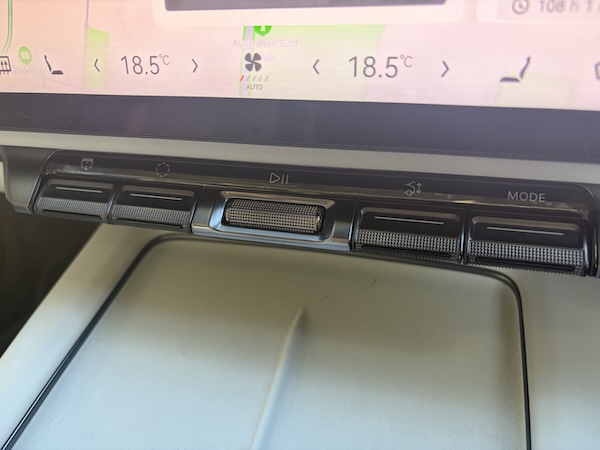
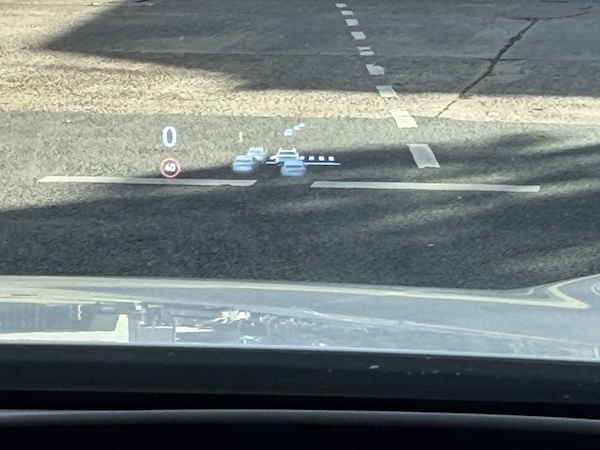
There is a 13-inch digital instrument cluster and a 16-inch touchscreen, both on the reasonable side and not too extravagant. Interestingly for a Chinese car, there are still physical buttons below the touchscreen for music controls and driving mode, but I was enable to make them work. More interestingly, the car also features a 36-inch head-up display which I missed when adjusting it but then became very visible.
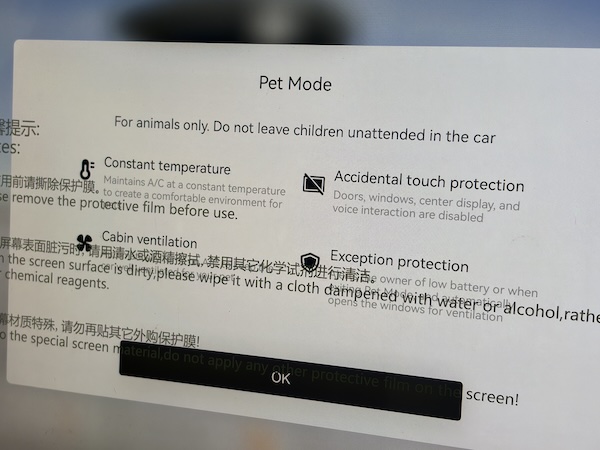
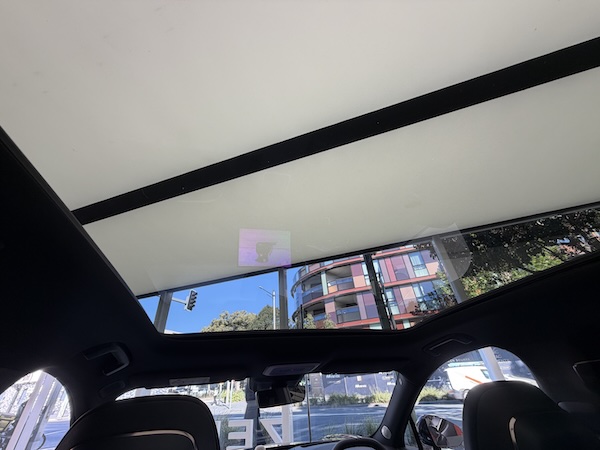
Another interesting feature of the 7X is the ability to select Pet mode or Camping mode. The Pet mode notably activate accidental touch protection meaning doors, windows, centre display and voice interaction are disabled. Camping mode notably closes the panoramic glass roof powered sunshade and turns off exterior approach unlocking and walk-away auto-locking so the car won’t continuously lock/unlock or flash lights while people move around outside or inside. It also shuts off the interior infotainment screens and dims exterior lighting to create a dark, quiet sleeping environment.
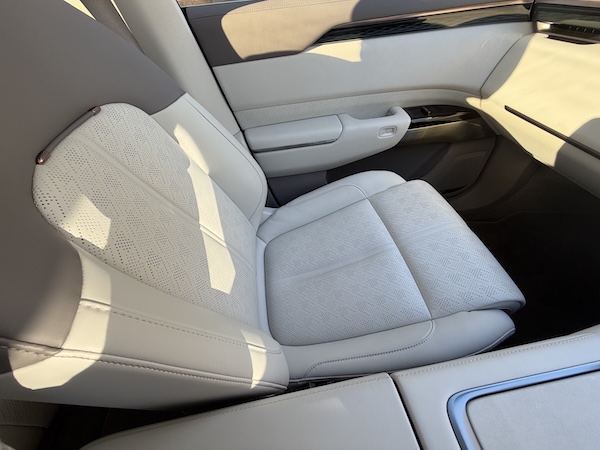
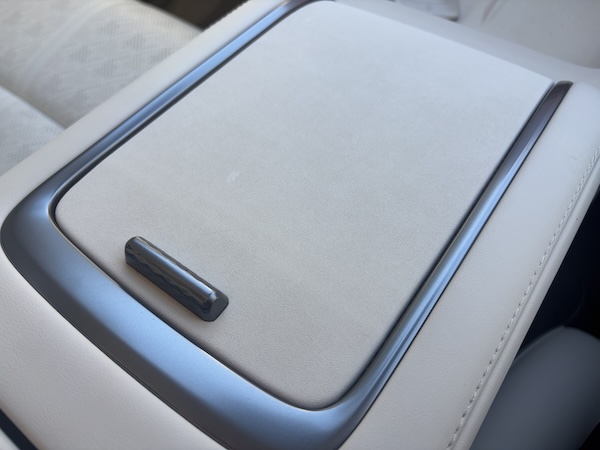
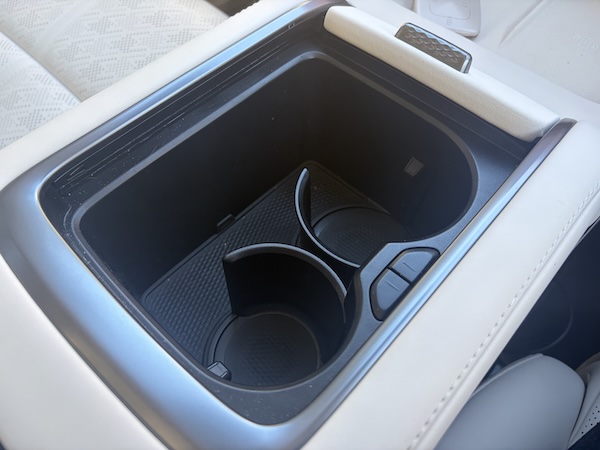
The materials inside are nice and soft including on the doors little openable pockets on the armrests up front as well. For the AWD Performance top-of-the-range, we have nappa leather seats vs. fake leather for the other variants.
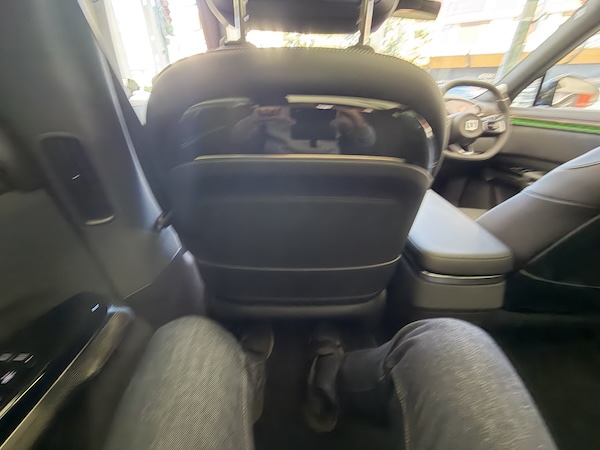
In the back seats, there’s very impressive legroom and foot room.
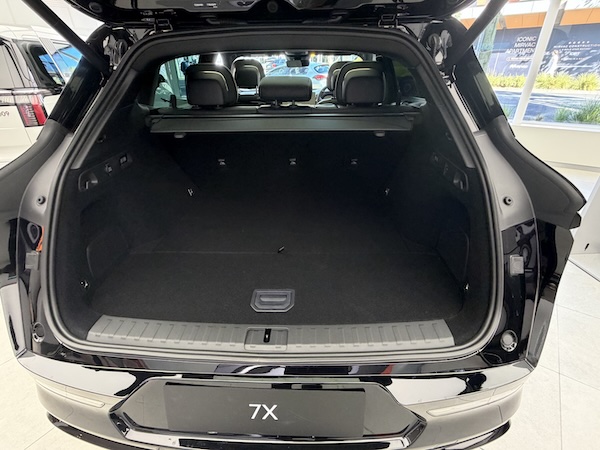
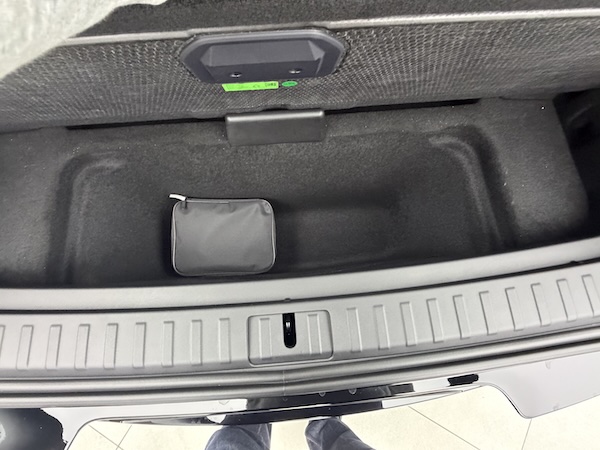
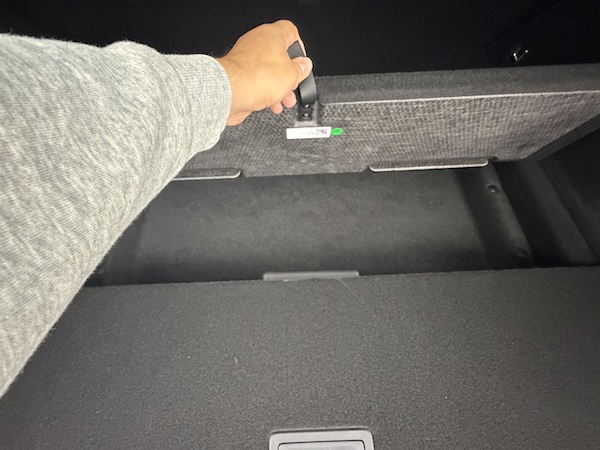
The cargo capacity is a satisfying 539L, with two separate underneath sections but no spare wheel. There’s also a 44L frunk.
What is it to drive? Well the Performance variant is capable of reaching 100km/h from stop in just 3.8 seconds, so we have Tesla-like acceleration here. Even set at Standard Acceleration, the car shoots up at the green light. Do we need it in what is in actual fact a family SUV? You be the judge. The RWD version does it in 6.0 seconds, which is still bloody fast. I found the handling a little stiff, but the overall drive impression is smooth enough albeit a bit sluggish at city speeds.
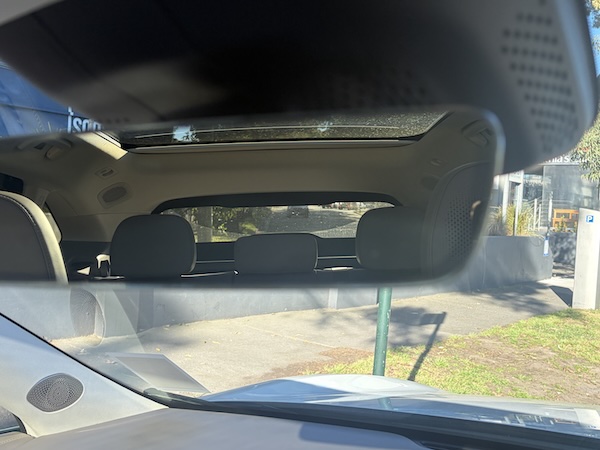
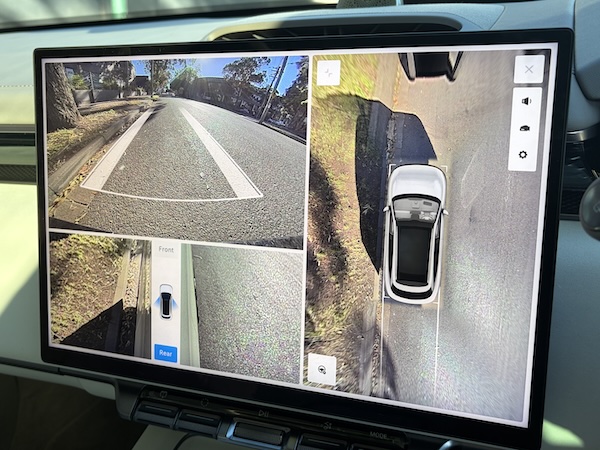
One big plus is the absence of annoying alerts for example when you are over the speed limit, when there’s a new speed limit or if you cross the middle lane. This is mandatory for cars in Europe but not in Australia and it’s a welcome setup. Instead, the info display will pulse red to warn you of the issue. One big drawback I experienced is the very poor rear visibility due to an overly slim back window (see above). It also is limited towards the foot of the road, so that you don’t see the top of the vehicles behind you. Weird.
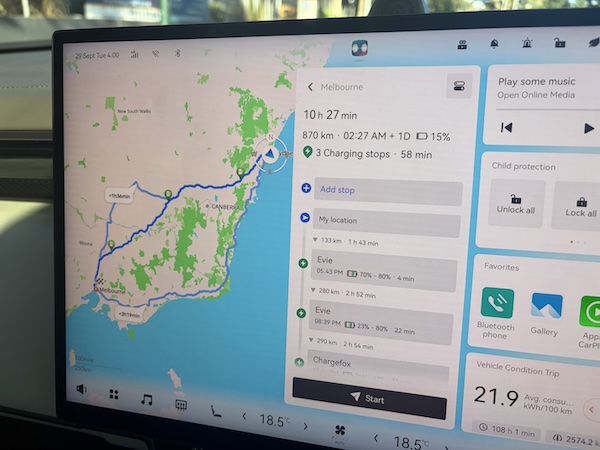
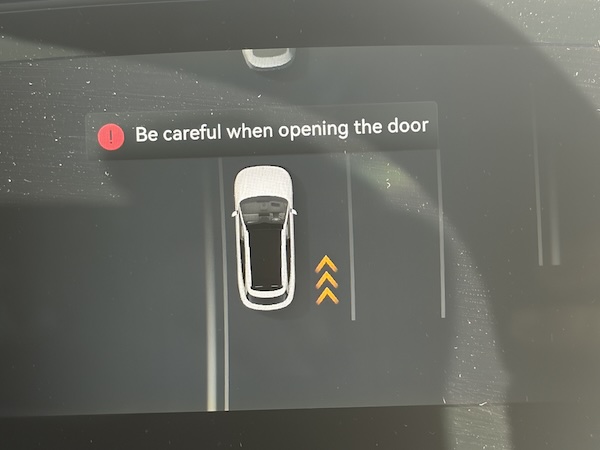
Setting up a mock trip from Sydney to Melbourne on the GPS gives the itinerary and, as expected, the exact recharging stops. When parked, you have a 360 degrees view (see above) and a visual alert to be careful when opening the door if cars are on the way. Neat.
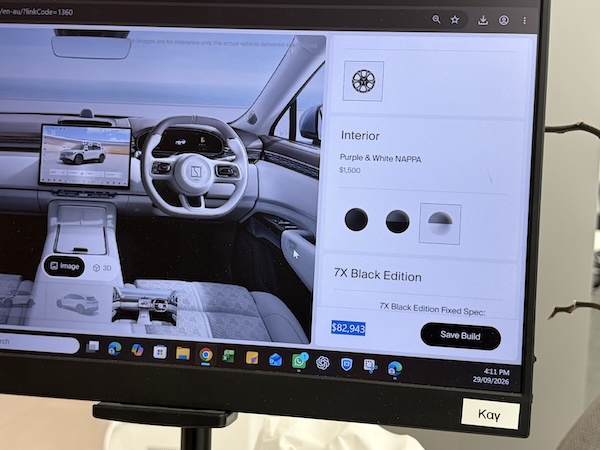
The three versions available are the RWD at AUD$57,900 (75 kWh LFP battery for a 480 km range), the RWD Long Range at AUD$63,900 (100kWh NMC battery for a 615 km range) and the Performance AWD at AUD$72,900 (100kWh NMC battery for a 543 km range). Only Onyx Black exterior paint is included, with all the other ones coming at AUD$1,500 extra (Forest Green, Tech Grey, Crystal White and Brook Blue). Black and Grey interior is also at AUD$1,500 while the Purple and White Nappa interior is exclusive to the Performance I tested and comes at AUD$1,500. We are approaching AUD$76,000 for a complete car which is hefty.
Finally, Zeekr offers a five-year, unlimited-kilometre warranty for private buyers while the battery pack is covered by an eight-year/160,000km warranty, with 70 per cent state of health guaranteed by the end of that period. That’s pretty generous in the Australian context. All in all, a very sophisticated vehicle but not exactly cheap for the top spec.