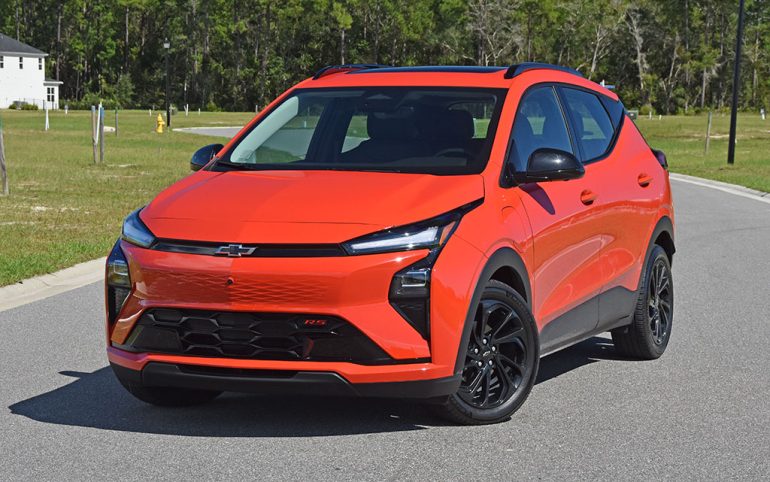
While electric vehicles (EVs) have somewhat slowed in their progression here in the United States, there remains a vast following, and manufacturers aren’t giving up on them any time soon, as they’ve spent countless resources to bring new EVs to the market. When it comes to an ‘affordable’ option in the EV landscape, there are few choices. However, one that stands out among the innovative EV crowd is the latest Chevrolet Bolt, a vehicle that General Motors seems to be doubling down on as it stands as the least expensive EV you can buy new in the United States.
The return of the Chevy Bolt, after a short three-year-long hiatus, picks up where the Bolt left off, improving just about every area that the Bolt may have fallen short to keep pace with today’s demands of a modern EV, sans its overall size remaining in the subcompact segment. While it may be on the small side, there’s a lot packed into a surprisingly affordable EV package with the new Bolt. It takes on a newfound charm and more agreeable look as GM does away with the low-mounted rear brake and signal lights and places them in the proper space with the taillight cluster. Moreover, there’s updated equipment now featuring an 11.3-inch touchscreen with Google built in, giving you voice functions to control a myriad of vehicle settings. The overall look remains undeniable, which isn’t a bad thing considering the Bolt never really looked bad, and the new redesign embodies the slightly larger EUV version of the outgoing Bolt.
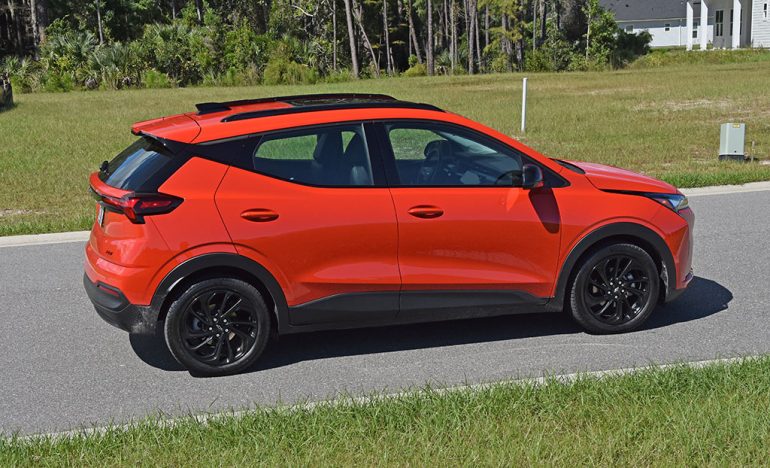
Other notable changes for the redesigned 2027 Bolt are Chevrolet’s big move to use a new Lithium Iron Phosphate (LFP) battery pack, which is inherently a safer and less costly choice over Lithium-Ion. The new Bolt also gets an NACS charging port, so you can easily plug up at Tesla Supercharger stations, taking advantage of its faster charging rate now at 150 kW. Range is also improved, landing at 262 miles.
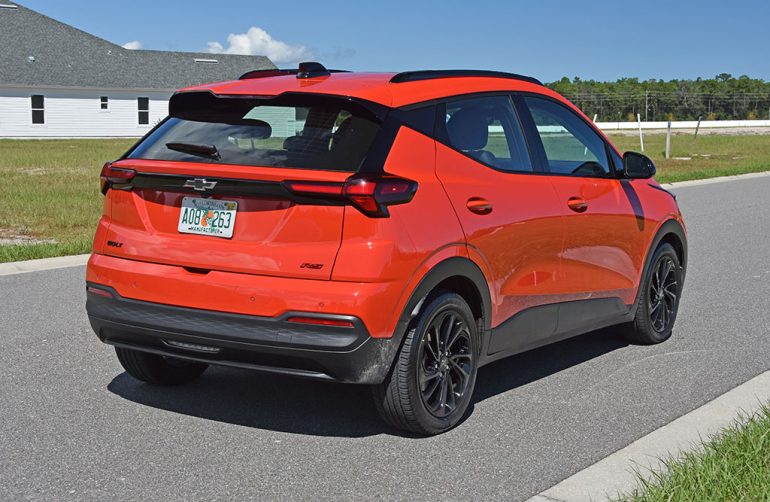
Powered by a single electric motor up front for Front Wheel Drive, the new Bolt keeps things relatively simple and does not offer an all-wheel-drive option. Power from the electric motor is rated at 210 horsepower and 169 lb-ft of torque. On paper, those figures feel like they are short-changing the Bolt as it feels a bit quicker than stated, which is a good thing. The zippy feeling is in part due to the torque being instantly available from a stop and on through its quest to hit 60 mph in 6.7 seconds.
Overall, the driving feeling of the new Bolt is excellent, and there’s enough power that you never feel wanting an extra oomph. Braking feeling is also good as it does well to manage braking regen coupled with a switch over to the friction brakes. There’s a one-pedal driving mode that feels aggressive at times, where you will have to learn to carefully modulate the throttle.
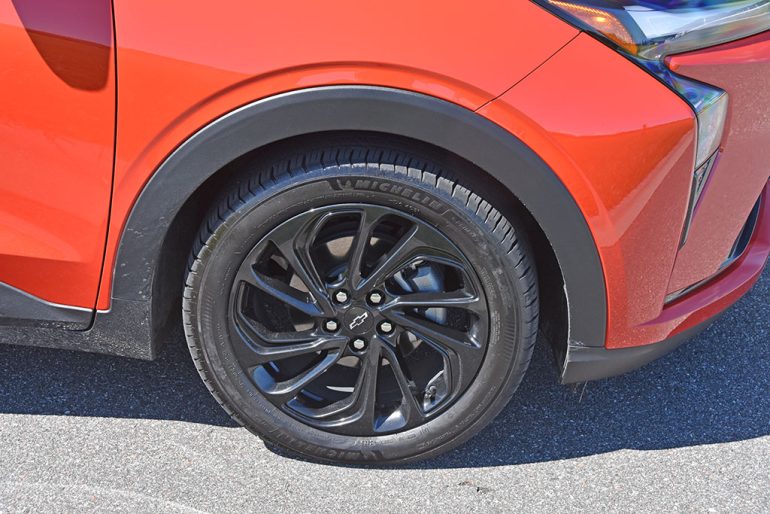
Handling is pretty much what I expected out of the small, electrified Bolt, with the caveat of the fixed-rate dampers not being adequate to slow some of the bouncy body movements when going over moderate to aggressive undulations and rises in the road. There was just too much motion up and down that was exacerbated at highway speeds going over such in the Bolt, even though the ride quality was somewhat acceptable in most normal situations at slower speeds.
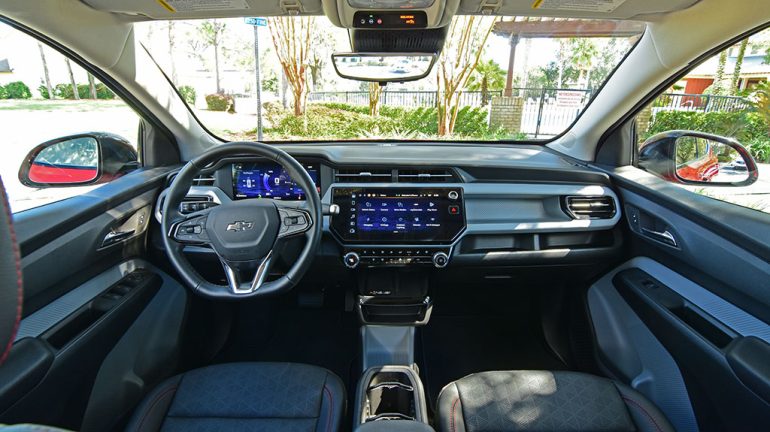
The efficiency of the new Bolt is spot on for its EPA estimates, matching real-world conditions, making the 134 MPGe city (4 miles/kWh) and 106 MPGe (3.2 miles/kWh) figures easily attainable. The new LFP battery composition seemed to fare well, but later tests in cooler weather may be the ultimate test to see how well they hold their charge. I was destined to get the full 262 miles of range after fully charging up at home using my Level 2 40-amp charger, taking just under 8 hours for a full charge from about a 15% state of charge.
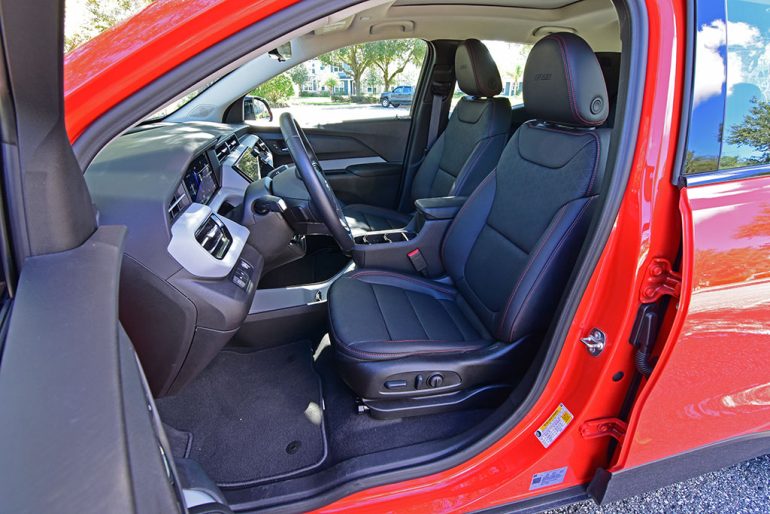
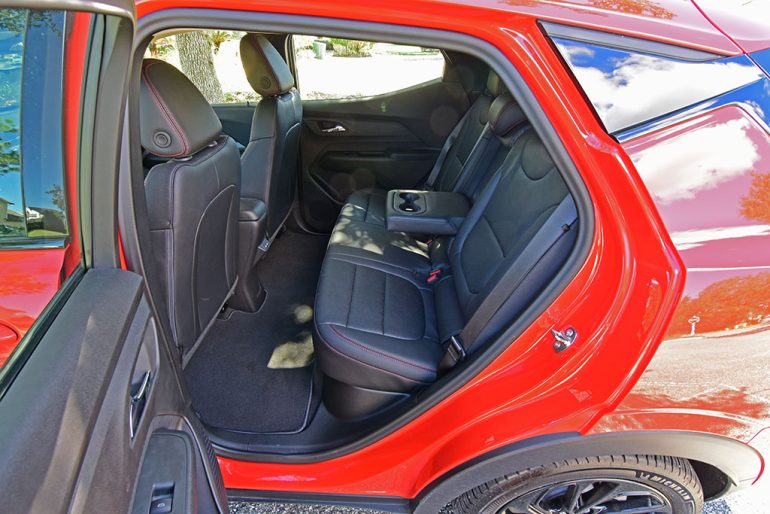
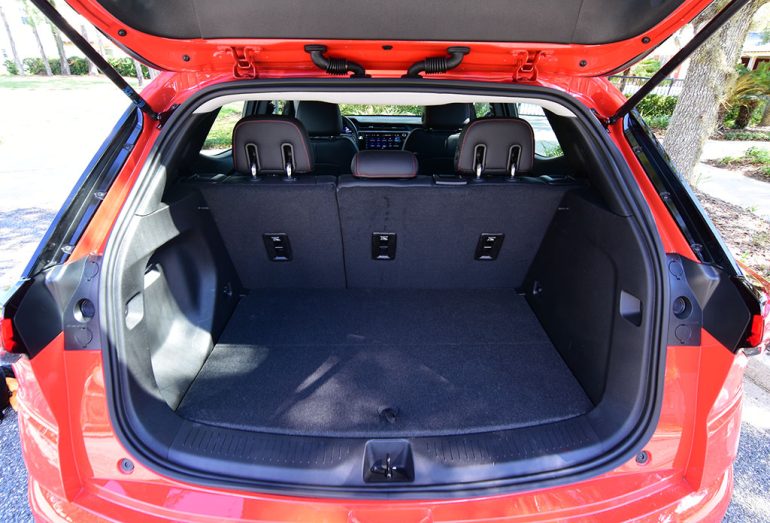
The interior space of the new 2027 Bolt was somewhat of a mixed bag, as I welcome the updated tech. However, there’s still no Apple CarPlay or Android Auto integration, and the seating areas are very uncomfortable. I found myself shifting around a lot to accommodate my 6-foot 3-inch frame, not for the lack of legroom but for the rather stiff seats and a rather smallish seating width. Here, the small size of the Bolt rears its ugly face, coupled with the abundance of hard plastics. I know Chevy had to cut some corners to give us the least expensive EV on the market, but you’ll pay dearly for compromising comfort as the main disappointment in the new Bolt.
The positive points of the interior include its updated touchscreen, 360-degree camera system, and integration of Google, which permits many voice interactions to control various parts of the Bolt from its single-zone automatic climate control and audio system to the heated and ventilated front seats. There’s also the added benefit of somewhat lessening the uncomfortable seating in the availability of GM’s SuperCruise hands-free driving system, which was one of the few features missing on my Bolt RS test vehicle.
At the end of the day, Chevrolet has done well to revive the Bolt for the 2027 model year. The other downfall and last notable stumble is GM’s decision to only produce the Bolt for just this one model year, potentially a total of 18 months. That means this will be a short-lived vehicle targeting about 35,000 units. If you want the least expensive EV around, you better plan to spend your money sooner rather than later because the countdown clock has started for your chance to get a new Bolt, which starts at $28,995 before any fees or options for the base LT trim and comes to about $35,685 in total for my nicely equipped Bolt RS test vehicle including the $1,495 dual panel panoramic sunroof, $1,195 technology package, and a destination charge of $1,395.