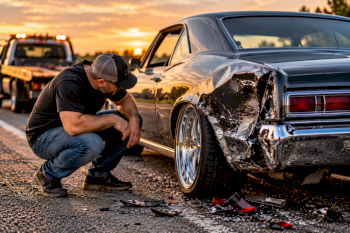
People who spend years building a custom vehicle know exactly what every panel, every detail, and every hour of work represents. When a crash happens, the instinct is often to look at the vehicle first. Bent sheet metal, damaged paint, a destroyed wheel, or suspension damage can be painful to see when so much time and money went into getting a build exactly right.
But when a serious road crash causes an injury, the consequences can extend far beyond repairing the vehicle. Medical treatment, time away from work, reduced mobility, and a long recovery can affect nearly every part of an enthusiast’s life.
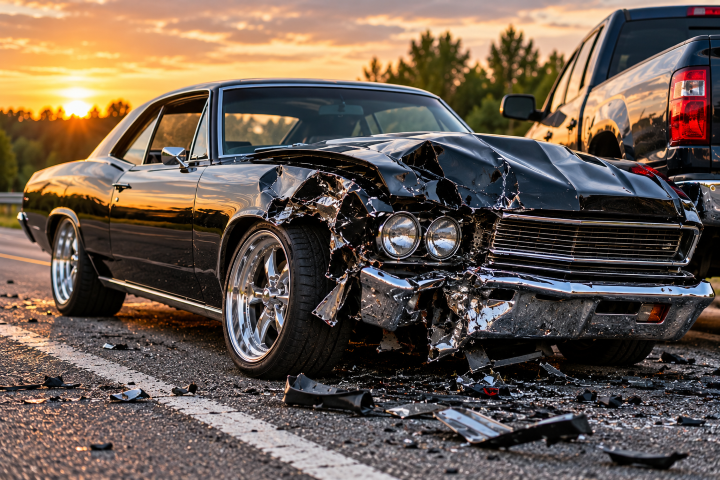
The car community is built around driving. Shows, cruises, road trips, club gatherings, and weekend events put custom vehicles on public roads where their owners have to deal with the same unpredictable traffic as everyone else. Gauge Magazine has previously looked at the realities custom vehicles face on public roads, where even a carefully built vehicle can be affected by conditions completely outside its owner’s control.
When a collision causes physical injuries, the financial impact can go well beyond the initial hospital visit. Medical treatment may continue after the crash, and an injury can interfere with someone’s ability to work or handle normal responsibilities while recovering.
Depending on the circumstances and applicable law, those losses may become part of an insurance claim or personal injury case. A personal injury attorney can help an injured person evaluate the circumstances of a crash, understand available legal options, and determine whether pursuing compensation may be appropriate.
That does not mean every collision requires an attorney or that compensation is guaranteed. Liability, insurance coverage, the nature of the injuries, available evidence, and state law can all affect what happens after a crash. For someone facing a serious injury, however, understanding those issues early can help prevent important questions from being overlooked.
A custom vehicle may represent years of work, but once it leaves the garage or show field, it shares the road with distracted drivers, sudden traffic changes, bad weather, construction, debris, and countless other variables.
That is especially worth remembering when traveling to automotive events. A weekend trip may involve unfamiliar highways, long hours behind the wheel, trailers, changing weather, and heavy traffic around the destination. Our car-show road trip safety guide covers several of the things enthusiasts should consider before heading out.
None of this means a custom vehicle should spend its life parked. Driving is part of why these vehicles are built. It simply means protecting the person behind the wheel matters even more than protecting the paint.
Vehicle damage is usually something an owner can see immediately. A crushed fender, damaged suspension, bent wheel, or ruined paint gives the repair shop a starting point.
Physical injuries can be harder to measure.
Recovery may involve follow-up appointments, rehabilitation, medication, transportation expenses, and time away from work. Some injuries improve quickly, while others take longer before their full effect on work and daily life becomes clear.
For someone who owns a shop, works in a skilled trade, fabricates vehicles, paints cars, installs suspension, or simply has a physically demanding job, an injury that limits movement can also interfere with the way that person earns a living.
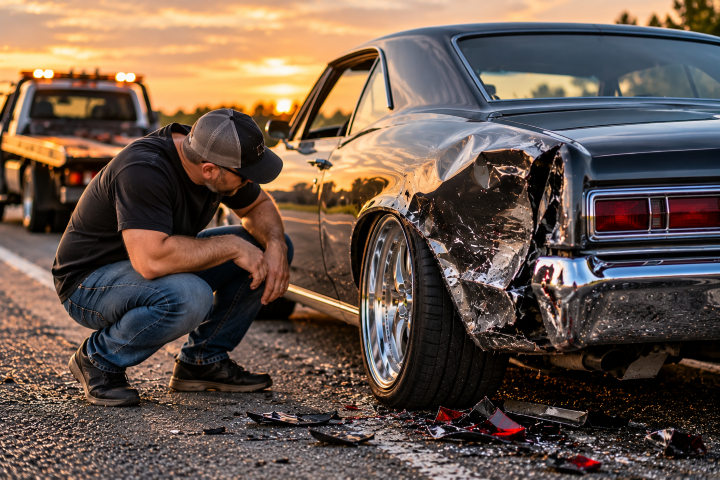
Car enthusiasts already understand documentation. Build photos, receipts, part numbers, alignment settings, paint codes, and modification records can become part of a vehicle’s history.
The same attention to detail is useful after a collision.
When it can be done safely, photographs can document vehicle positions, visible damage, debris, road conditions, traffic signs, and other details before the scene changes. Medical records, repair estimates, towing bills, receipts, insurance correspondence, and records of missed work may also become important later.
Gauge Magazine’s guide on what to do immediately after a car accident covers the immediate priorities in more detail, including safety, medical attention, documentation, and preserving records.
A serious crash can put more than a vehicle out of commission. Shows get missed, projects stall, work schedules change, and time that would normally be spent in the garage can suddenly be consumed by medical appointments, insurance calls, and recovery.
The damaged vehicle still matters. Anyone who has spent years building a custom car or truck understands why seeing it wrecked can hurt on a personal level. But sheet metal can be repaired, paint can be sprayed again, and another set of wheels can be ordered.
The person behind the wheel deserves at least that much attention.
Handling the aftermath carefully means addressing both sides of the crash: what happened to the vehicle and what happened to the person driving it. Protect your health, keep good records, understand your options, and give recovery the same patience and attention to detail that went into building the vehicle in the first place.
The post Road Crashes Damage More Than Custom Paint and Chrome appeared first on Gauge Magazine.