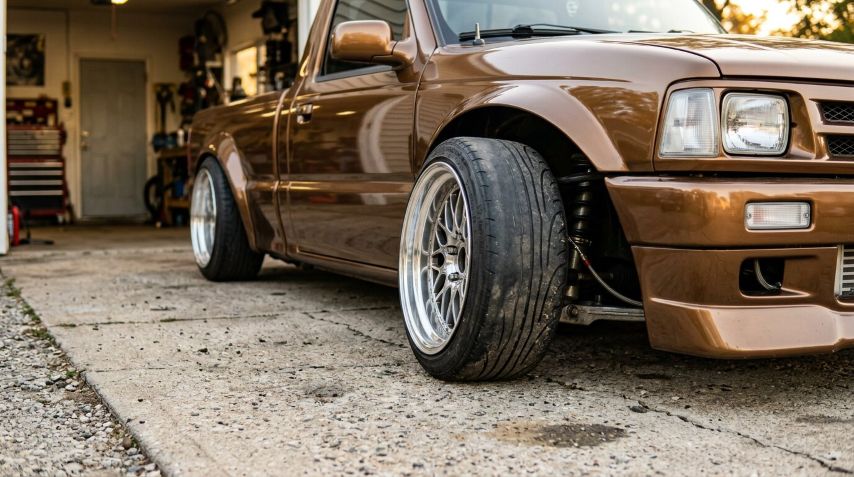
Drop a car or truck a few inches and the wheels tuck, the stance improves, and the inside edge of every tire quietly starts wearing away. It happens to slammed mini trucks in Ohio and bagged pickups at UK shows alike, and builders on both sides of the Atlantic learn the same lesson the hard way: whether you’re searching for mobile truck tyre fitting UK services or calling a tire shop in Texas, the cord showing on the inner shoulder was usually visible weeks earlier to anyone who knew where to look.
This guide explains why negative camber eats tires, which warning signs show up first, and how to keep the look without replacing a set every few thousand miles.
Camber is the tilt of the wheel when you look at the car from the front. With negative camber, the top of the wheel leans in toward the chassis. Many lowered vehicles end up with more negative camber than stock because changing ride height can alter suspension geometry.
A little negative camber can be normal and may help maintain tire contact during cornering. The problem starts when a street-driven vehicle runs excessive negative camber. The contact patch becomes biased toward the inner portion of the tire, which can contribute to accelerated inner-edge wear.
Camber rarely works alone. Lowering can also change toe, the angle the tires point in or out when viewed from above. Even a small toe error can scrub the tire as it travels down the road, and combined with heavy negative camber it can wear an inner shoulder much faster than expected.
Proper alignment is an important part of any modified suspension setup. Gauge Magazine regularly features lowered trucks and other custom vehicles where suspension setup, wheel fitment, and stance all have to work together.
Inner-edge wear hides behind the wheel, which is why so many owners only find it when a tire is already badly worn. Check these areas regularly:
The trouble with inner-edge wear is that the outer tread can still look healthy, so the car can seem fine even while the hidden portion of the tire is becoming badly worn.
In Great Britain, cars, light vans, and light trailers generally must have at least 1.6 mm of tread across the central three-quarters of the tread and around the entire circumference. Tires must also meet applicable condition requirements. Owners can check the current requirements in the UK government’s vehicle safety guidance.
In the United States, legal requirements can vary by jurisdiction. The National Highway Traffic Safety Administration advises replacing tires when the tread reaches 2/32 of an inch and recommends regularly checking tread condition and tire pressure.
For a slammed car, getting to a shop with a failing tire can be its own problem. Steep driveways, speed bumps, limited ground clearance, and a tire you don’t trust can make the trip risky. Mobile tire service may make sense for a lowered build when available, allowing the tire to be serviced where the vehicle is parked rather than driving on a badly damaged tire.
If you’re building or maintaining a lowered vehicle, Gauge Magazine’s custom vehicle features offer plenty of examples of how builders combine suspension, wheel, tire, and stance choices on street-driven and show vehicles.
There’s no single number because it depends on the car, suspension, tire, toe setting, and intended use. As a general rule, the closer a street-driven vehicle stays to an appropriate alignment specification, the easier it is to achieve even tire wear. Aggressive camber is generally easier to live with on a show vehicle that sees relatively few miles.
Only if the car has enough adjustment available. Some lowered cars can run out of adjustment with factory components, which is why properly engineered adjustable parts are sometimes needed.
Do not assume that a tire can simply be flipped or remounted to compensate for uneven wear. Directional and asymmetric tires have specific mounting requirements. Rotation or remounting should follow the tire and vehicle manufacturer’s instructions, and the underlying cause of the uneven wear should be corrected.
Stop normal driving on the damaged tire and arrange for professional replacement or appropriate roadside/mobile service. The alignment or suspension issue that caused the wear should also be corrected so the replacement tire does not develop the same problem.
The post Lowered and Stanced Cars: How Negative Camber Destroys Tires appeared first on Gauge Magazine.