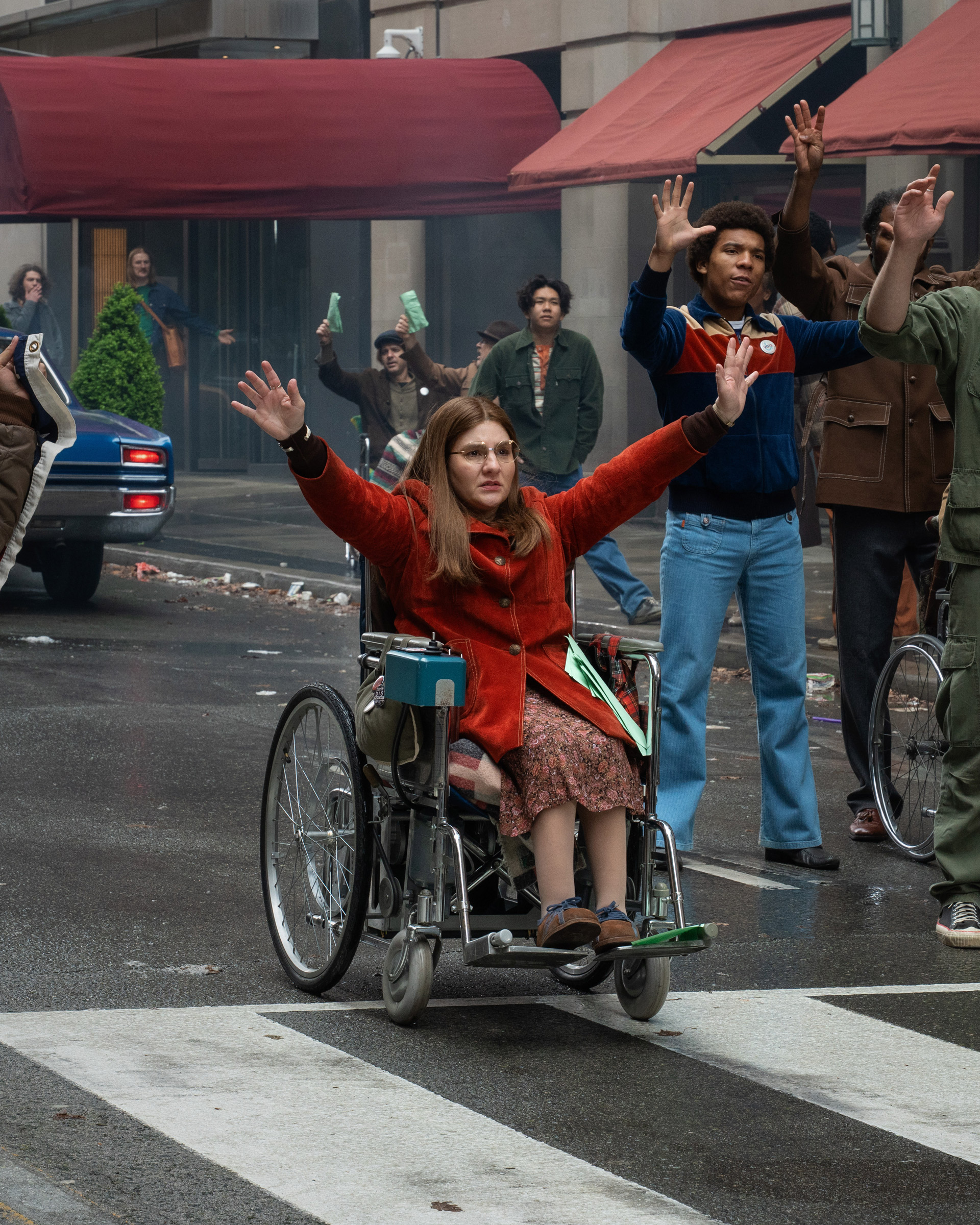
The night before an airline lost my wheelchair was among the most dazzling of my life. I sat at a long table in the back of an L.A. movie theater as talented writers, actors, and creatives read aloud the draft of a movie script I’d co-written with Oscar-winning filmmaker Siân Heder. I felt the thrill of people laughing at just the right moments. I clocked cheeks shiny with tears. But more than anything, I marveled over the possibility that this movie might actually get made. When I was a newly paralyzed kid in the ’90s, with freshly fitted leg braces, I watched Forrest Gump overcome his disability by running so hard his own braces literally fell off. Months after I started college, I watched a recently disabled boxer ask her coach to end her life in Million Dollar Baby. In my formative years, the stories of disability I saw were scarce, unrecognizable, and often harmful.
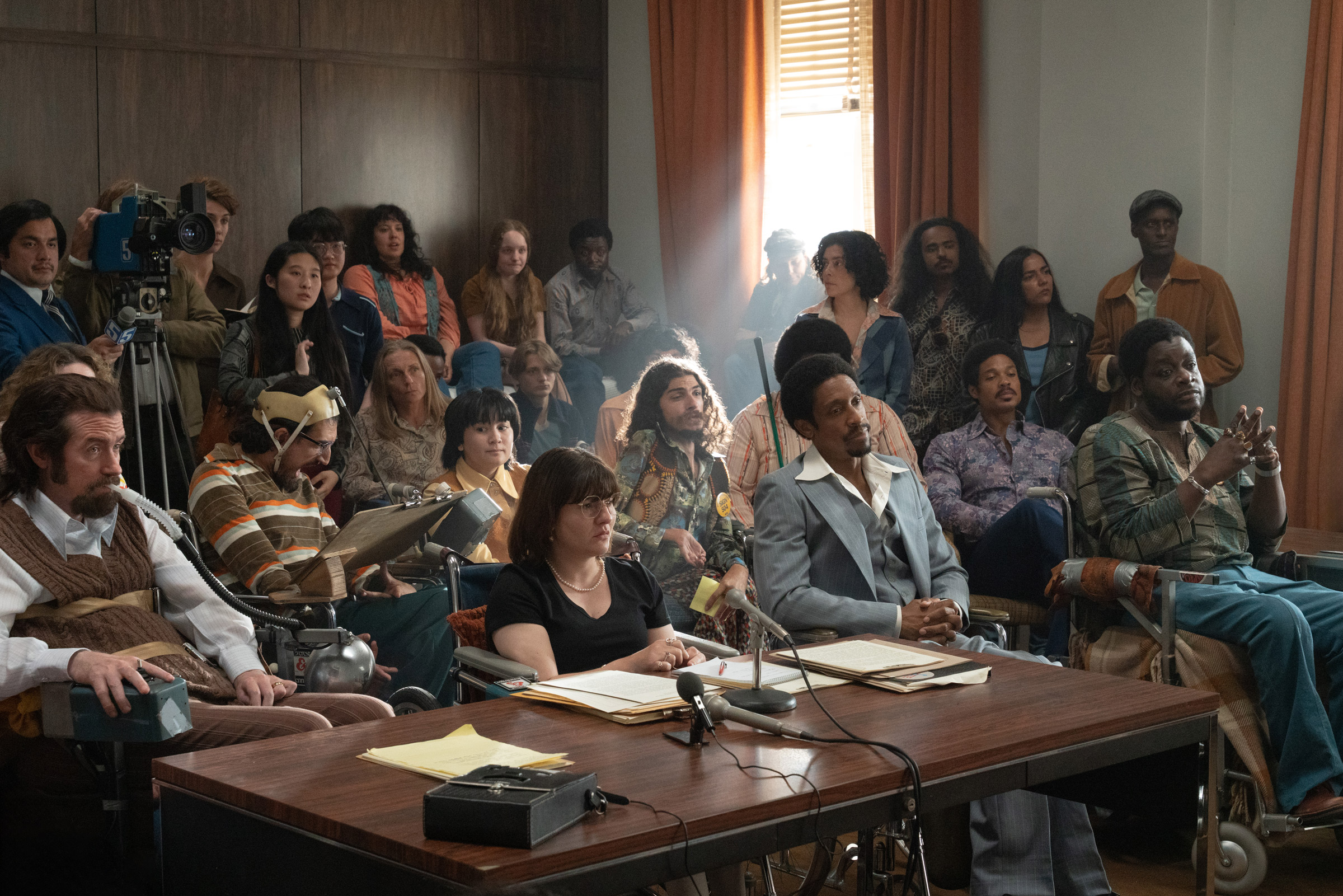
Our script, Being Heumann, tells the real-life David and Goliath story of a standoff between the U.S. government and a group of scrappy disabled protesters that changed the course of American history. The fight revolved around Section 504 of the Rehabilitation Act, a tiny bit of legislation that reframed how we think about disability in our communities. Instead of positioning its embodiment as a personal tragedy that inevitably excludes people from society, the language of 504 suggested that our exclusion had been largely created and should be corrected. The law passed in 1973, but after years without any moves to implement it, Judy Heumann led over 100 disabled people and nondisabled allies in a sit-in at the Department of Health, Education, and Welfare in San Francisco. They lived in those halls for almost a month as the government tried to push them out, cutting off their water supply and phone lines. When it became clear that they weren’t going to buckle, the government relented, agreeing to implement 504. The very group that had been deemed expendable took on the most powerful and won. It still holds the place as the longest peaceful occupation of a federal building in U.S. history.
Section 504 paved the way for the Americans with Disabilities Act (ADA), the first civil rights law for disabled people in the world. Thanks in large part to disabled WW II vet and my Kansas Senator, Bob Dole, it passed in 1990 with nearly unanimous bipartisan support and was signed into law by President George H.W. Bush when I was 4 years old. Even if they’re not consistently or completely fulfilled, these laws changed our world in their insistence that physical and mental impairment alone should not and would not preclude us from participating in our communities—going to school; voting; receiving care in a hospital; being considered for a job for which we’re qualified; and accessing our libraries, post offices, public transit, housing, and more. In other words, Section 504 and the ADA protect every American citizen; if there is one thread that binds us together, it is that every single one of us will acquire a disability if we live long enough. Still, I, like most Americans, never heard a whisper of this history growing up.
It wasn’t until I worked on this script that my perspective considerably expanded. It was like putting on a pair of night-vision goggles: the curb cuts, accessible bathroom stalls, and ramps radiated a new story. Someone had fought for me to be here. It didn’t wipe out the inaccessibility and stigma that still exist in my life, but it enriched my understanding of the bigger story I was living inside.
When I first joined the Being Heumann project, I was nervous about earning Judy’s trust. I remember sitting in my car, phone pressed against my sweaty ear, as she asked me questions about my life. “So you went to school with your siblings?” My attendance at the school down the street from my house was never a question, while Judy’s mother battled for years to get her daughter a spot in even a basement classroom. “And what was it like for you applying for teaching positions?” My wheelchair was never mentioned in job interviews, while Judy was denied a teaching license because her wheelchair was deemed a fire hazard. Recapping my life to The Judy Heumann, I saw more clearly than ever before how she and other activists had shaped it. Even as I’d sat on the edges of inaccessible playgrounds or been pushed out of unsustainable work cultures, the full life I live today would not exist if someone hadn’t fought hard for my inclusion before I was born. I wanted Judy to know that my outrage over the exclusion disabled people still face didn’t diminish my appreciation for the gifts she had granted us. I think I convinced her I could hold both stories as true.
While it didn’t make the final cut, one of the scenes performed at our table read told the story of the time Judy was forcibly removed from a plane when the airline insisted she needed a care attendant or a note from a doctor to fly. Someone expressed appreciation that airlines are now more accommodating to wheelchair travelers. Siân looked at me knowingly. “Well, they’re still not great,” she said.
And so when I flew home from the reading, I can’t say I was surprised to find upon landing that my wheelchair, which cost more than my car and is fully customized to prevent pain and pressure sores, was missing. In its absence, I was placed in an airport wheelchair—although, given that it was not self-propelling, it feels more apt to call it a cart. Because airplanes don’t have accessible bathrooms, I hadn’t peed in eight hours, but without wheels that I could push myself, I couldn’t get to a toilet without help. I almost always fly alone, but out of sheer luck, my husband had accompanied me on this trip. We watched the people from the last flights pour out the doors until the floor was empty. Over an hour later, the airline informed us they had no idea where the wheelchair was. I felt like I was being sent home with body parts missing.
The next day, as I sat at my kitchen table, calling the same customer-service numbers again and again, a -familiar feeling thumped in my chest. While we worked on the script, I wanted to capture the frantic helplessness that can come when your basic rights are not in your control. You can hold up a protest sign, put your body on the line, hurl your voice to the sky, write yet another email to legislators, and still, it often feels like you are entirely at the mercy of a few people at the top who aren’t even listening.
Two days later, my husband found the frame of my wheelchair dropped off on our doorstep, scratches across the front, two parts dangling. They never found the wheels. A replacement pair arrived three weeks later.
While I recounted the ordeal to Siân, we marveled at the irony. Here we were, telling the story of a woman who took on the airlines for disabled passengers to have equal access to travel, and 50 years later disabled travelers still take the very real risk of our lives being upended every time we fly. We have come so far. We have so far to go. I saw the dichotomy everywhere. It was my generation’s job, I thought, to build on the progress Judy’s had fought for. What I didn’t realize at the time, however, is that we wouldn’t just be advancing it—we’d be defending it as well.
Almost a year to the date of that hopeful, disastrous flight home, I found out that Apple Studios had greenlighted the making of Being Heumann. I texted Siân gleeful curse words in disbelief. In the coming months, I saw a big film studio prioritize authentic disability casting for more roles than I could count on my hands and ask good questions about how to make the filming process accessible for them. I think I stopped breathing while I watched Ruth Madeley channel Judy’s chutzpah on her audition tape. Every time I thought of my younger self getting the chance to watch this story with these characters, my eyes welled. There is no way to quantify what it would have meant to see bodies like mine do something as ordinary as get dressed, go to work, or receive care, let alone hook up, party, fight, cry and win together. To see the world reflected back to me as I experienced it—pushed out by stairs and curbs, racing wheelchairs down hallways, sitting eye level with butts.
It was right in the middle of this dreamy bubble that I first learned about a new lawsuit, Texas v. Becerra, filed by the attorneys general in 17 states, seeking to make Section 504 unconstitutional or dismantle all of the detailed protections that it lays out. I scoured the internet for any reporting from mainstream news outlets. The silence stunned me. I went directly to the lawsuit itself, and as I squinted into the legalese, I recognized arguments that sounded identical to the ones posed in the 1970s. We’d written these sentiments into the mouths of our most skeptical characters: disabled people are a burden on the rest of us; we shouldn’t be forced to integrate them into our communities.
Over the course of two years, the lawsuit evolved; it was updated as Texas v. Kennedy, the people made noise, and many states dropped out. Then in June, the Justice Department’s Office of Legal Counsel issued a memo asserting that Section 504 and the ADA don’t actually mandate that states support disabled people to remain integrated in their communities. Instead, this memo claims, sending people to live in institutions—away from their families, friends, and beds—is an acceptable option. This position is in direct conflict with the way disability-rights law has been interpreted by courts for decades. And, in addition to the human cost, it doesn’t make fiscal sense. For example, according to the Kansas Department for Aging and Disability Services and the Disability Rights Center of Kansas, sending one person with an intellectual or developmental disability (I/DD) to live in an institution can easily cost well over $310,000 a year. Providing home- and community-based services with an I/DD waiver for this same person would cost, on average, $70,000 a year. The discrepancy is similarly steep for someone with a physical disability. So at least in this case, it costs less to include us.
Even so, that memo set the foundation for a joint proposal from the Department of Justice and the five remaining states that ultimately ended the case. They asked the court to vacate critical language about integration, and in September the judge agreed. Now the law remains on the books—only Congress can change the legislation itself—but it’s been utterly gutted, despite the loud outcry from disability advocates across the country and the way it had been applied since the protesters won their fight in 1977. It’s hard not to interpret this move as anything other than a profound disregard for the value of disabled life.
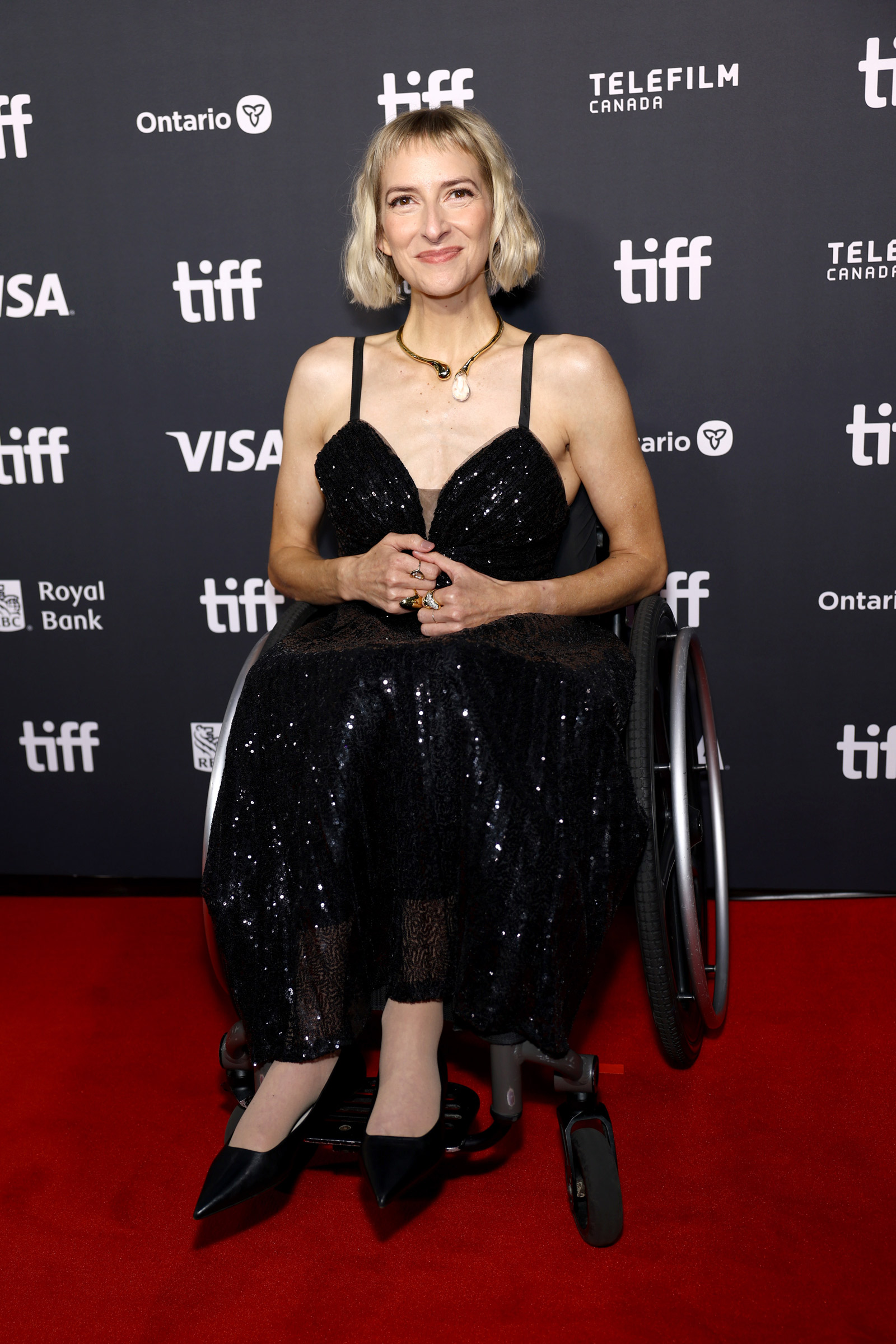
And yet, even as the lawsuit and memo wound their way through the government, the Toronto International Film Festival welcomed Being Heumann as its opening-night film. I rolled across the red carpet in my black sequined dress and scratched-up wheelchair frame, taking in the wide expanse of our embodied disabilities, each of us glammed out and feted for our talents. It felt like living inside two timelines: one where my government undercuts the foundations of laws that have long protected all of us, the other where the hubs of culture celebrate the incredible story behind the passing of those same laws. As Judy’s life’s work is threatened, audiences around the world are learning her name. The past is asserting itself into the present, the future is teetering toward the past, all inside one surreal moment. I’m trying to hold onto the contradiction, never allowing the significance of one reality to eclipse the other.
I wish Judy were here to give us our marching orders—to make the monster lurking around the corner feel a little smaller with the force of her voice. I wish she could take in the wild power of her own story moving across a screen and witness this outpouring of recognition, gratitude, and celebration. She died unexpectedly while we were working on the film. In fact, many of the 504 leaders have passed away—Brad Lomax, Ed Roberts, Kitty Cone, Ron Washington, Hale Zukas. Their generation came of age in a world where doctors routinely told parents they should send their disabled children away to live out their lives in institutions, but their activism fundamentally changed the lives of all of us coming up behind them. Now that we are the adults in the room, what legacy will we leave behind?
I find myself thinking a lot about the work culture can do where legislation drops off. As we continue to fight for the laws Judy and her peers helped make real, I wonder about the ripples of an entertaining movie that isn’t here to force a lesson but bring to life a vivid story of disability as a dynamic, nuanced, deeply human experience. I wonder if one film might beget more. Perhaps this kind of authentic representation of disabled life could be a fixture that younger generations will one day take for granted. Maybe storytelling can insist on our shared humanity in the ways legislation can’t.
Because, even as I see now more than ever how essential laws can be, I don’t want just laws; I also want a society that values disabled people enough to implement them meaningfully and fully. I want whole communities invested in the great, ongoing project of building a world for all of us. I think Judy would co-sign my enormous appetite. I no longer believe human evolution inevitably bends toward including more of us, but if she taught us anything, it’s that we don’t show up because the outcome is guaranteed; we show up because it isn’t.