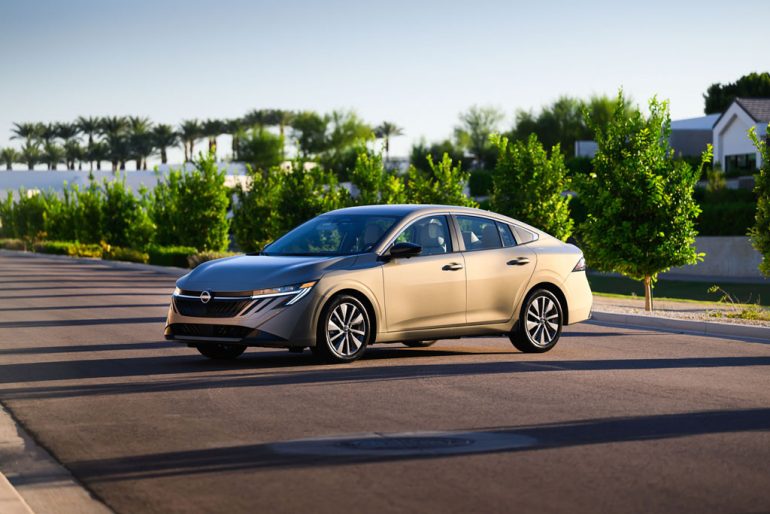
Four-door sedans have had their fair share of struggles in recent years here in America, as crossovers of all shapes and sizes have continually dominated the landscape, encroaching far into the space that sedans once ruled. In a valiant effort to keep and potentially grow the current space that sedans have, Nissan has carefully taken steps to improve upon their approach in vehicles like the new Sentra, which has been completely redesigned for the 2026 model year.
Continuing its redesigned new path for the 2027 model year, marking its ninth generation, the Nissan Sentra carries a respected alternative for those looking for affordable transportation. The upgraded look and positioning as a larger compact vehicle, the new Sentra is one of the most affordable vehicles you can buy new. Nissan keeps things mostly simplistic in only offering one powertrain instead of going the hybrid route, as Hyundai does with the Elantra hybrid or Honda with the Civic Hybrid. However, Nissan seems to have a newfound respected formula in what the new Sentra has to offer for the collective of its parts and how well it drives, coupled with many improved aspects that compete well amongst its counterparts.
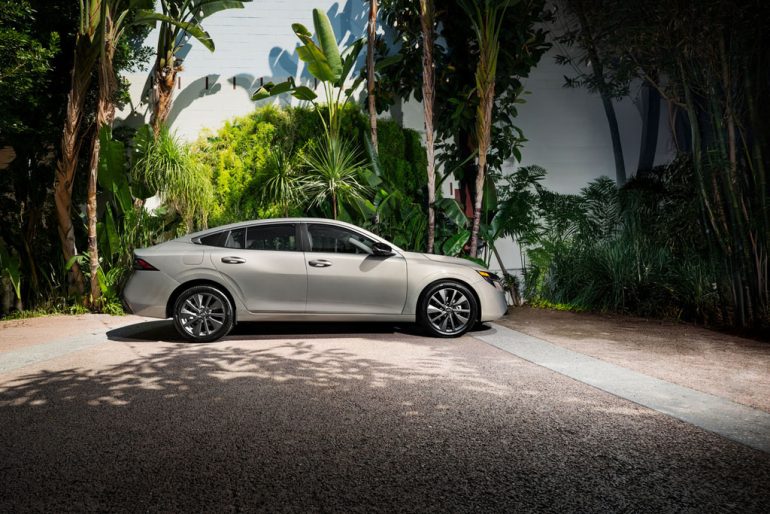
Powering the new Nissan Sentra is left to the carried over 2.0-liter naturally aspirated 4-cylinder engine that outputs 149 horsepower and 146 lb-ft of torque. That power is sent to the front wheels via a CVT (Continuously Variable Transmission) that is among the best-tuned for a CVT I’ve experienced in a vehicle that has under 200 horsepower. The power delivery, what little bit you can muster out of the new Sentra, is mostly smooth and plays on the CVT, having ratio step-downs to closely emulate a traditional automatic transmission.
Overall, the new Sentra is slow; there’s no other way to get around it. However, the lower end of things seems to be up to the task to appease most who shop for such a vehicle, in that it is not dangerously slow. There wasn’t much consistency in my hitting 60 mph from a stop, as I saw my best time being 9.1 seconds out of many other different resulting tries. Out on the open road, the Sentra feels surprisingly agile in that its chassis deserves more power, as it feels it can handle a lot more with its somewhat sporty disposition, with a firm ride quality. I actually enjoyed how the Sentra handled and its ride quality, which is more on the firmer side, but is not overly firm that it would bring about complaints from many.
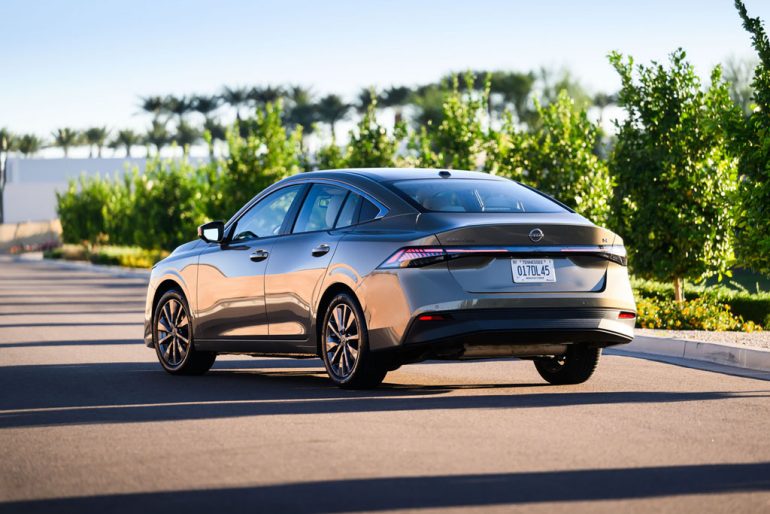
Of course, as you can imagine, with a CVT, there’s the slight buzz of the engine that you’ll get from moderate to full throttle, but Nissan seems to have kept things from getting too wild with unwanted sound and vibration. You’ll never confuse the Sentra for a luxury vehicle by any stretch of the imagination, but you do somewhat respect its new level of refinement, which is aided by the much-improved interior.
Fuel economy comes in with decent numbers and the ability to match its EPA estimates of 30 mpg city, 38 mpg highway, and 33 mpg combined in the real world. Filling the 12.4-gallon tank of regular unleaded will give you a highway cruising range of about 471 miles.
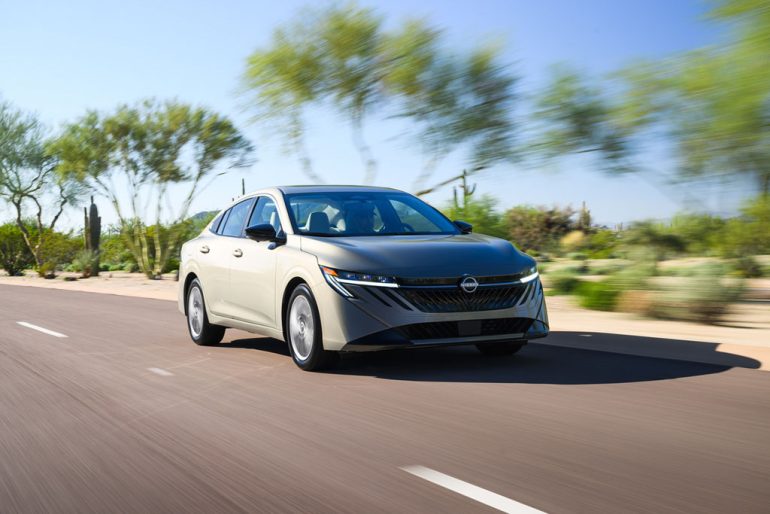
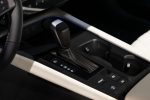
The new interior of the Sentra SL is somewhat of a cheat code that Nissan has enabled to give it a visual edge in the SL trim with contrasting colors of its injected molded plastics that give you an impression of a premium space. While much of the plastic surfaces that have color in the SL trim have somewhat of a soft touch to them, they do well to play things up a notch, departing from being cheap-looking. This is a good thing, and I welcome it, in addition to the softer touch areas that you actually touch.
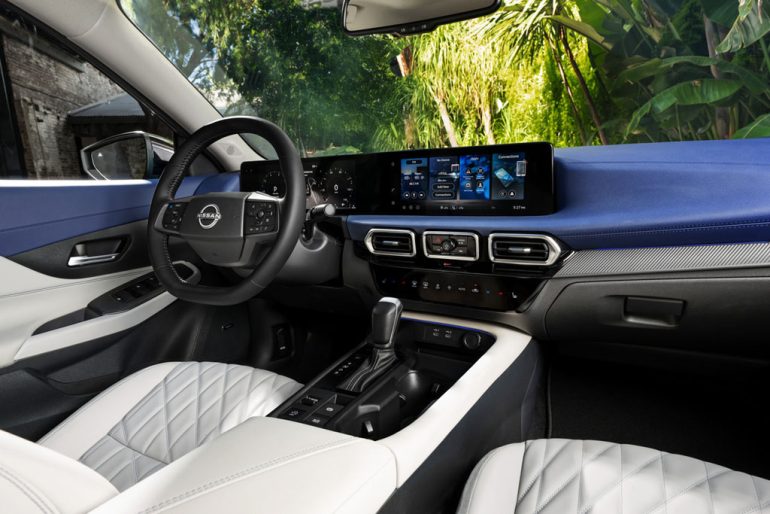
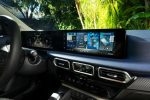
Encasing a new dashboard layout with a 12.3-inch configurable digital gauge cluster and a 12.3-inch infotainment touchscreen, the Sentra has a somewhat inviting space inside. The layout is kept simple, and there’s a grouped set of panel-style buttons encased in a continuous section with tone feedback for selecting the automatic dual-zone climate system’s temperatures, defrost, fan speed, and heated seat controls, all just below the physical turning volume knob. The operations of the infotainment system are easy to learn, and the integration of wireless Apple CarPlay and Android Auto works well, as does the magnetic smartphone wireless charger, which others should take note of, as such a charging pad prevents your phone from sliding everywhere.
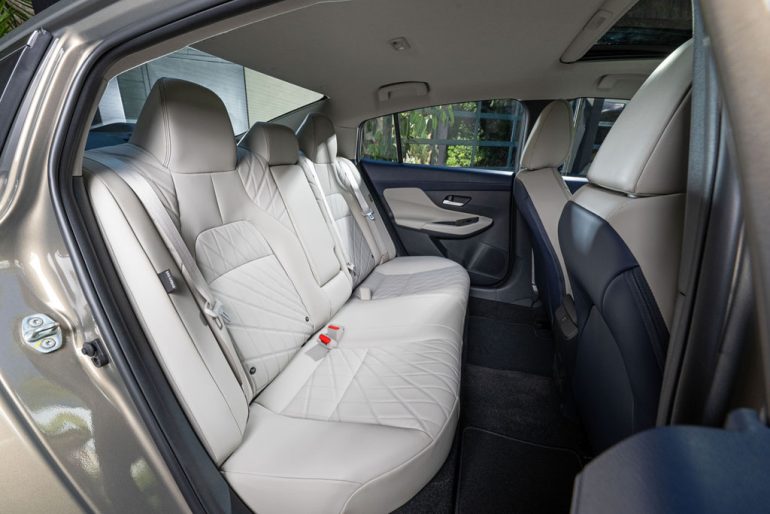
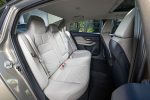
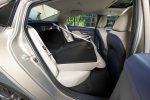
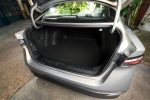
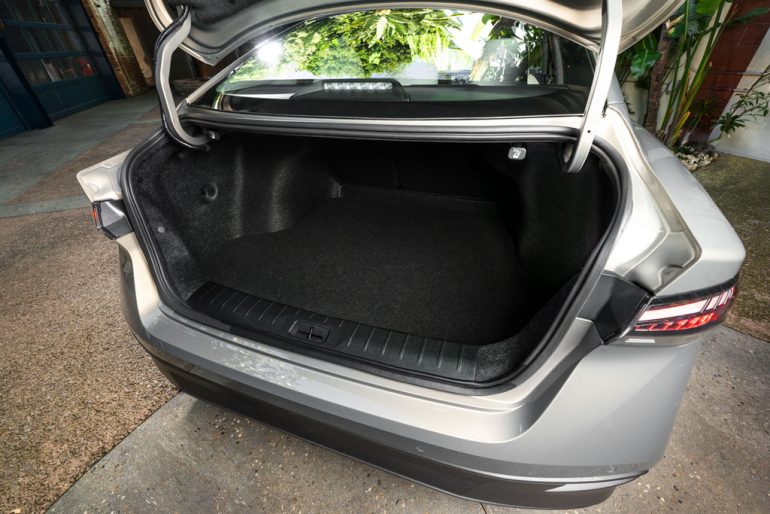
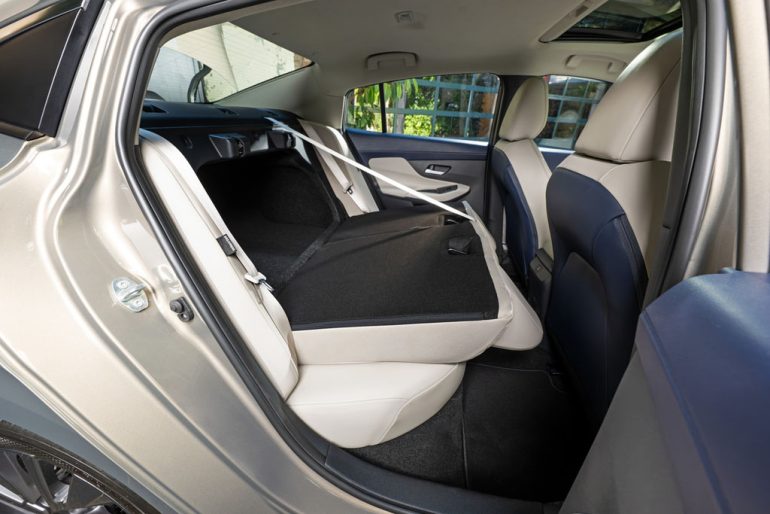
Nissan continues the cheat code theme for having quilted leather seating surfaces and the power-adjustable driver’s seat. Out back, the space is mostly expected for the Sentra’s segment, while the cargo room is surprisingly large, with just over 14 cubic feet, and the foldable rear seatbacks are in place.
Safety remains an emerging strong point for Nissan with the new Sentra, as it has achieved the Insurance Institute for Highway Safety’s Top Safety Pick. The active safety blanket includes all of the expected highlights, including a 360-degree camera system in the Sentra SL trim, and Nissan’s latest ProPilot Assist driver assistance system that works with the intelligent cruise control with steering assist. The system only requires that you have a hand on the steering wheel by touch instead of tugging on the wheel when the system is enabled. For the most part, the system works well during the day on roads with clearly painted lines and even follows through on some aggressive curves.
Nissan knows its customers, and the new Sentra plays the game nicely with a few cheat codes to come out as a winner for how well it drives and its interior’s upscale perception. With that, I feel the new Sentra will do well for one of the most affordable vehicles at this current time, despite its somewhat lackluster straight-line performance. The value perception is intact as the new Sentra S starts at $22,990 before any fees or options. Moving through all trim levels (5 total now, including the new-for-2027 SR Midnight trim) up to my Sentra SL test vehicle, you’ll be expected to pay just over $28,000, with mine testing out at $30,990.