
The fate of Congress hangs in the balance as the outcome of a few key races will determine which party controls the House and Senate for the remainder of Donald Trump's presidency.
Republicans currently control both chambers, with 53 seats in the 100-seat Senate and 218 seats in the 435-seat House.
History suggests that Democrats will gain seats, as the party in power usually cedes representation in the midterms. In 2022, Democrats under President Joe Biden lost nine seats in the House, and in 2018, during Trump’s first term, Republicans lost about 40 seats in the lower chamber.
Democrats are widely expected to gain enough House seats to take control of that chamber. The Senate remains a toss up amid several tightly contested races, many in red states Trump won in 2024. Between campaigns, super PACs and billionaire donors, hundreds of millions of dollars have been spent on a handful of races.
Read More: Midterm Ad Spending Has Surpassed $10B. Where Is the Money Coming From?
Here are the Senate and House races to watch ahead of election day on Nov. 3.
Republican Sen. Dan Sullivan is running for another term against Democrat Mary Peltola, who previously served as the first Alaska native elected to Congress. But there's also a Daniel J. Sullivan Jr. on the ballot, and his candidacy was part of a broader effort by Democrats to help Peltola’s bid, according to a recent New York Times report. Alaska’s Republican Governor Mike Dunleavy ordered an investigation into Peltolas campaign following the report.
Polling has indicated that Sullivan and Peltola are neck-in-neck, with Peltola occasionally gaining a slim lead. While Trump won Alaska in 2024 by 13 points, the race appears to be close enough that he travelled to Wasilla on Oct. 13 to campaign on Sullivan’s behalf.
Alaska uses rank-choice voting, which means that voters will rank their top candidates as opposed to selecting one. This month, the Justice Department filed a preemptive lawsuit seeking to block certification of the election results in Alaska’s Senate race if the election results suggest the incumbent lost due to “voter confusion” due to two Dan. Sullivans on the ballot.
Read more: The 7 Key Governor Races to Watch
This midwest contest to replace outgoing Republican Sen. Joni Ernst has emerged as among the tightest in the country, with Republican Rep. Ashley Hinson, a former broadcast journalist, vying against Democratic state Rep. Josh Turek, a paralympic gold medalist.
This is another state that Trump won by 13 points in 2024. Yet the recent polling suggests a true toss-up. Hinson, who has represented Iowa in the House since 2021, has distanced herself from Trump, calling for an “immediate end” to the Iran war. Trump campaigned alongside Hinson last week.
Read More: Is Iowa the Senate Race No One Saw Coming?
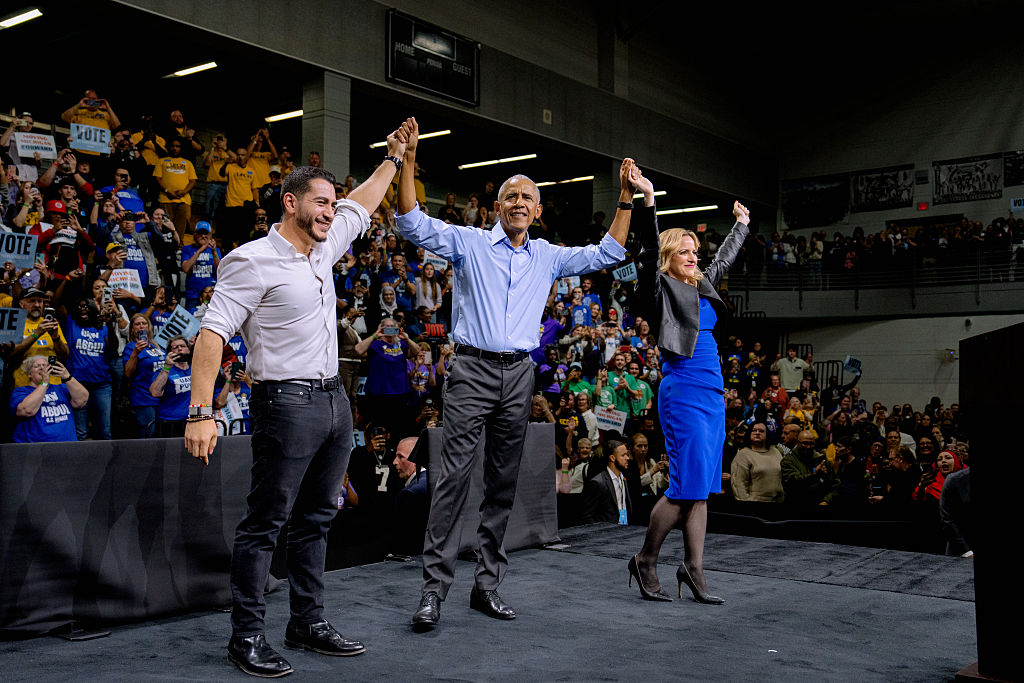
Michigan’s open Senate rate has emerged as perhaps the most hostile of the midterms. Democrat Abdul El-Sayed, a physician and former public health director, has the chance to be the country’s first Muslim senator. He’s facing off against Mike Rogers, a former FBI agent who served in the House before losing a 2024 Senate bid. Both are vying to replace Sen. Gary Peters, the Democrat who has held the seat since 2015.
Read More: Democratic Senate Hopeful Abdul El-Sayed Is Running Against Both Parties
El-Sayed won his party’s nomination after a fierce primary against Rep. Haley Stevens, in which his criticism of Israel’s war in Gaza became a lightning rod issue. Since the primaries, prominent Democrats including Barack Obama, Kamala Harris, and Rep. Alexandria Ocasio-Cortez of New York have all come to Michigan to stump alongside him.
Republicans have attacked El-Sayed for his Muslim identity and progressive politics. At a rally in Michigan last week, Vice President JD Vance accused El-Sayed of hating America.
Recent polls have shown El-Sayed leading Rogers, but usually within the margin of error.
Sen. Susan Collins, a Republican, is seeking a sixth term in Maine, a moderate blue state. She is facing off against Democrat Troy Jackson, a logger and former president of the Maine Senate, who became the party’s nominee after the winner of the primary, Graham Platner, withdrew from the race amid sexual assault allegations, which he denies.
Main is the only state Trump did not win in the 2024 election where an incumbent Republican is up for reelection. Collins has distanced herself from Trump across many policy issues and on the campaign trail. She voted to convict Trump following his impeachment after the January 6 riots on the Capitol. Yet she’s also drawn criticism for backing Trump’s previous picks for the Supreme Court, despite her longstanding support for Roe v. Wade, which the Court later overturned.
Collins is chair of the powerful Senate Appropriations Committee and frequently boasts on the campaign trial of federal dollars she helped steer to the state. Recent polls show Jackson barely leading Collins, in a race that is widely viewed as a toss-up.
Read more: In Maine, a Toss-Up Senate Race Is About the Incumbent and Not Much Else
Former Democratic Sen. Sherrod Brown faces off against Republican Sen. Jon Husted, who was appointed by Republican Gov. Mike DeWine to replace Vance when he went to the White House in 2025.
More than $200 million has been contributed in outside spending on this race, making it one of the most expensive this midterm season. Yet the race is a special election to only finish the remainder of Vance’s term. The winner will need to run again in 2028 to secure a full six-year term.
Read More: Ohio May Be the Sleeper Senate Race of the Midterms
While Ohio has mostly voted Republican in recent years, recent polls show Brown ahead. Brown served for over a decade in the Senate until losing re-election to Republican Bernie Moreno in 2024.
Kansas has not elected a Democratic Senator since 1932. But that could all change if Adam Hamilton, who founded the largest Methodist congregation in the U.S., beats out the incumbent, Republican Roger Marshall.
Marshall, a physician and former military officer, has received the support of Trump, who called him “one of my favorite Senators.” Democrats have highlighted Marshall’s pursuit of unpaid medical bills from patients from a decade ago. State court records show that he filed more than 700 of these debt-collection lawsuits, which have been a source of controversy for his campaign.
Read More: Kansas Has Emerged as a Senate Battleground State. Here’s Why It Matters
Recent polls have shown Hamilton leading up to five points against Marshall, prompting a flurry of last-minute investments by both sides into the state. Republicans acknowledged the extent of their concerns about holding on to Kansas when they moved money there after pulling out of North Carolina’s Senate race.

In perhaps the most closely-watched race of the midterms, James Talarico has a chance to become the first Democratic Senator in Texas since 1993. He faces off against Republican nominee Attorney General Ken Paxton, who defeated the incumbent, Sen. John Cornyn, in a Republican runoff in May.
Read More: How James Talarico Made Texas Competitive Again
Talarico has had a slight edge in recent polling, but the race remains extremely tight, and one poll from last week had them tied.
The contentious race has topped $500 million in ad spending, which could make it the most expensive non-presidential faceoff in U.S. history.
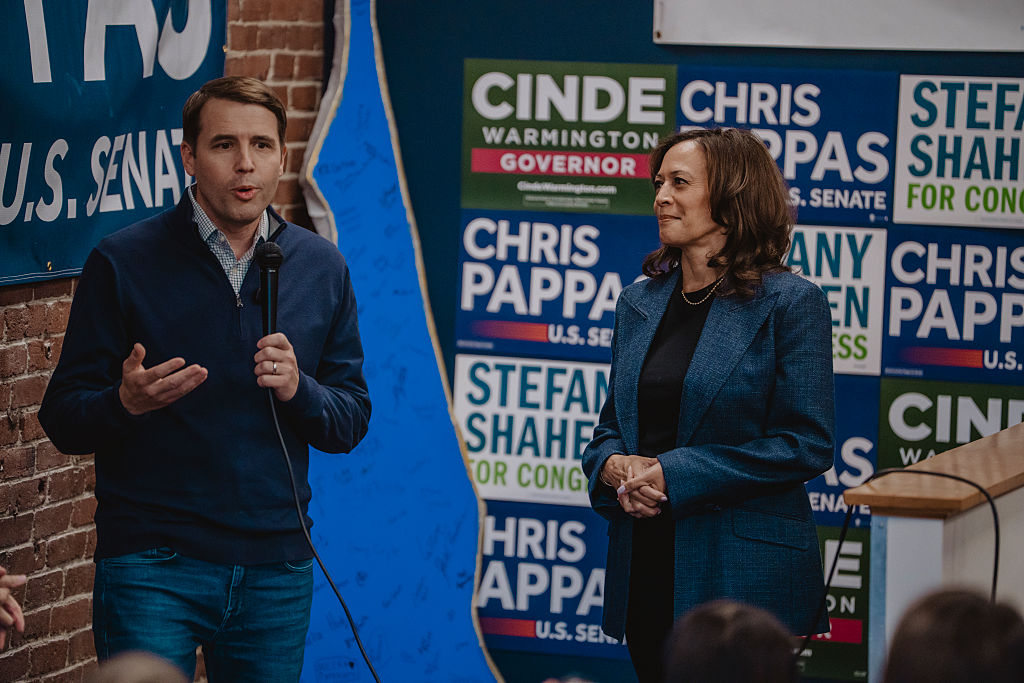
A tight contest for Democratic Sen. Jeanne Shaheen’s seat is taking place in New Hampshire, where four-term Democratic Rep. Chris Pappas is running against former Sen. John Sununu, who was beat out by Shaheen in 2008.
Sununu’s name is well known in his state. His brother served as governor until last year and his father was also governor.
Read more: Why Republicans Still Think They Can Flip New Hampshire's Senate Seat
Pappas has maintained a lead in recent polls against his Trump-endorsed opponent, but Republicans are hopeful that the power of the Sununu brand in New Hampshire will help turn out their voters.
In one of the most expensive House races in the country, Republican Rep. Tom Barrett is facing off against progressive William Lawrence, a climate organizer who founded the climate advocacy organization the Sunrise Movement.
Michigan’s seventh district encompasses rural and suburban areas that turned Republican in 2024 after former Democratic Rep. Elissa Slotkin left to run for Senate. Lawrence, who beat out more moderate candidates in the Democratic primary, was polling near even with Barrett in August. More recent polls show Lawerence leading.
Deep in South Texas, Trump marked impressive gains with Hispanic voters in 2024. Now, Texas’ 15th district has emerged as a major test of whether Republicans can hold on to those voters. Roughly 75% of eligible voters in this House district are Hispanic.
Republican Monica De La Cruz, who flipped the district in 2022, is running for reelection against Democrat Bobby Pulido, a popular Latin Grammy-winning Tejano musician who is running as a moderate.
Some recent polls show Pulido in the lead, though election results in that region have at times defied expectations. Cook’s Political Report continues to rate the race as a toss-up.
Republican Rep. Max Miller, a former Trump White House aide, is battling Democrat Brian Poindexter, a union worker and former councilman, in Ohio’s seventh district.
The House race has received outsized attention over domestic abuse allegations against Miller, which he has denied. Republican Sen. Bernie Moreno, who is Miller’s former father-in-law, said over the summer that Miller should “seek professional help.” Moreno was joined by Ohio’s other Senator, Republican John Husted, in publicly urging Miller to exit the race in a district that has traditionally voted Republican and which Trump carried in 2024 by 11 points. Cook’s Political Report rates the race a toss-up.