We counted, and this midterm election cycle, there were just seven major-party candidates for Congress who had working-class jobs when they first got into politics. The last ballots are still being totaled, but many of the politicians from working-class backgrounds who ran won, or seem poised to win.
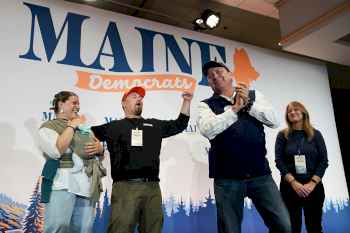
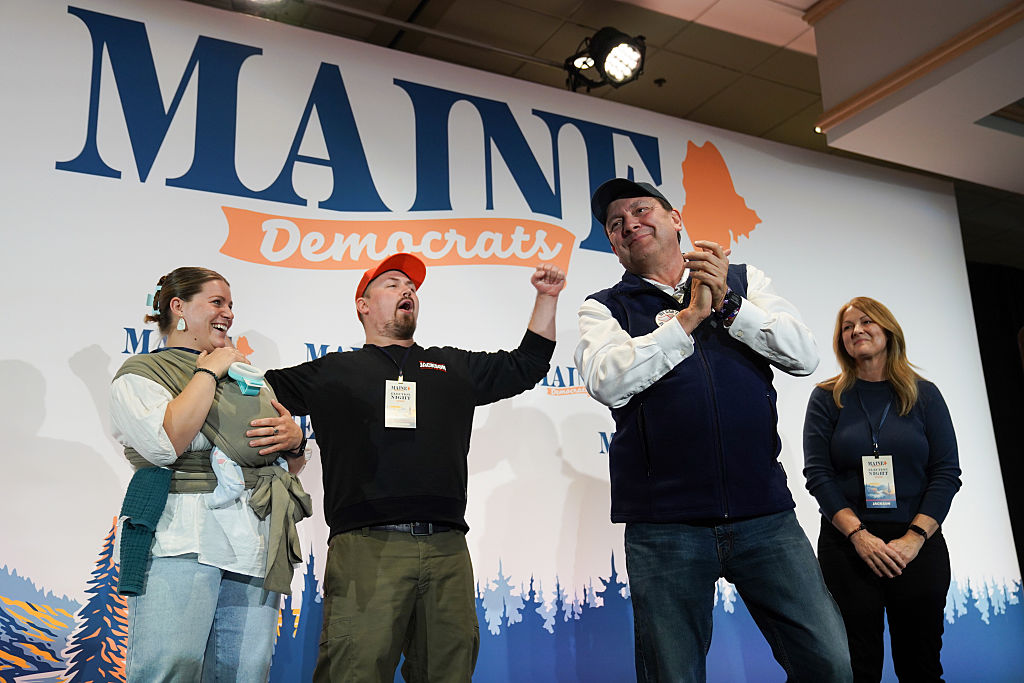
During national elections, we often hear a lot about the rare candidates who had working-class jobs. If you follow politics, you’re likely to know that Maine’s newly elected Senator Troy Jackson was a logger, or that New York Representative Alexandria Ocasio-Cortez was a bartender. But these candidates are the exceptions to an often-unspoken rule of U.S. politics: the working class doesn’t govern.
Our research shows that people in working-class positions—manual labor jobs like construction worker, service industry jobs like restaurant server, and clerical jobs like receptionist—almost never go on to hold elected office. Working-class jobs make up over half of our labor force, but historically, the share of members of Congress who last had a working-class job has never cracked 3%. The same pattern holds in state and local politics: as of 2024, in the average state legislature, less than 2% of members have, or last had, a working-class job.
This kind of polarized inequality has real consequences. Research from across multiple countries shows that when politicians from working-class jobs are scarce, people tend to trust their governments less. Studies from the U.S. and elsewhere show clearly that a shortage of politicians from the working class tilts economic policy against the concerns and priorities of working people—and in favor of the wishes of the well-off. As the old saying goes, in politics, if you’re not at the table, you’re on the menu.
What keeps working-class Americans out of office then? It isn’t that they run and lose, or that voters dislike them—it’s that they so rarely run in the first place.
Yesterday’s midterms were a case in point. According to our tallies, there were 933 Republican and Democratic candidates for Congress, but the two major parties ran just seven candidates in the general election whose campaign websites listed a working-class job as their most recent non-elected occupations: Tim Rogers, a delivery driver (Wisconsin-4), Brian Poindexter, an iron worker (Ohio-7), Sam Forstag, a smoke jumper (Montana-1), Ray Pooley, a machinist (Michigan-9), Christopher Reichard, an electrician (Missouri-8), Rebecca Cooke, a waitress (Wisconsin-3), and Troy Jackson, a logger (Maine Senate). These seven candidates—so few you could easily write all of their names on a Post-It note—have recent experience in the kinds of jobs that most working Americans go to every day.
Studies generally find that when working-class candidates run, they tend to do about as well as other candidates—and the 2026 midterms were no exception. The one major-party Senate candidate from the working class, Troy Jackson, unseated incumbent Republican Susan Collins; she trounced her Democratic opponent 51-42 when she last ran in 2020. In the House, the six major-party candidates from the working class all ran for seats their party had lost in 2024; so far, two have been declared winners (Poindexter and Cooke) and a third is leading as the final votes are counted (Forstag).
As the vote totals stand now, we estimate that the Democratic House candidates from the working class performed about 9.3 percentage points better than the Democrats who ran in their districts in 2024; nationally, the average Democratic House candidate is doing about 8.8 percentage points better than in 2024. The one Republican House candidate, Tim Rogers, performed 5 percentage points worse than in 2024; nationally, Republicans are down about 7 percentage points.
In short, where workers ran, they won votes and flipped seats at reasonable rates. Why, then, didn’t more workers run?
We’ve spent the last 15 years trying to understand this thorny problem in the U.S. and in democracies around the world. We’ve chased down explanations that turned out to be wrong, like the idea that working-class people are less qualified or less interested in running (there’s no real evidence for either claim). We’ve considered explanations that don’t take us very far, like the idea that things were better back when labor unions were stronger, and elections were less expensive (they weren’t).
What we’ve learned suggests that workers rarely hold office because, like this year, they rarely run. And they rarely run because of what it means to run for office in our current political system.
Running for office means taking on significant personal burdens, like taking time off work, giving up control over your day-to-day life, and taking massive risks with your reputation and future. Working-class people are less likely to be able to shoulder those burdens. In our research, we consistently find that qualified people in working-class jobs are more likely to express basic concerns about running. As Representative-elect Brian Poindexter said in the opening words of his acceptance speech on Tuesday night, “Who would have thought we’d put a worker in Congress?”
Political powerbrokers know exactly how hard it is to put a worker in office. Party leaders, interest groups, and sitting politicians are constantly recruiting the next generation of political candidates, sometimes with splashy candidate schools and recruitment programs, and sometimes with routine encouragement and quiet offers of support and resources. None of the leaders who do this work have infinite resources; most pass over qualified workers in favor of qualified professionals who they think will have an easier time running. Workers almost never hold office because they face more obstacles, and the people who could help them will usually prioritize candidates who have an easier time running.
It doesn’t have to be this way, of course. There are successful models for recruiting working-class candidates, like the New Jersey AFL-CIO Labor Candidates School, which identifies, recruits, trains, and supports candidates every election cycle and boasts a 75% win rate. There are also models of how political parties can create deep institutional partnerships with unions and other pro-worker organizations to create a pipeline of working-class candidates, like the British Labour Party did at the start of the 20th century. And there are ways to modify elections, like reserving seats for underrepresented groups or making campaigns shorter. There are also ways to sidestep elections entirely, like the randomly selected citizen assemblies that are used all over the world to advise elected leaders about the viewpoints of ordinary citizens.
Working-class people rarely hold office in the U.S., but the results of yesterday’s midterms remind us that it doesn’t have to be this way. The obstacles keeping working-class people out of office are built into our elections. But every year, a handful of working-class people manage to beat the odds, overcome the barriers, and get into office. If parties and interest groups get serious about supporting them, more will run next time.