A week after Democrats swept the U.S. midterms, a document prepared by the data-analytics firm Palantir Technologies began circulating among U.S. officials and military experts. The white paper, dated November 2026, outlined a shift in strategy for a company that has landed billions of dollars of contracts from the U.S. government.
Palantir is famous for selling data aggregation software that assists the Department of Defense, Department of Homeland Security and other U.S. agencies. The document, titled “Palantir Civilian Harm Mitigation Technical Whitepaper,” recasts the company’s role in that partnership, promising capabilities configured specifically to aid military decision-making and “proactively” identify and mitigate harm to civilians.
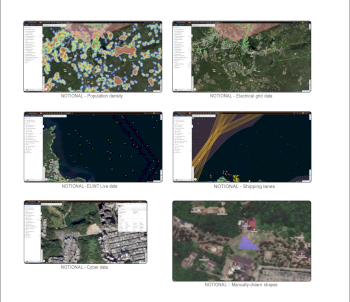
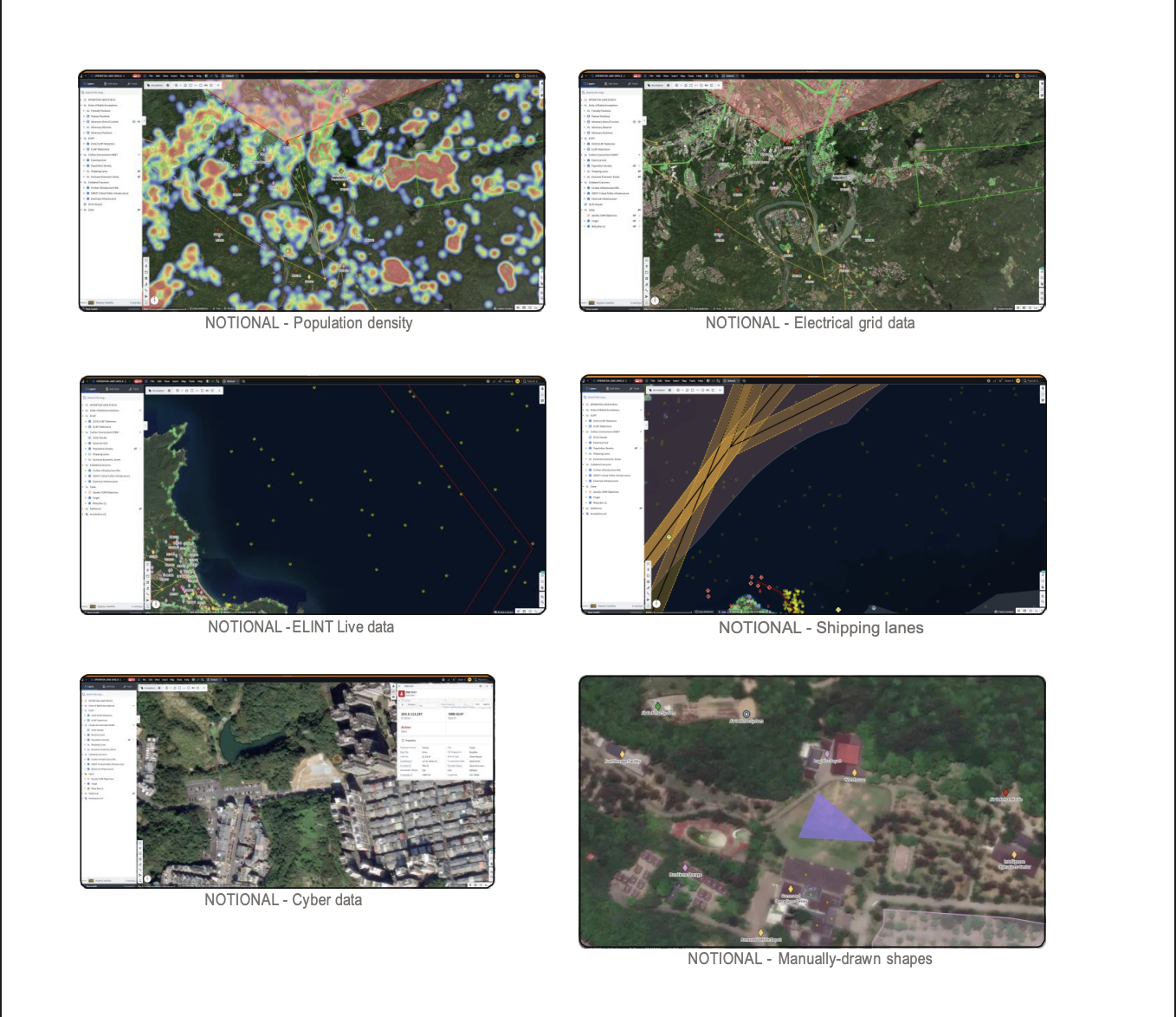
A key piece of the pitch outlines the new capabilities of Gaia, the geospatial interface which sits inside Palantir’s broader AI-enabled Maven Smart System. The company says that within Gaia, users can introduce a variety of data layers—including open-source intelligence about civilian infrastructure, assessments about the accuracy of its data, civilian “no strike” targets like schools and hospitals—while retaining a log of actions taken across the entire system, in order to prevent civilian harms, ensure compliance with the rules governing war, and make retroactive investigations of incidents easier. The document even pitches a custom workflow for integrating legal reviews into military targeting decisions. Palantir describes the service as a way to help military operators comply with international humanitarian law.
These features in the product appear to address some of the key flaws that contributed to one of the deadliest civilian casualty incidents in recent U.S. military history. In February, during the opening phase of the war with Iran, U.S. Tomahawk missiles intended to target an Iranian military installation instead hit an elementary school in the city of Minab, killing more than 150 civilians, including more than 100 children. Palantir’s technology was used in the U.S. strike, which was later mired in controversy. President Trump denied responsibility, while internal investigators found evidence to the contrary. A UN fact-finding mission said it found “reasonable grounds” to believe the U.S. had committed a war crime.
Palantir’s government contracts—including a $10 billion software deal with the Defense Department, and its use by U.S. Immigration and Customs Enforcement in the Trump Administration’s massive deportation effort—have made it a frequent target of critics. The white paper outlining its product comes as experts expect the company to face new levels of scrutiny under a Democratic Congress. Dozens of Democratic lawmakers pressed earlier this year for hearings to investigate Palantir’s collection of Americans’ personal data amid allegations of mass surveillance, which Palantir denies. The company recently hired Jon Tester, a former Democratic senator from Montana, as an adviser.
Experts on international law and armed conflict were critical of Palantir’s new pitch. The features in the white paper highlight technical fixes that could have averted the catastrophic loss of civilian life in the Minab strike, for which Palantir denies direct responsibility. Additionally, the lack of independent oversight of the company’s software and its deployment also make it difficult to assess the efficacy of Palantir’s new claims.
"If Palantir understands the targeting process, all of the policy for civilian harm mitigation, and the legal requirements, why wasn't their targeting software already equipped with robust capabilities for civilian environment characterization?” says Wes Bryant, the Pentagon’s former chief of civilian harm assessments, who reviewed the white paper.
The quiet release of the document may reflect the reality of a newly divided Washington. The Democrat-led Congress is expected to step up scrutiny of the U.S. military and private contractors like Palantir amid calls for greater transparency and oversight in the deployment of AI technology. The paper also anticipates the possibility that technology companies whose tools are used by the military may bear more responsibility for any harm borne by civilians.
“It sounds like the measures that Palantir plans to take will actually bring Palantir closer to the point of attack,” says Adil Haque, a law professor at Rutgers University, “not only generating a list of targets that the U.S. military must then verify prior to attack, but becoming more integrated into the targeting process itself.”
Palantir did not respond to multiple requests for comment for this story.
Palantir says that while governments hold the “ultimate” responsibility for the military decision-making its products assist, the company shares a responsibility to mitigate civilian harm. In the case of the Minab strike, independent experts say, both the state and the software appear to bear some of the blame.
The catastrophic failure of the strike conducted by the U.S. military on Feb. 28, which used Palantir technology, was meant to hit an Iranian Revolutionary Guard (IRGC) naval complex. Instead missiles struck the Shajareh Tayyebeh Primary School next door, which was in session at the time. While military structures are lawful targets, the nearby school was clearly visible in satellite imagery that had been publicly available for at least half a decade.

The UN’s investigation concluded that “the building of the school was the intended point of impact and that the damage did not result from an errant strike or collateral damage from the attack on the adjacent Islamic Revolutionary Guard Corps complex.” It also added that it had twice requested information from the U.S. about the strike, but had yet to receive a response.
The catastrophic targeting error appeared to stem from stale data. A former Department of Defense official with knowledge of the situation, who spoke on condition of anonymity to avoid retaliation, tells TIME the Pentagon has failed to routinely update military target lists. The former official alleges systemic problems in the way the U.S. military aggregates data and intelligence. “We have so many different systems. They don't seamlessly interoperate together,” says the official, who was doubtful about Palantir’s ability to modernize the system, but added that if the company can deliver, it would be “a good thing.”
Bryant, who was a senior adviser to the civilian protection center within the Pentagon, says no-strike lists used by the Department of Defense were often out of date. “Along with many other failures in the targeting process, this is why I fundamentally bring it back to the chains of command,” he says. U.S. joint targeting doctrine mandates commands to maintain updated no-strike lists for compliance with the rules of engagement under international law.
The Pentagon has said that it is reviewing the Minab strike and the circumstances surrounding it. Bloomberg reported recently that advisers to Defense Secretary Pete Hegseth wanted to withhold the outcome of the investigation until after the midterms.
The Department of Defense declined to comment on their ongoing investigation. “The Department of War remains committed to the rigorous verification of all intelligence inputs and the responsible integration of emerging technologies to support our service members in making informed, precise, and safe decisions in any operational environment," an official said in a statement to TIME.
Palantir’s Maven Smart System has been a core part of U.S. military targeting during the Iran war. Gaia sits within it, although this white paper makes no direct mention of Maven. The system ingests data from multiple streams and provides an interface to manage military operations. According to reports, U.S. Central Command personnel had an unfounded expectation that Maven would automatically evaluate the health of the data steering strikes. A spokesperson for Palantir told Bloomberg that the company “is not responsible for the underlying data nor identifying intelligence deficiencies” and that there’s no evidence its software was at fault in the Minab strike. (Palantir representatives did not respond to a list of questions from TIME about the incident.)
“Within Maven, they had the tools, if they wanted, to insert civilian environment information and overlays, and it could have been the system that actually prevented this from happening in lieu of all of these human failures,” says Bryant, who advised on initial efforts to develop this with Palantir in his former role at the Pentagon.
The features the new document pitches map to failures that led to the Minab strike. They include OSINT integration, which was used by journalists to confirm the impact of the strike; checks on data latency; and expiry dates triggering reassessment of intelligence, which could have prevented the strike in the first place, according to experts.
Crucially, the newly pitched Palantir features do not appear to include a system for logging and investigating civilian harm allegations after a strike —“a glaring gap” in civilian harm mitigation, according to Emily Tripp, executive director of Airwars, a charity that tracks civilian harm.
Jessica Dorsey, a former expert member of the Global Commission on Responsible AI in the Military Domain, an initiative of the Dutch government, said she was also concerned that legal reviews conducted the way Palantir describes could become “a sort of pro-forma box-ticking exercise” instead of the substantive assessments they’re required to be.
“There is a real risk that the aim of data integration and the concept of reliable intelligence become confused,” Dorsey says. If Palantir knows its systems are used in targeting, she added, it “should be conducting adequate human rights and risk due diligence assessments and acting on foreseeable risks rather than just marketing a technical fix after the fact.”