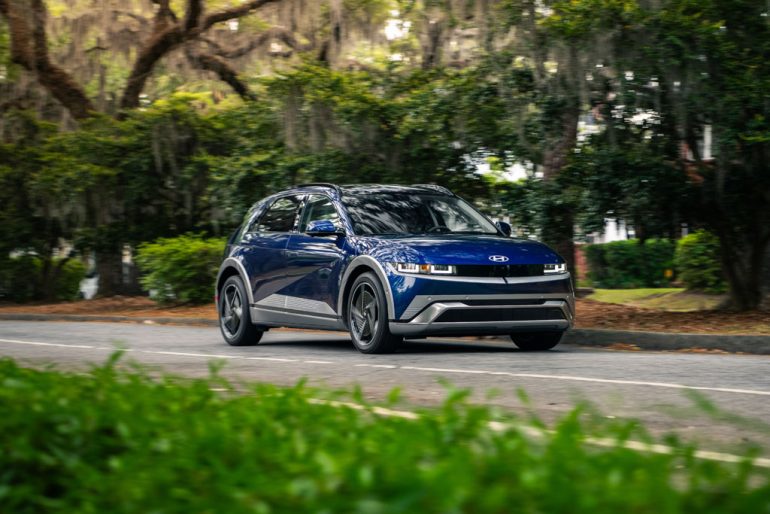
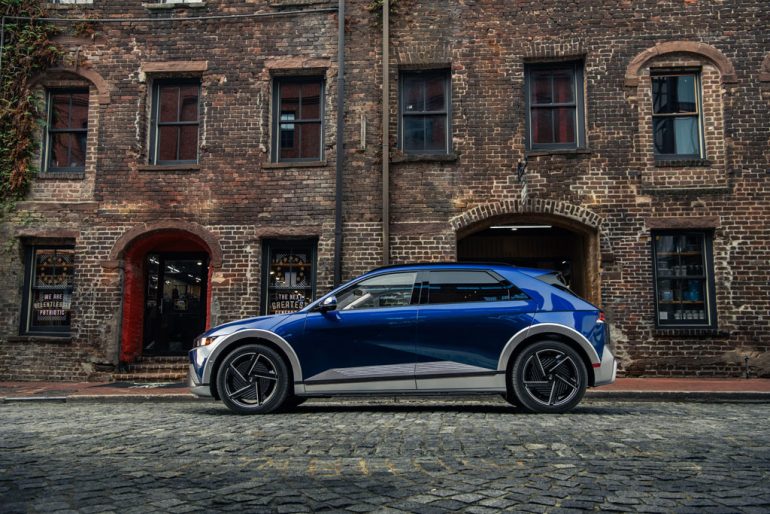
The 2027 Hyundai Ioniq 5 is a carryover model with modest updates to equipment content and color availability, continuing as one of the most competitively priced long-range electric crossovers in its class. The lineup spans nine configurations across two battery sizes, two drivetrains, and five trim levels — SE Standard Range, SE, SEL, XRT, and Limited — with MSRP running from $35,250 to $49,125 pre-destination. All extended-range configurations use the 84 kWh battery; the entry SE Standard Range uses a 63 kWh pack. Drivetrain choices are rear-wheel drive (RWD) on SE Standard Range, SE, SEL, and Limited, and dual-motor all-wheel drive (AWD) on SE, SEL, XRT, and Limited. The Ioniq 5 N performance variant (approximately $60,000, 601 hp) is not covered here and is reviewed separately. This guide covers invoice prices for all standard 2027 Ioniq 5 configurations, what each trim delivers, and how to negotiate effectively at a Hyundai dealer.
The federal $7,500 clean vehicle tax credit that previously applied to qualifying electric vehicle purchases was eliminated by the One Big Beautiful Bill Act, signed into law on July 4, 2025, and effective for vehicle purchases made after September 30, 2025. The 2027 Hyundai Ioniq 5 does not qualify for any federal EV tax credit. Buyers who purchased a qualifying Ioniq 5 before October 1, 2025 were eligible for a credit of up to $7,500; buyers purchasing a 2027 model today are not. Some states offer independent EV incentives — check your state’s current programs, as availability and amounts vary significantly.
This is a material change to the Ioniq 5’s total cost of ownership calculation. Hyundai anticipated the credit’s elimination by cutting 2026 Ioniq 5 prices by up to $9,155 across the lineup, resetting the base MSRP from the mid-$40,000s to the low-to-mid $30,000s. The 2027 pricing holds largely at that reset level, with modest increases of $250 to $400 depending on trim. The absence of the federal credit is priced in to the current MSRP structure; the vehicle’s value case stands on its own at current prices.
The table below shows MSRP alongside dealer invoice prices for all nine 2027 Ioniq 5 configurations. Prices are pre-destination. Hyundai’s destination and delivery charge on the 2027 Ioniq 5 is $1,600.
| Trim | Drivetrain | Battery | Range | MSRP | Dealer Invoice | Dealer Margin |
|---|---|---|---|---|---|---|
| SE Standard Range | RWD | 63 kWh | 245 mi | $35,250 | $34,898 | $352 |
| SE | RWD | 84 kWh | 318 mi | $37,750 | $37,373 | $377 |
| SE | AWD | 84 kWh | 290 mi | $41,250 | $40,838 | $412 |
| SEL | RWD | 84 kWh | 318 mi | $40,200 | $39,798 | $402 |
| SEL | AWD | 84 kWh | 290 mi | $43,700 | $43,263 | $437 |
| XRT | AWD | 84 kWh | 259 mi | $46,525 | $46,060 | $465 |
| XRT w/Tow Hitch | AWD | 84 kWh | 259 mi | $46,975 | $46,505 | $470 |
| Limited | RWD | 84 kWh | 318 mi | $45,225 | $44,773 | $452 |
| Limited | AWD | 84 kWh | 269 mi | $49,125 | $48,634 | $491 |
Dealer margins on the Ioniq 5 are thin — roughly 1 percent of MSRP across the lineup. Front-end margins run from $352 on the base SE Standard Range to $491 on the Limited AWD. These are real figures, not placeholders: Hyundai operates with a narrower front-end dealer margin structure than most European luxury brands and many domestic competitors. The Ioniq 5’s negotiating dynamics reflect that reality. Holdback adds a further cushion — Hyundai typically pays dealers a quarterly holdback of approximately 2 to 3 percent of base MSRP — but on a $35,000 to $49,000 vehicle, that holdback represents $700 to $1,470, not the thousands of dollars of room present in luxury segments. Buyers should calibrate their expectations accordingly: invoice-to-sticker gap on the Ioniq 5 is not the primary negotiating lever it is on a BMW or Mercedes-Benz.
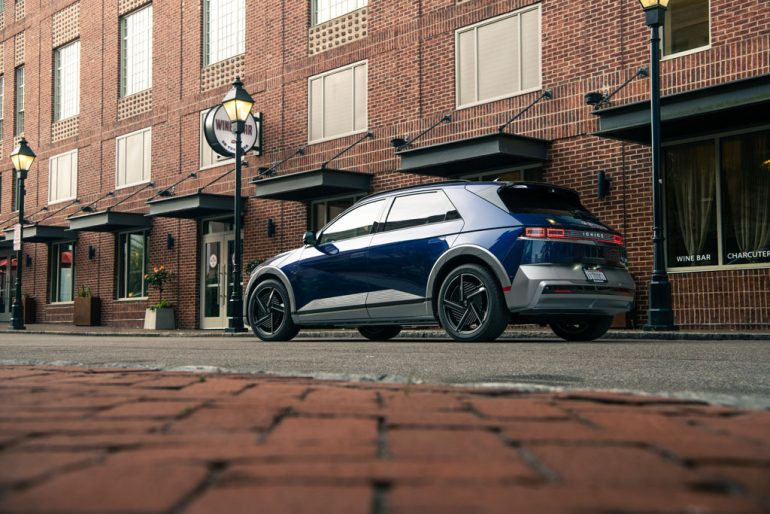
The Ioniq 5’s 800-volt electrical architecture is one of its most important real-world advantages and worth understanding before purchase. Most EVs in this price range use 400-volt systems that cap DC fast charging at 50 to 150 kW. The Ioniq 5’s 800V architecture supports charging at up to 350 kW at compatible ultra-fast stations, which dramatically shortens road-trip stops.
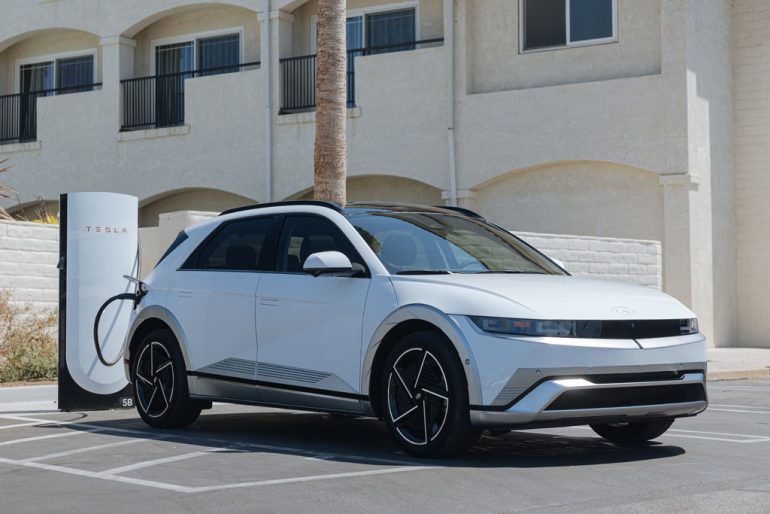
Practical charging benchmarks on the 84 kWh extended-range models: at a 350 kW ultra-fast charger (10 to 80 percent), approximately 20 minutes; at a 150 kW NACS charger such as a Tesla Supercharger (10 to 80 percent), approximately 30 minutes; at a 50 kW DC station via the included CCS adapter (10 to 80 percent), approximately 81 minutes. The 15-minute charge at an ultra-fast station adds approximately 178 miles of range on the RWD 84 kWh models — a figure that meaningfully changes road-trip calculus compared with 400V competitors at the same price point.
All 2027 Ioniq 5 configurations use a NACS (Tesla-style) charge port as standard, providing direct access to Tesla’s Supercharger network. A CCS adapter is included for compatibility with non-Tesla DC fast chargers. Level 2 AC charging (240V home charger) brings the 84 kWh models from 10 to 100 percent in approximately 7 hours 20 minutes; the 63 kWh SE Standard Range completes the same range in approximately 5 hours 40 minutes.
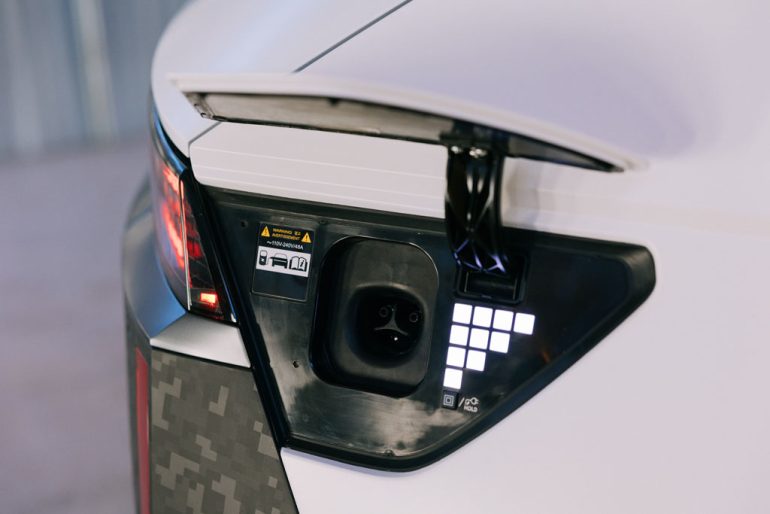
Vehicle-to-load (V2L) capability is standard across the lineup, providing up to 3.6 kW of power from the vehicle’s battery through a standard household outlet adapter. This enables powering camping equipment, jobsite tools, or household devices during outages.
The SE Standard Range uses a 63 kWh battery with a single rear motor producing 168 horsepower and 258 lb-ft of torque. EPA range is 245 miles. Zero to 60 mph takes approximately 8.5 seconds. At $35,250 MSRP and $34,898 dealer invoice, it is the entry point to Ioniq 5 ownership and the most affordable path to the 800V charging architecture and NACS port. The SE Standard Range makes sense for buyers with reliable home charging whose typical daily driving falls comfortably within 200 miles — the 245-mile range provides adequate buffer for most commuting patterns while keeping the acquisition price as low as possible in the lineup. For buyers who do regular long trips or whose home charging access is unreliable, the step to the 84 kWh SE RWD at $37,750 adds 73 miles of range for a $2,500 MSRP premium.
All other configurations use the 84 kWh battery. The RWD single-motor configuration produces 225 horsepower and 258 lb-ft of torque with 318 miles of EPA range. The AWD dual-motor configuration produces 320 horsepower and 446 lb-ft of torque. AWD range is 290 miles on SE and SEL, 269 miles on Limited AWD, and 259 miles on the XRT — the XRT’s lower range reflects its larger off-road-influenced tires. Zero to 60 mph takes approximately 5.1 seconds in AWD configuration, versus 7.4 seconds RWD on the 84 kWh SE.
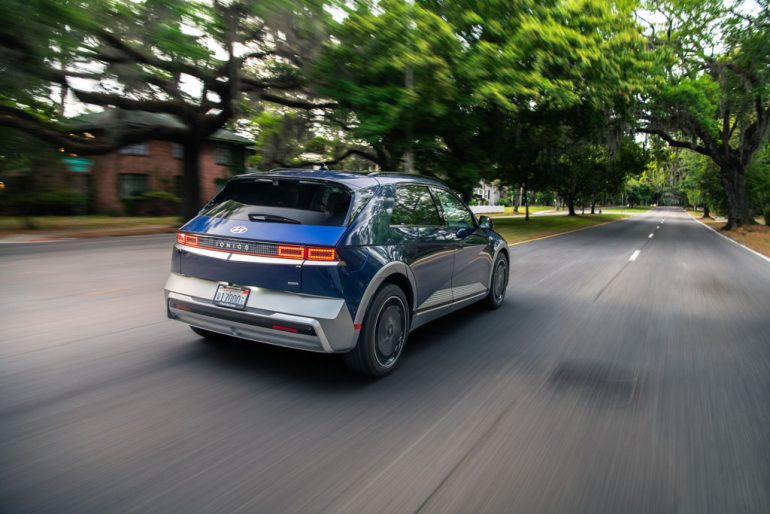
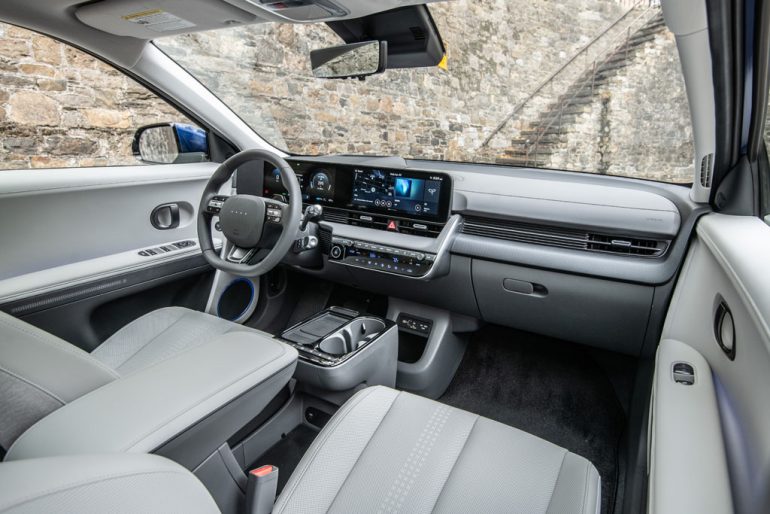
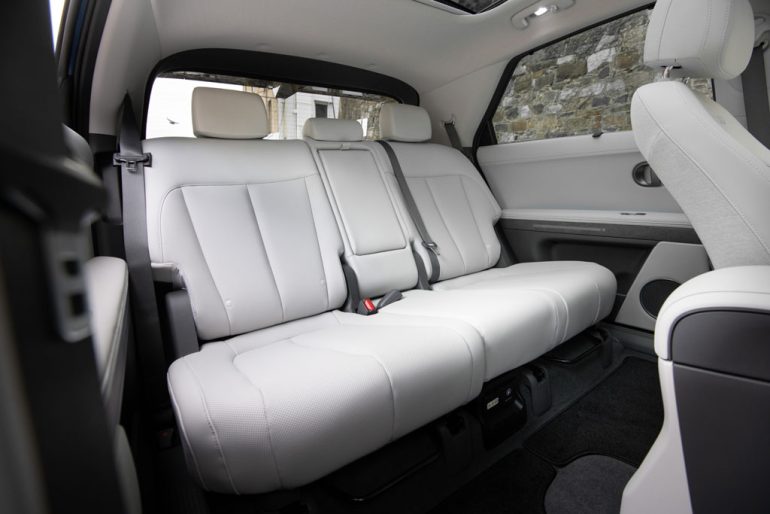
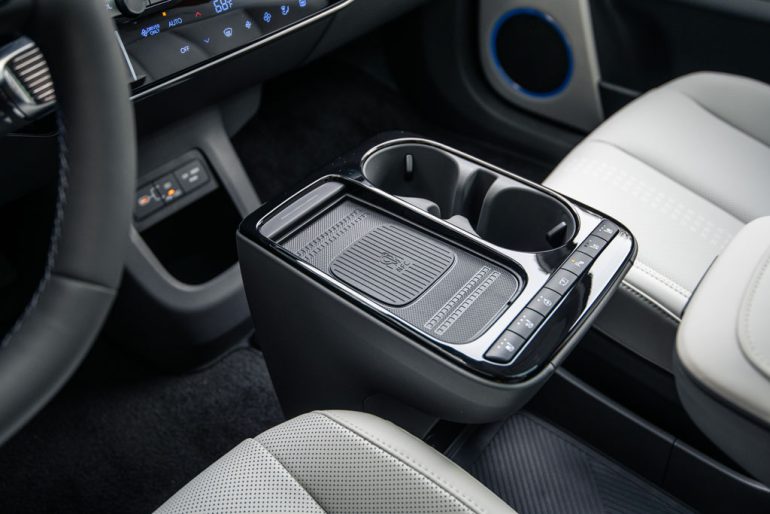
Standard across all 2027 Ioniq 5 configurations: a 12.3-inch digital instrument cluster, a 12.3-inch infotainment touchscreen, wireless Apple CarPlay and Android Auto, over-the-air software update capability, Hyundai’s BlueLink connected car system, Vehicle-to-Load (V2L) power export, a one-pedal driving mode, forward collision avoidance with pedestrian and cyclist detection, lane keeping assist, blind-spot collision warning, rear cross-traffic alert, driver attention warning, highway driving assist, a rear-view camera, an 8-way power driver’s seat, heated front seats, a heated steering wheel, a power liftgate, and a flat-floor interior with a sliding center console.
The SE Standard Range and SE trims are the entry configurations. The SE adds wireless phone charging over the SE Standard Range. Both ride on 19-inch alloy wheels. The SE’s fabric seating and minimal content focus the transaction on range and technology access rather than comfort upgrades. Buyers for whom invoice price and range per dollar are the primary considerations will find both SE trims well-suited to that priority.
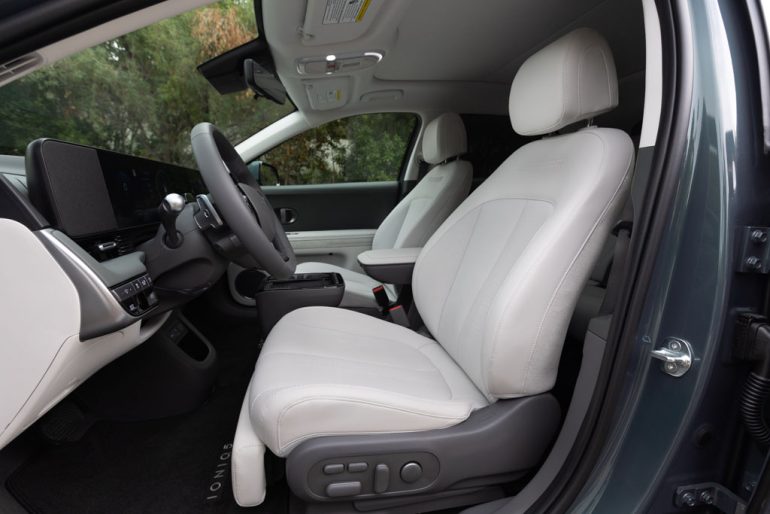
The SEL is the volume trim and the first step into genuinely comfortable daily-use equipment. Standard additions over the SE include leather-appointed seating, a panoramic sunroof, ventilated front seats, an 8-speaker Bose premium audio system, memory driver’s seat settings, roof rails (newly standard for 2027 on SEL and above), and a surround-view monitor. The SEL represents the best balance of price and content in the lineup for buyers who want the comfort upgrades that make a daily driver genuinely pleasant to live with. At a $39,798 estimated invoice for RWD or $43,263 for AWD, the SEL is the configuration most buyers researching the Ioniq 5 should start from.
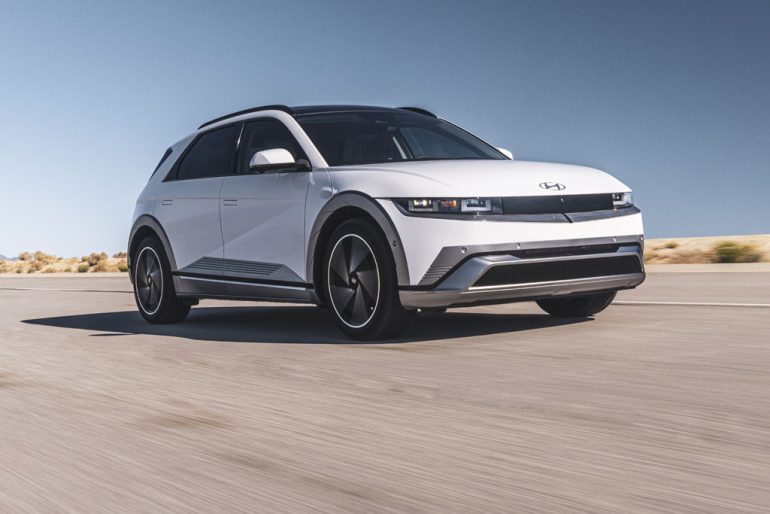
The XRT is an AWD-only off-road-influenced trim with distinctive styling and a tow hitch option. Standard additions over the SEL include a unique exterior package with black cladding, underbody protection, rugged-appearance 20-inch wheels designed for mixed terrain, XRT-specific interior trim, and a standard roof rack. The XRT with Tow Hitch adds a factory-installed hitch for $450 over the base XRT. Towing capacity with the factory hitch is 2,000 pounds. The XRT is for buyers who want a more rugged appearance and the towing option; the range penalty from the larger tires (259 miles versus 290 on the SEL AWD) is the trade-off. At a $46,060 invoice on the base XRT versus $43,263 on the SEL AWD, the $2,797 premium over the SEL AWD buys primarily the visual and styling differentiation.
The Limited is the top configuration. Standard additions over the SEL include a 77-watt wireless charging pad, a digital side mirror system (replacing conventional mirrors with cameras feeding displays inside the A-pillars), 20-inch alloy wheels, Hyundai HomeLink garage door integration (newly exclusive to Limited for 2027, moved down from SEL), and a head-up display. The Limited RWD at $44,773 invoice is the range-maximizing choice for buyers who want the full feature set without the AWD premium; the Limited AWD at $48,634 invoice is the top specification available in the standard Ioniq 5 lineup. The digital side mirror camera system is a distinctive technology feature — it takes brief adjustment but provides better visibility in adverse weather and low light than conventional mirrors once acclimated.
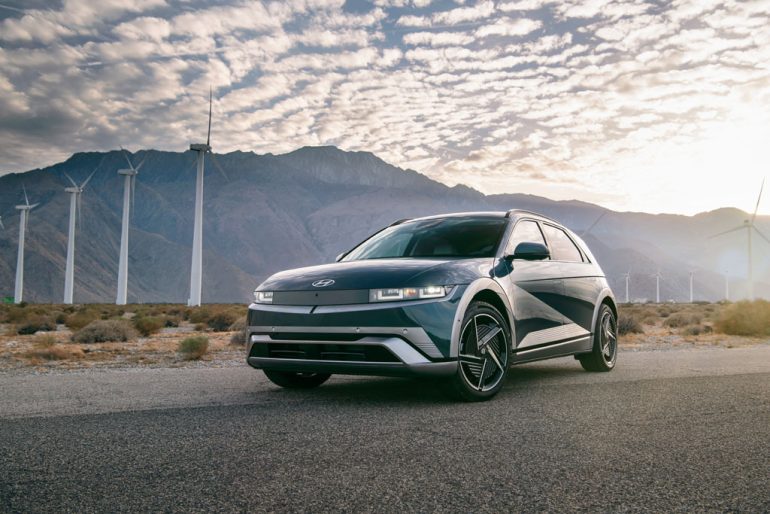
The drivetrain decision in the Ioniq 5 carries a consistent $3,500 MSRP premium ($3,465 at estimated invoice) for SE and SEL configurations, adding 95 horsepower and 188 lb-ft of torque while reducing EPA range by 28 miles (318 miles RWD versus 290 miles AWD on SE and SEL). That trade-off is straightforward: buyers in cold-weather climates where winter traction is a real consideration, or who want the 320-hp AWD’s 5.1-second 0-60 mph performance, have clear reasons to choose AWD. Buyers in mild climates whose daily driving doesn’t demand it will find the RWD configuration’s 318-mile range, lower acquisition price, and slightly better efficiency the stronger everyday case.
The Limited AWD’s 269-mile range reflects some real-world efficiency loss from the dual-motor system at the top of the trim stack; buyers specifically cross-shopping Limited RWD (318 mi, $44,773 invoice) and Limited AWD (269 mi, $48,634 invoice) are trading 49 miles of range and $3,861 at invoice for the AWD’s traction and performance. That is a buyer-specific calculation worth making explicitly rather than defaulting to AWD as the premium choice.
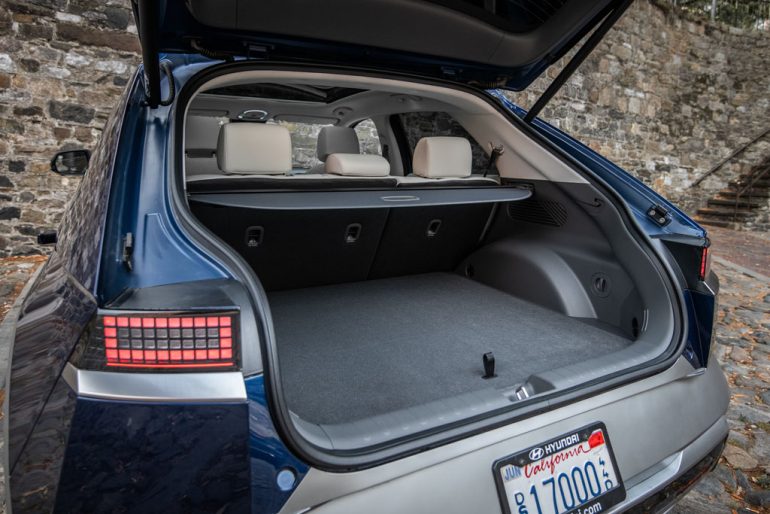
The 2027 Ioniq 5 is a carryover model with four changes over the 2026 lineup. Roof rails are now standard on the SEL trim and above, previously requiring an accessory purchase on SEL. Hyundai HomeLink garage door integration moves to Limited-exclusive status, removed from the SEL’s standard content. The cargo cover transitions from standard equipment to an accessory purchase across the lineup. Gravity Gold Matte and Sage Silver Matte exterior colors are discontinued. Pricing increased modestly: $250 on the SE Standard Range, SE, and XRT; $400 on the SEL RWD; $150 on the Limited. Powertrain, range, charging architecture, and technology content are unchanged from 2026.
The 2027 Hyundai Ioniq 5 carries a 5-year/60,000-mile bumper-to-bumper warranty, a 10-year/100,000-mile powertrain warranty, and a 10-year/100,000-mile high-voltage battery warranty. Roadside assistance is provided for 5 years with no mileage limitation. The 10-year powertrain and battery coverage is among the longest in any segment and a meaningful differentiator against competitors whose battery warranties run 8 years or fewer. For buyers planning to hold the Ioniq 5 for 8 to 10 years, the warranty coverage substantially reduces the financial risk of battery degradation or powertrain issues during that ownership window.
The Ioniq 5’s thin front-end margins change the negotiating approach versus a vehicle with $3,000 to $7,000 of invoice-to-MSRP room. With $352 to $491 of front-end margin, arriving at invoice-level pricing is a realistic baseline rather than an aggressive ask — it essentially means asking the dealer to absorb holdback as the profit center, which is exactly how volume-driven Hyundai dealers operate on competitive EV inventory. The question is not whether to negotiate but how to structure the approach given the constrained front-end numbers.
Factory incentives matter more on the Ioniq 5 than on most vehicles in its category. Hyundai has been aggressive with lease subsidies, conquest bonus cash for buyers coming from certain competitors, and regional incentive programs that change quarterly. Check Hyundai’s current national offers and ask the dealer specifically what factory programs are running on the Ioniq 5 before you negotiate the vehicle price — a $500 to $1,500 factory incentive can materially improve the transaction on a vehicle where dealer margin is structurally limited.
Email negotiation across multiple dealers remains effective. Sending identical trim and configuration requests to two or three Hyundai dealers in your area lets you establish a price floor before visiting in person. On a vehicle where the invoice-to-MSRP gap is $352 to $491, the difference between dealers often comes down to which dealer is willing to pass through the most factory incentive or absorb less of the add-on products (paint protection, fabric protection, tire-and-wheel plans) that make up margin on thin-front-end vehicles.
Watch the finance and insurance office carefully. Dealers selling thin-margin vehicles compensate with F&I product sales: extended warranties, prepaid maintenance, GAP insurance, appearance protection packages, and tire-and-wheel plans are commonly presented in bundled packages at Hyundai dealers. Hyundai’s 10-year/100,000-mile powertrain and battery warranty substantially reduces the value of extended service contracts during the initial ownership window — evaluate each F&I product independently against its specific asking price, and decide in advance what, if anything, you want before you sit down.
The competitive context strengthens buyer leverage. At $35,250 to $49,125 MSRP, the 2027 Ioniq 5 competes directly with the Chevrolet Equinox EV, Ford Mustang Mach-E, Volkswagen ID.4, and Tesla Model Y. Cross-shopping those alternatives and presenting a competing offer — a Model Y quote at comparable content, for instance — gives a Hyundai dealer a reason to sharpen the total out-the-door price in ways that in-person negotiation without competing offers does not. The Ioniq 5’s 800V charging architecture, 10-year battery warranty, and V2L capability are genuine differentiators worth weighing in that comparison, but the existence of competitive alternatives at overlapping price points is the buyer’s leverage.