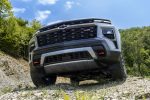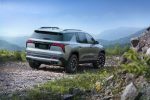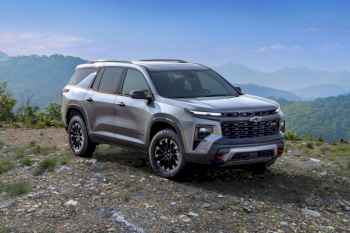
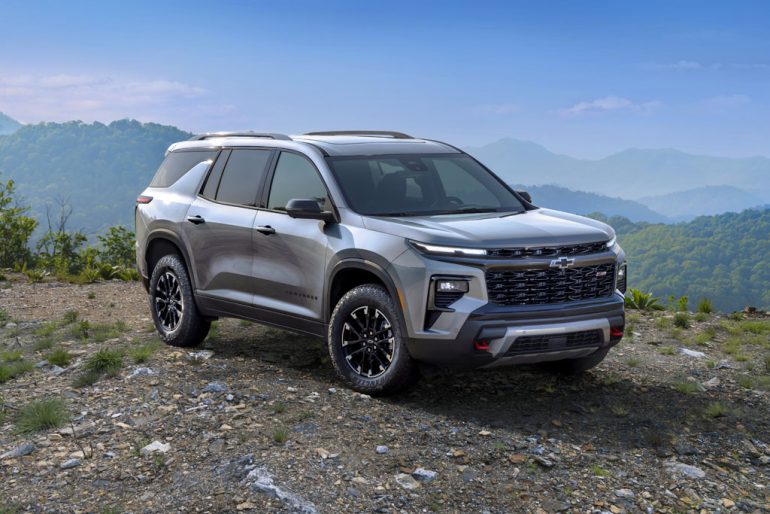
The Chevrolet Traverse has long been an easy choice for families who need three usable rows but don’t necessarily want to move up to the larger Chevy Tahoe or other body-on-frame SUVs. Chevrolet gave the Traverse a more truck-like look in its 2024 redesign, and the Z71 went a little further with all-terrain tires and some extra ground clearance. Having driven the 2024 Traverse Z71 a few years ago, I came away from my time in the 2027 model with much the same impression. The same formula remains – when the pavement ends, there’s a little extra to appease you in having some extra off-roading hardware, but apart from an engine that makes itself heard more often than I’d like.
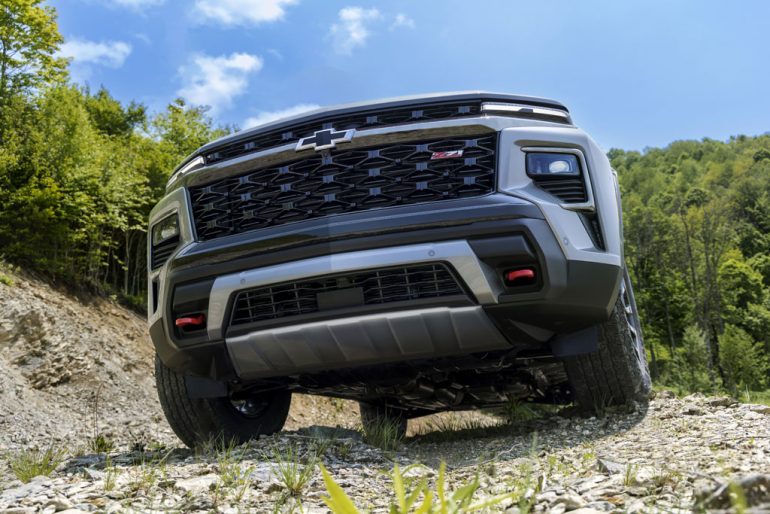
There hasn’t been much change to the Traverse since that redesign. Chevrolet dropped the base LS trim for 2025 and offered the top-level High Country trim, leaving the LT trim as the starting point. The Z71 still looks the part with its upright front end and a little more tire under it than the other trims. Park one next to a Tahoe and you’re reminded that the Traverse isn’t exactly small, either. It’s less than a foot shorter, and you get some of that space back where it matters, particularly in the third row.
The 2027 Chevrolet Traverse continues its path with its 2.5-liter turbocharged four-cylinder and eight-speed automatic transmission. With 328 horsepower and 326 pound-feet of torque, it makes more power than the old V6. I don’t miss the V6 for what it did in being a predictable powertrain, but I do miss the way it sounded when you put it against the current turbo 4-cylinder. The turbo four has a coarse buzz that finds its way into the cabin under acceleration, even when you’re not asking all that much of it. Such a characteristic is my number one issue with the new Traverse, which partly takes away from any refinement it has.
There’s still a split-second hesitation when you first get into the throttle from a stop. Once the turbo spools up, the Traverse moves out well enough, and there’s plenty left when you need to pass on a two-lane road. Getting to 60 mph takes about seven seconds, which is respectable for a crossover of this size. It’s that first bit of throttle response, more than the power itself, that makes the Traverse feel a little slower than the numbers suggest. Otherwise, power is respectable out on the road even when you load up the Traverse with a driver, six passengers, and a bit of cargo.
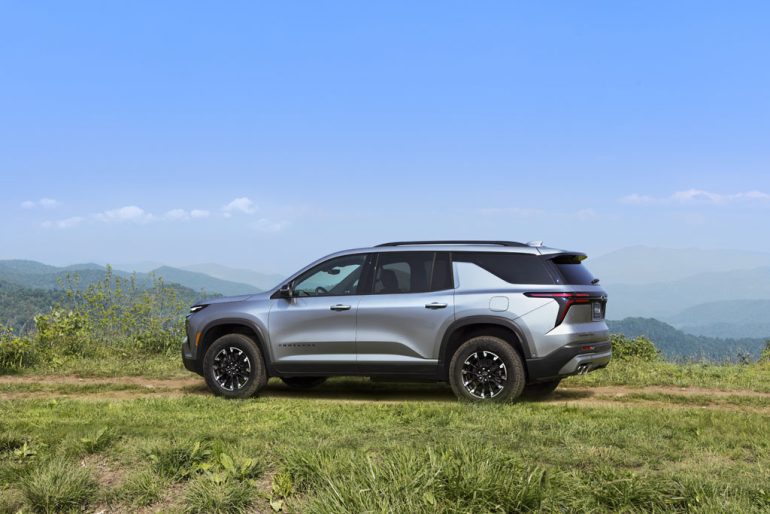
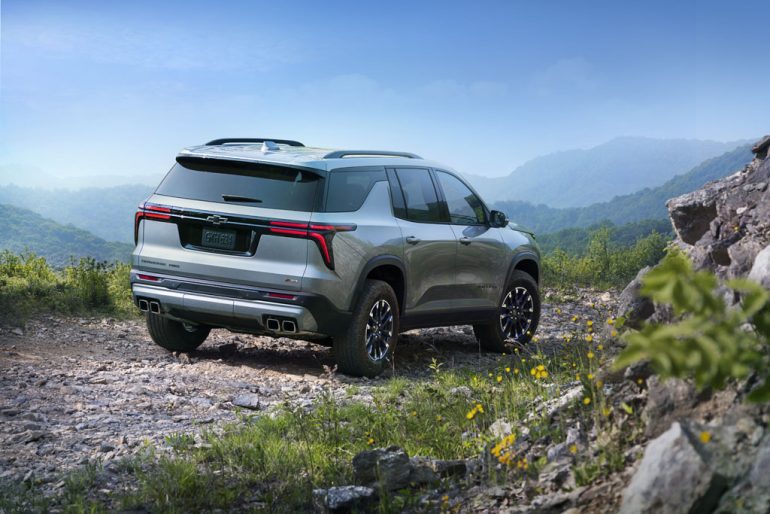
The Z71 trim gets 18-inch wheels wrapped in all-terrain tires, a raised suspension, and a twin-clutch all-wheel-drive system. The extra ride height doesn’t seem to take away from how settled it feels on the road. The steering is another matter. It’s light off-center and has more play than I’d prefer. I also found that the front tires could slip when I got back on the throttle coming out of a turn on wet and dry pavement. Often enough, it’s a little unsettling given how planted the Traverse feels the rest of the time.
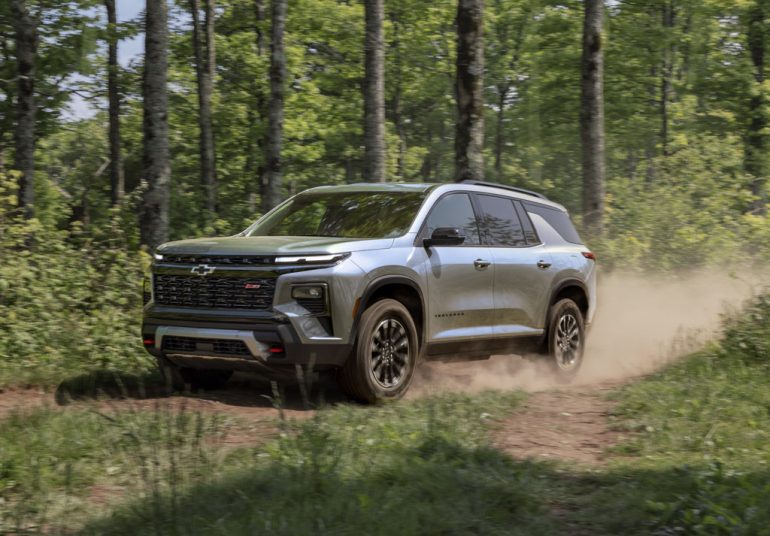
I wouldn’t buy the Z71 expecting it to be a serious off-roader, but the extra clearance and somewhat knobby tires are useful on a rutted road or a loose surface. For the sort of light off-roading most Traverse owners are likely to do, that’s probably enough.
The EPA rates the 2027 Traverse Z71 AWD at 20 mpg city, 24 mpg highway, and 21 mpg combined. Those figures are about what I saw during everyday driving when obeying the speed limit. A front-wheel-drive Traverse gets up to 26 mpg on the highway, so there’s a little to give up for the Z71’s hardware. The turbo four does reasonably well for a vehicle this size, though fuel economy alone may not have everyone trading out of an older V6 Traverse.
The Traverse makes good use of its size inside. The dash is mostly composed of a 17.7-inch touchscreen, with an 11-inch digital gauge cluster in front of the driver. I like that the cluster gives you a few useful layouts, including a map view and a simpler display. Getting certain information where you want it is more involved than it should be, though. In one layout, you first have to bring up what you want on the center screen before you can move it over to the left side of the cluster.
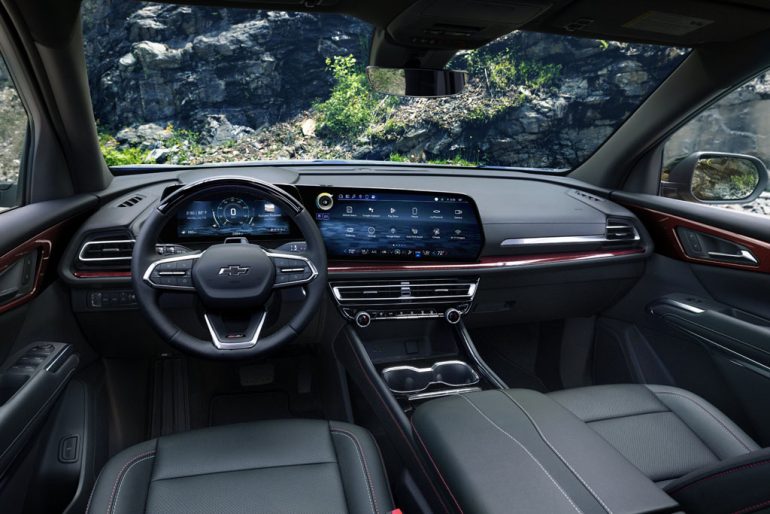
Chevrolet kept some limited physical climate controls below the screen and a proper volume knob, both of which I appreciate. You can also adjust the climate through the screen, but I’d rather reach for a button without having to look down. The shortcuts for the headlights, available surround-view cameras, and lane-keep assist are easy enough to get to, though I’d still take a separate headlight switch. Overall, the infotainment system is simple enough for most and packed full of desirable features and functions, even if some of those controls, like the headlights, are embedded in the touchscreen but have quick-access on-screen buttons.
Wireless Apple CarPlay and Android Auto are both here, and the cooled wireless charging pad is in a convenient spot below the climate controls that worked without fault to charge up my iPhone and keep it reasonably cool in the process.
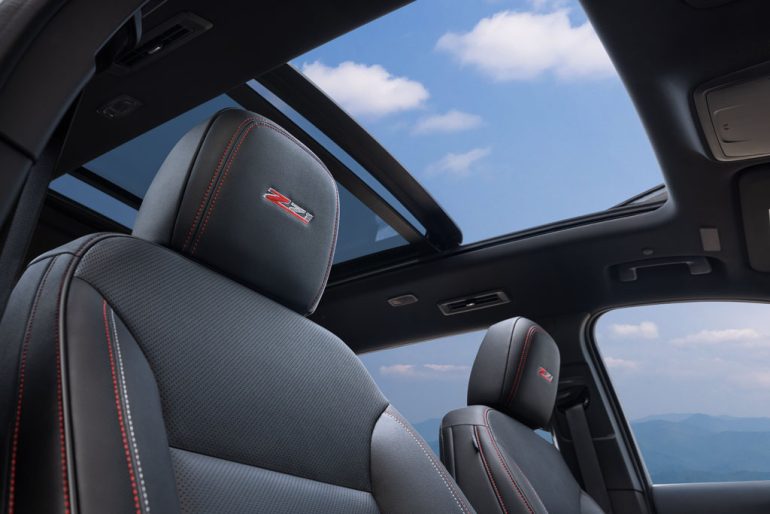
My Z71’s seven-passenger layout has sliding second-row captain’s chairs and comfortable heated front seats. The third row remains one of the better reasons to look at a Traverse. There’s enough room back there for adults, and the seat cushion is high enough that you don’t have to spend the whole ride with your knees up. The LT trim is the one to look at if you need eight seats, as it offers a second-row bench.
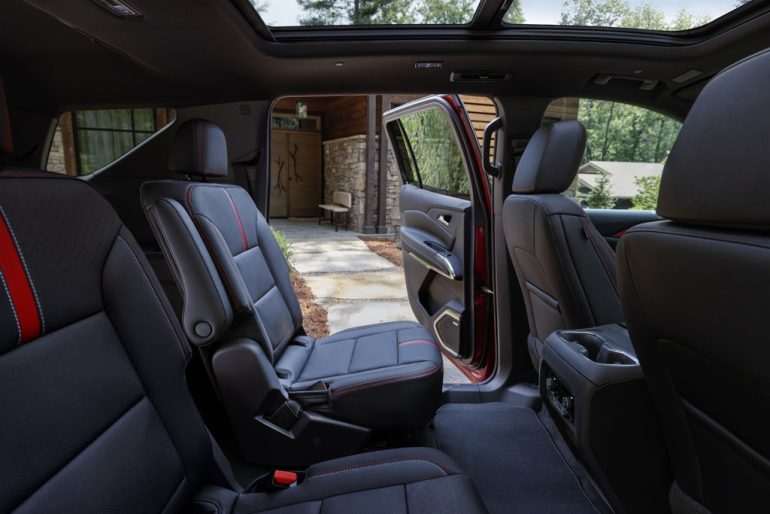
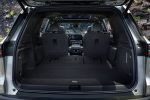
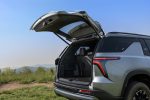
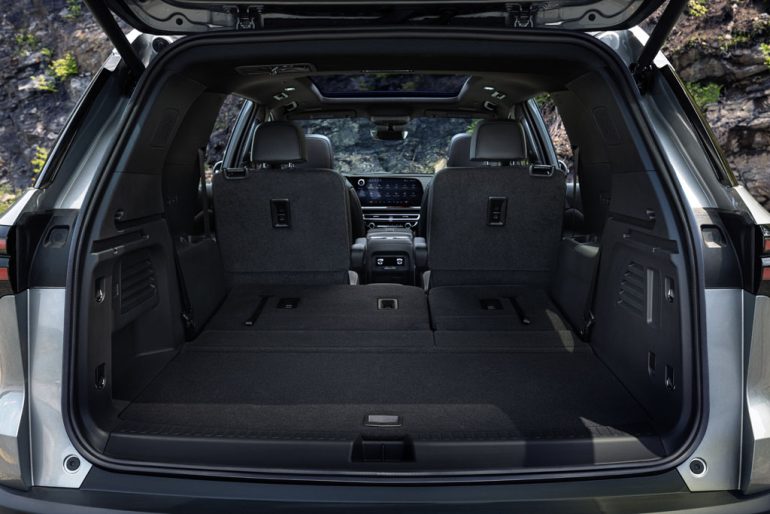
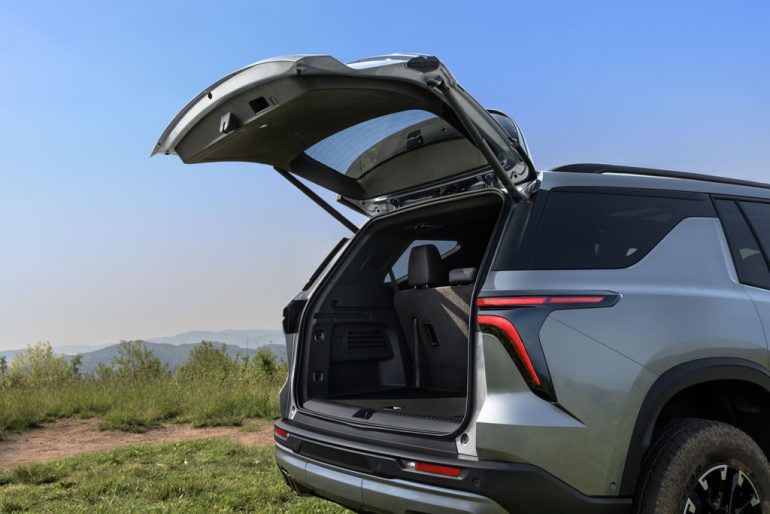
Cargo space is good even with the third row in use, and there’s a deep storage area under the floor. I ran into the same thing I did in the 2024 model when folding the third row. With the captain’s chairs slid back, the third-row seatbacks can catch on them before they fold flat. Moving the second row forward solves it, but it’s an extra step when you’re standing at the open liftgate trying to make room for something.
Super Cruise is available on the Z71, and it remains one of the better features to consider if you spend much time on the highway. On compatible roads, I found its automatic lane changes worked smoothly. I also noticed it leaves a little more room when passing a larger vehicle, which feels more natural than holding dead center in the lane the whole way by.
The Traverse offers the typical driver assists, including forward collision warning with automatic emergency braking, lane-keep assist, blind-zone monitoring, and rear cross-traffic braking. The available surround-view camera is especially useful in tight parking spaces. There’s also a Buckle to Drive setting that can keep you from shifting out of Park until the front occupants buckle up.
The 2027 Chevrolet Traverse Z71 AWD starts at $52,995 before destination and options, compared with $41,700 for a front-wheel-drive LT. Adding equipment like Super Cruise can push the price up quickly. If all you need is the room, the LT gives you much of what makes the Traverse worth looking at in the first place. My nicely equipped test vehicle hovers around $59,000 once you add in the options and destination charge.
For me, the Z71 is still the more interesting Traverse. The engine could stand to be quieter, and I’d like a little more connection and weight from the steering, but neither takes away from how well it works as a family vehicle. You get a third row adults can actually use, plenty of cargo room, and enough extra capability to tackle a rough road without turning the rest of your drive into a compromise.