
When a commercial truck jackknifes and damages an emergency vehicle, the trucking company’s insurer may be responsible for covering the resulting losses. However, liability is not always limited to the truck driver or carrier. A maintenance provider, cargo loader, or another motorist may also share responsibility, depending on what caused the crash.
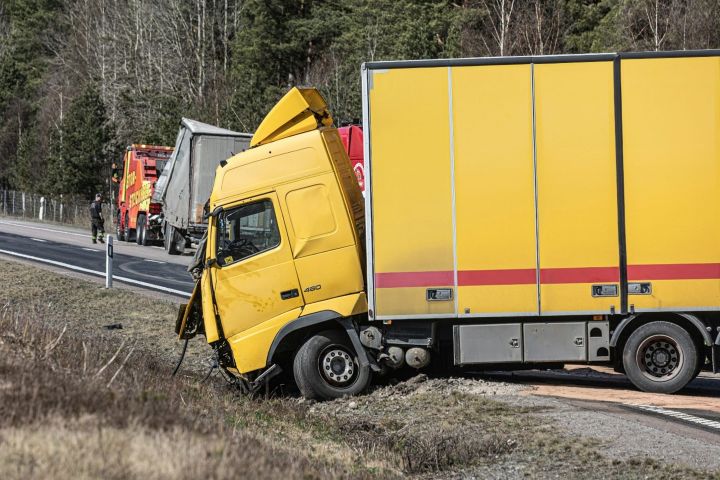
During these jackknife accidents, a trailer can swing across multiple lanes, striking nearby vehicles such as police cruisers, fire engines, or ambulances. Determining who is liable requires investigators to examine the circumstances leading up to the collision and identify the factors that contributed to the truck losing control.
A driver may be liable for speeding, distraction, fatigue, unsafe braking, or following too closely. An emergency maneuver does not automatically excuse unsafe driving.
A carrier may be responsible for an employee’s negligence while working. It may also face claims for negligent hiring, training, supervision, or maintenance.
A repair shop may share liability if careless brake, tire, steering, or coupling work contributed. Under 49 CFR § 396.3, motor carriers are responsible for regular inspection, repair, and maintenance of vehicles under their control, including work they arrange for others to perform.
Improperly balanced or secured cargo can affect trailer stability. Another motorist may share fault if their actions contributed to the collision.
Investigators examine police reports, electronic data, driver records, maintenance files, cargo documents, video, and witness accounts. State fault rules affect how responsibility is divided and whether an injured person’s recovery can be reduced or barred.
An emergency vehicle’s driver is not automatically at fault for being stopped at a scene. Its position and warning lights may be examined if they contributed. Claims against government agencies may have special immunity rules and notice deadlines.
The trucking company’s commercial auto insurer often pays covered injury and property claims when the driver or carrier is liable. Federal rules require certain carriers to maintain minimum financial responsibility.
Under 49 CFR § 387.9, the federal minimum is $750,000 for for-hire carriers transporting nonhazardous property in interstate or foreign commerce in vehicles with a gross vehicle weight rating of 10,001 pounds or more.
If a repair shop, loader, manufacturer, or another driver shares fault, its insurer may contribute. An injured responder may receive workers’ compensation or public-employee benefits.
The NTSB documented a crash near Ashdown, Arkansas. A tractor-semitrailer jackknifed on U.S. Route 71 and entered the oncoming lane, where it struck a police patrol car. All four officers in the patrol car were killed.
The NTSB cited the driver’s failure to maintain a safe following distance as the probable cause and improperly adjusted brakes on both the tractor and semitrailer as a contributing factor.
Proper documentation can help establish how a jackknifed truck caused damage to an emergency vehicle or injured an on-duty responder. It can also help identify the parties responsible and support subsequent insurance or legal claims.
Consider taking the following steps:
For more on the property-damage side of a claim, see Gauge Magazine’s guide to navigating the repair process after a crash.
The emergency agency may also need to notify its insurer or risk-management department about vehicle damage and employee injuries. Depending on the circumstances, an injured responder may have access to workers’ compensation benefits or a separate third-party claim. The available options depend on applicable laws, insurance coverage, and the facts of the collision.
Yes. It may be responsible for an employee’s conduct while working or its own negligent practices.
Yes, if careless repairs contributed to the collision and evidence supports a claim under state law.
Not necessarily. Payment depends on fault, insurance, and workers’ compensation.
The post Who Pays If a Jackknifed Truck Causes an Accident Involving an Emergency Vehicle? appeared first on Gauge Magazine.