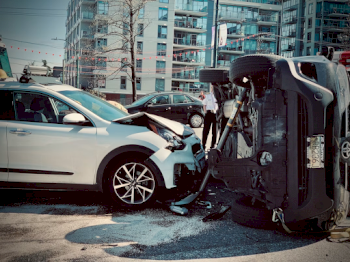

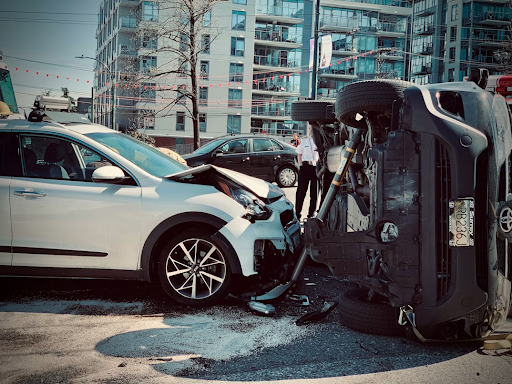
Determining fault in a two-car accident can be challenging, but determining liability after a multi-vehicle accident is even more complex. When three or more cars are involved, the situation can quickly become confusing and chaotic.
Unlike a straightforward two-vehicle collision, a multi-car crash can involve multiple points of impact, conflicting witness statements, and a complicated chain of events. In this article, we’ll break down what you need to know about liability in a multi-vehicle accident.
In a multi-vehicle accident, fault is assessed by examining what happened and how each driver contributed to the collision. Insurers, attorneys, and, if the case is litigated, a judge or jury may review witness statements, police reports, skid marks, vehicle damage, video footage, and other physical or electronic evidence.
A police report can document observations, statements, citations, and vehicle positions, but it does not by itself conclusively determine civil liability.
Your actions, along with those of the other drivers, may also be assessed to determine whether traffic laws were followed. For instance, if you were speeding or following another vehicle too closely, you could be held responsible for causing or worsening the crash.
In some cases, more than one party might share fault for an accident. If the applicable state follows comparative negligence laws, each driver may be assigned a percentage of fault based on their contribution to the crash. For instance, one driver could be found 60% responsible for failing to brake in time, while another could be assigned 40% for changing lanes unsafely. How those percentages affect recovery depends on the law of the state where the accident occurred.
Because this article refers readers to an attorney in Montgomery, Alabama, an important distinction applies. Alabama generally follows contributory negligence rather than comparative negligence. Under this rule, a claimant whose own negligence proximately contributed to an injury may be barred from recovering on an ordinary negligence claim. The Alabama Supreme Court has described contributory negligence as an affirmative and complete defense to a negligence claim. The outcome still depends on the facts, claims, defenses, and applicable exceptions in the individual case.
Weather and road conditions can play a significant role in determining liability after a multi-vehicle accident. If you are driving through heavy rain, fog, slippery roads, or poor lighting, you may have more difficulty stopping or spotting hazards.
However, drivers are still expected to adjust their speed and behavior to match the conditions. A driver who fails to use reasonable care during bad weather could be found responsible for causing or contributing to a crash. Weather itself is not negligent, but the way each driver responds to it can affect the liability analysis.
If you are involved in a multi-car crash, taking the right steps can help protect your safety, preserve evidence, and support any resulting insurance claim. First, call 911 and request medical assistance for anyone who needs it.
If the vehicle is drivable and conditions and local law allow, move it out of active traffic. Otherwise, use your hazard lights and follow instructions from emergency dispatchers or responding officers. Do not stand in an active traffic lane or place yourself in danger to inspect damage or collect evidence.
While waiting for law enforcement, exchange information with the other drivers, including their names, contact details, and insurance information. If it’s safe, photograph the accident scene, vehicle positions, damage, road conditions, and weather. You should also collect contact information from witnesses who saw what happened. Gauge Magazine’s guide to what drivers should document at the scene of a car accident provides a more detailed checklist.
When speaking with police officers or insurance adjusters, provide accurate facts and avoid guessing or making conclusions about fault. Even an innocent comment could later be interpreted as an admission of liability. Speaking with a Montgomery personal injury attorney may help you understand your options, identify potentially responsible parties, and determine whether compensation may be available.
A multi-vehicle collision may also involve several drivers, vehicle owners, employers, and insurance companies. Reviewing what happens when multiple insurance policies cover one accident can help explain why the first policy identified may not be the only potential source of coverage.
Multi-car pileups are among the most chaotic and dangerous traffic accidents, often involving multiple impacts, serious injuries, and complex questions about responsibility. If you have been involved in one and are dealing with missed work, injuries, medical bills, and vehicle damage, you may want to consult a car accident attorney about your rights and whether legally recoverable compensation is available.
The post What to Know About Liability After a Multi-Vehicle Accident appeared first on Gauge Magazine.