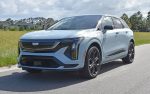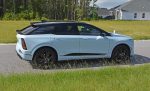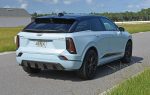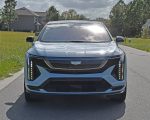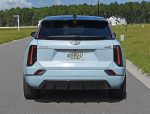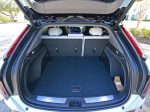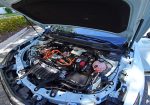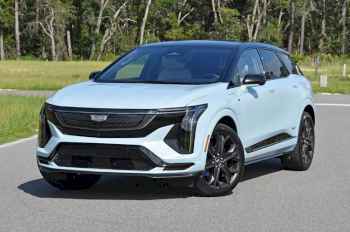

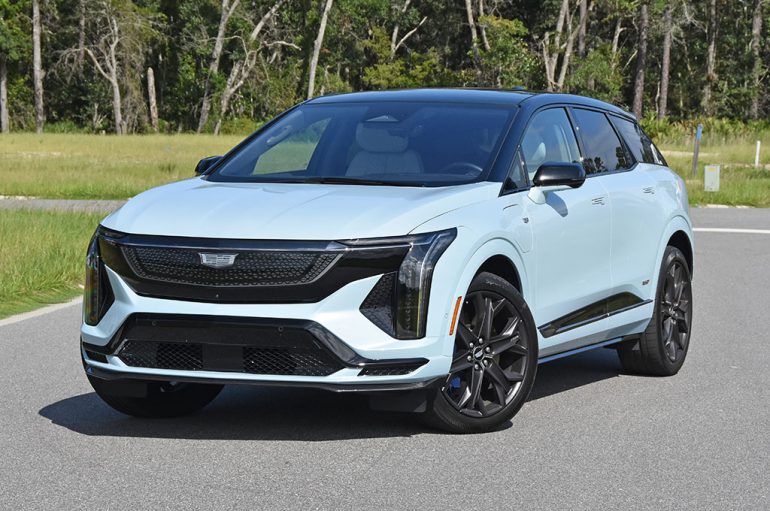
The recent appeal of Cadillac vehicles has fortified my affection for the brand, and they keep on pushing such a notion forward, even with vehicles like the all-electric Optiq. This week, though, I get to enjoy the Optiq V-Series, a performance version of the electric luxury crossover with many good and a few not-so-good takeaways. Still, in walking away from the Optiq-V, there’s a lot more to like than there is to complain about. However, the shortcomings are valid while we’re in such a competitive landscape – more on that later.
Powered by dual electric motors for an all-wheel-drive setup that’s rather robust, the new Optiq-V has a total output of 519 horsepower and 650 lb-ft of torque. Such a respected amount of power in a smallish package unleashes a strong punch, one that gets this Caddy crossover up to 60 mph in 3.3 seconds without complaint. That daring quickness is accessed through the vehicle’s V drive mode, coupled with the Vmax competition setting that somewhat disables driving aids and unleashes a thrilling experience with launch mode.
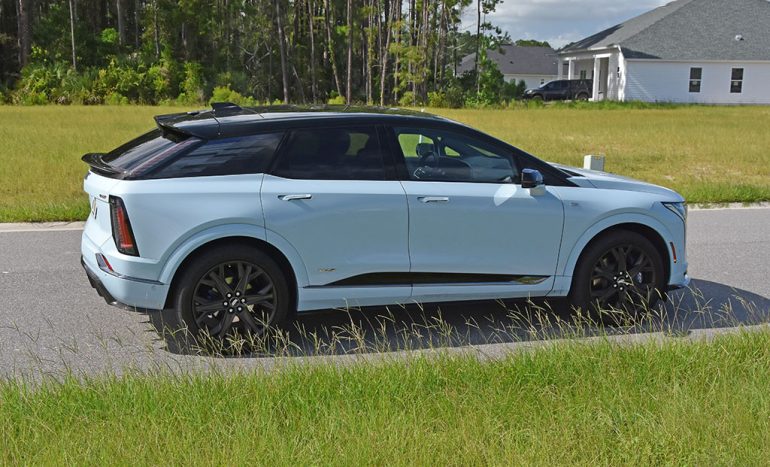
Cadillac’s quest to keep things exciting but hold onto its luxury theme with a strong grip is evident in vehicles like the new Optiq-V. The vehicle handles well and feels just nimble enough to carry around its nearly 5,500 pounds with grace. There’s a welcome, assured stability to the Optiq-V out on the open road, permitting some excitement for your drive. The unfortunate downfalls of the Optiq-V start with its rather short EPA range of 250 miles that you get out of a full charge. Such a range has you making added plans for charging it up at your nearest Tesla Supercharger station using the new NACS Tesla-style port, which is also somewhat of a letdown in that I only saw a high charging rate of around 130 kW to recharge the smallish 85 kWh battery. While my 200-kW Tesla Supercharger station was mostly empty during my charge, the Optiq-V failed to reach its max capacity charging rate of 150 kW. Though maybe I should have preconditioned the battery more beforehand. Either way, there’s a little to be desired on the range and charging rate for the Optiq-V. Outside of the Optiq-V trim, if you opt for the base rear-wheel-drive Optiq, you get a range of about 302 miles out of a full charge. So there’s that.
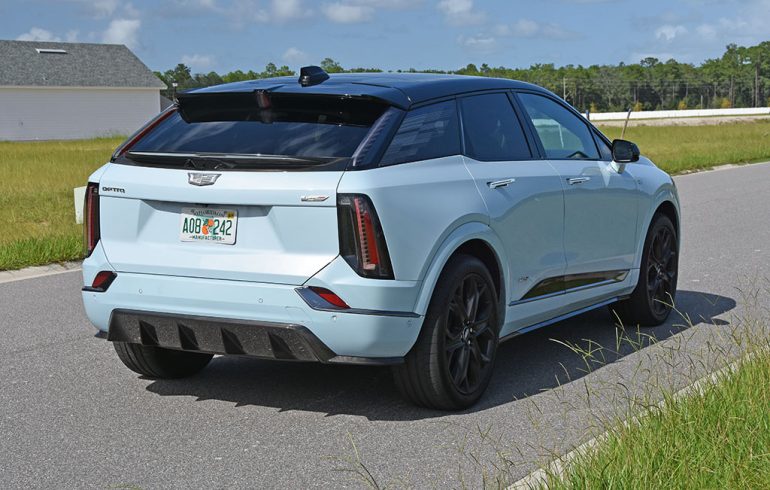
On the plus side, the Optiq-V remains mostly efficient in normal driving situations, matching and seldom besting its EPA estimates of 83 MPGe combined with mixed city and highway driving. Even when driving around with the max power output enabled through the V and Vmax modes, the vehicle didn’t suffer much more than it normally would if you’re not constantly launching the vehicle or traveling much faster than posted speed limits on the highway and interstate. Charging up at home using a Level 2 charger at 40-amps, I saw a rate hovering around 9.5 kW, taking about 9 hours from a 8% state of charge to top things off at 100%.
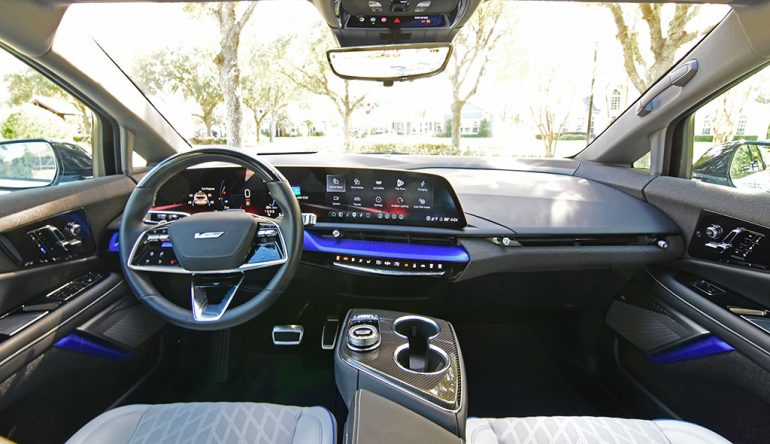
The inviting aspects of the new Optiq remain in its form factor, which is more or less a scaled-down version of the Cadillac Lyriq, which is a good thing because I like that vehicle as well. Power output feels about the same as the Lyriq V that I had a couple of months ago, which is also a welcoming theme for an electric performance-oriented luxury crossover. There are even massively sized 6-piston Brembo brake calipers up front to bring its heft to a stop in good time, while you can also utilize the on-the-fly braking regen steering wheel paddle or take up use of the one-pedal drive mode.
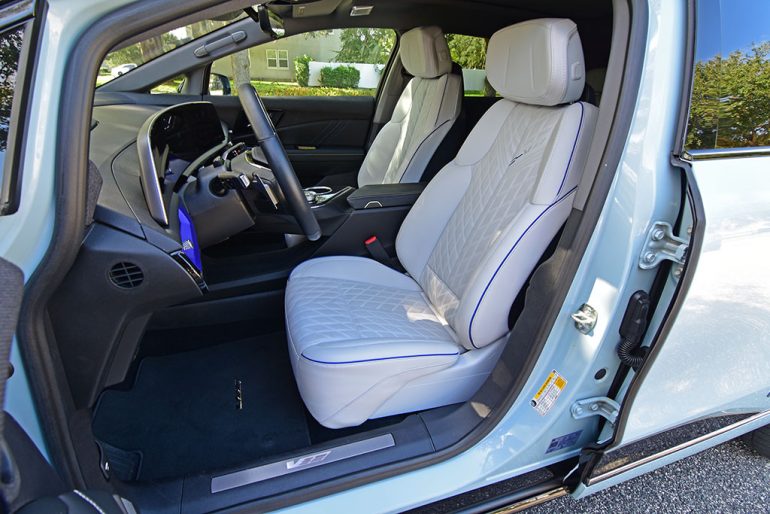
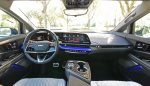
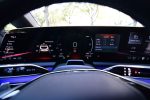
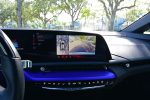
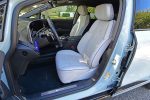
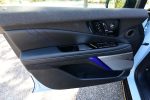
Inside, there’s a lot to like in the somewhat plush interior that has some flair through eye-popping accented colors on the dash’s plastic and stylized trim. There are also options to add even more accented color areas, such as the soft-touch front seatbacks being an eye-turning blue color. Otherwise, the layout of the big OLED curved screen is integrated with a large touchscreen infotainment unit and a somewhat configurable gauge cluster area. Cadillac has done well here, but as with all new EVs from General Motors, sans the Cadillac Lyriq, there’s still no Apple CarPlay or Android Auto integration, which continues to be something that I think GM has made a big mistake. Considering how many people are accustomed to smartphone integration, it remains a minus for considering new GM EVs despite having Apple Music and other downloadable apps via the Google integration available for the system. I still want my CarPlay as use of my iPhone in the vehicle becomes an unnecessary and often distracting inconvenience. Also, I would have liked a frunk (front trunk).
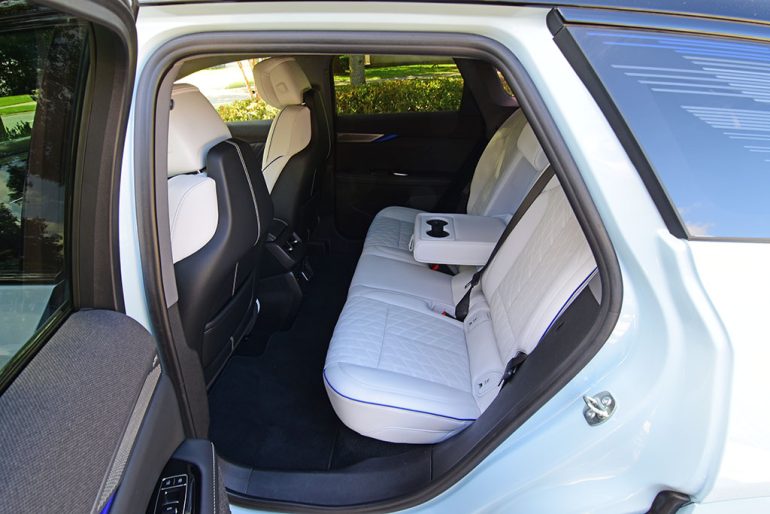
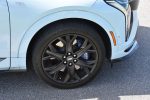
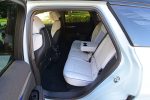
Apart from the shortcomings, the Optiq-V has a surprisingly good amount of space for seating areas and a lot of front power seat adjustability. Moreover, there’s heating, ventilation, and a massaging function (back area only). Other highlights include the abundance of special touches for its animated LED lighting outside, color-patterned interior LED ambient lighting, the exceptional Super Cruise hands-free driving system, and a decent ride quality through its adaptive dampers that keep things composed and mostly luxurious in both the Touring and Sport modes, even with having the 21-inch wheels wrapped with somewhat stiff, sidewalled Continental SportContact 6 max-performance summer tires.
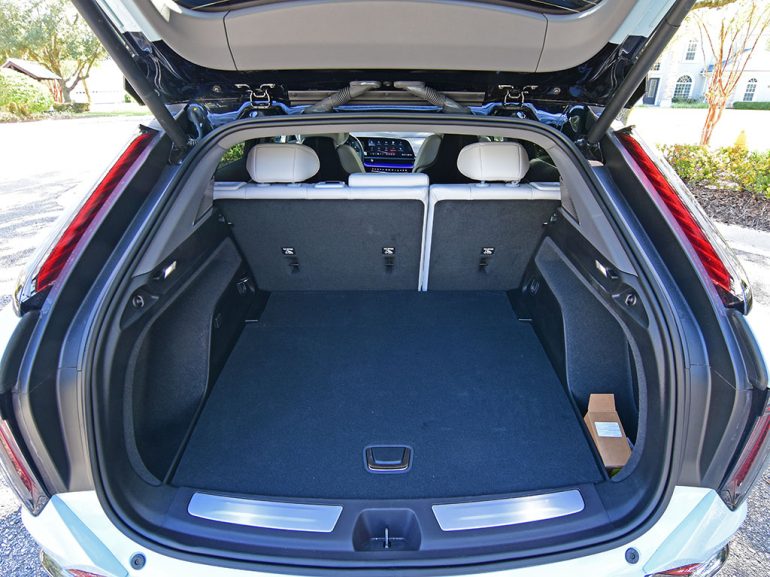
Cadillac seems to be on the right footing to keep its literal forward movement with vehicles like the Optiq-V, if it can eventually address its few shortcomings. In a growing field of stiff competition, the Optiq-V’s paltry range and slowish charging rate may hurt its appeal more than its collective strengths will help. At least pricing is kept somewhat reasonable with the Optiq-V topping out at $78,926 for my loaded-up test vehicle that has a few optional packages, including a $5,700 exterior carbon fiber package and the $2,555 charging & convenience package 2. It may not necessarily be cheap, but if you have a blind eye to its total range and charging speed, then we could have a winner here.