
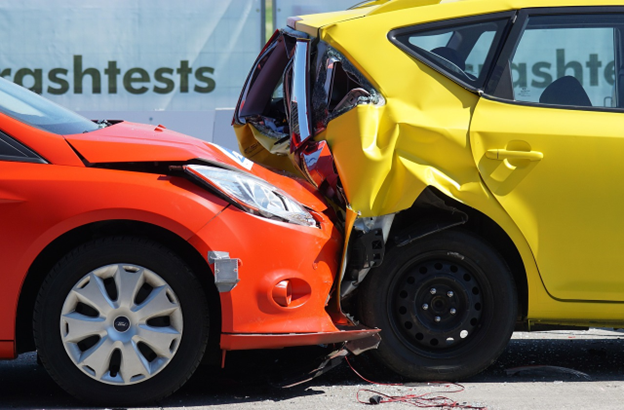
California is the most populated state in the country, with close to 39 million residents. Its economy is the largest of any state, driven by technology, agriculture, entertainment, and international trade. The state also maintains one of the busiest highway systems in the nation, with heavy traffic on its roads and highways increasing the risk of rear-end collisions.
Rear-end collision liability does not automatically apply to the driver in the back. Depending on the evidence, responsibility may involve the rear driver, the front driver, an employer, a vehicle manufacturer, a repair provider, or more than one party at the same time.
Drivers who are rear-ended in California often assume the case is simple and will settle quickly. Sorting out who actually caused the impact usually takes more work than that.
Many rear-end crashes involve a following driver who did not leave enough distance or failed to respond to traffic ahead. California Vehicle Code Section 21703 requires a driver not to follow another vehicle more closely than is reasonable and prudent, considering vehicle speed, traffic, and roadway conditions.
A rear-end impact can support an inference that the following driver was negligent. However, California courts have explained that it is evidence of negligence rather than an automatic final ruling. Whether the rear driver acted negligently remains a factual question that depends on the circumstances and any explanation supported by the evidence.
A lead driver can contribute to the hazard that results in a collision. When that happens, part of the responsibility may be assigned to the front driver.
A sudden stop by itself does not automatically make the front driver responsible. Traffic congestion, pedestrians, roadway hazards, and vehicles stopping ahead can all provide legitimate reasons to brake. The complete circumstances determine whether either driver acted negligently.
Liability can sometimes extend beyond the two drivers involved. Employers, vehicle manufacturers, repair facilities, and other parties may be included when their conduct or products contributed to the collision.
An employer may be vicariously responsible when an employee causes a crash while acting within the scope of employment. In California, the conduct generally must be reasonably related to the employee’s assigned tasks or reasonably foreseeable in light of the employer’s business or the employee’s responsibilities.
Motor carriers may also face direct liability when negligent hiring, training, supervision, scheduling, or maintenance contributes to a crash. Federal motor carriers and qualifying commercial drivers are subject to the hours-of-service regulations, including the rules found in 49 CFR Part 395.
A violation does not automatically establish that fatigue caused the collision. Driver logs, electronic logging-device data, dispatch records, and other evidence must connect the violation to the crash.
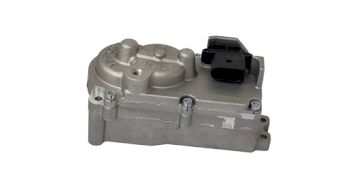
A defective brake system, throttle component, tire, or driver-assistance system may contribute to a collision. A manufacturer or parts company may be responsible when a product was defective and that defect was a substantial factor in causing the crash or resulting injuries.
Under 49 U.S.C. § 30118, manufacturers have notification responsibilities when they determine that a vehicle or equipment item contains a safety-related defect or fails to comply with an applicable federal motor vehicle safety standard. A recall can be relevant, but the existence or absence of a recall does not independently prove a product-liability claim.
A repair shop may be responsible if negligent inspection, repair, or installation contributes to a brake or vehicle failure. Examples could include improperly installing brake components, failing to complete agreed repairs, or overlooking a dangerous condition that reasonable service should have identified.
Commercial vehicles must also comply with applicable lighting requirements, including the stop-lamp provisions in 49 CFR 393.11. Work orders, inspection reports, invoices, and maintenance records may help identify who serviced the vehicle and what work was performed.
Yes. Shared liability can arise in chain-reaction crashes and other collisions involving several contributing acts. California follows pure comparative negligence, meaning responsibility can be divided among the parties according to their respective percentages of fault.
An injured person’s recovery is generally reduced by the percentage of fault assigned to that person. Unlike modified comparative-fault states, California does not use a 50% or 51% cutoff that automatically prevents recovery.
In a pileup, the driver who caused the first impact may carry a substantial share of responsibility. Drivers farther back can still share fault if they were following too closely, driving too fast for conditions, or otherwise unable to stop safely. Gauge Magazine’s guide to liability after a multi-vehicle accident explains why each impact must be examined separately.
Fault disputes are decided through evidence rather than assumptions. Useful proof may come from several sources:
No single item is automatically conclusive. Event data availability varies by vehicle, video may show only one angle, and phone records do not always establish exactly what a driver was doing. The evidence must be considered together.
Some disputes become harder because of what happens after the crash. Statements, missing documentation, and unnecessary delays can affect how insurers evaluate a claim.
California Evidence Code Section 1160 generally prevents a statement expressing sympathy or benevolence regarding another person’s pain, suffering, or death from being admitted as proof of liability in a civil case. However, an accompanying statement admitting fault may still be treated differently. Drivers should therefore avoid speculating about causation at the scene.
Delaying medical evaluation can make it harder to document when symptoms began, although a treatment delay does not automatically defeat a legitimate injury claim. Some injuries are not immediately apparent.
Failing to report or document the collision can also remove a potentially useful contemporaneous record. A police report does not independently decide civil liability, but it may contain observations, identifying information, witness details, and other evidence. Gauge Magazine explains when a police report may be required after a California accident.
This article provides general information and is not legal advice. Liability depends on the evidence, applicable law, and circumstances of each collision.
The post Who Can Be Liable in a Rear-End Collision Case? appeared first on Gauge Magazine.