
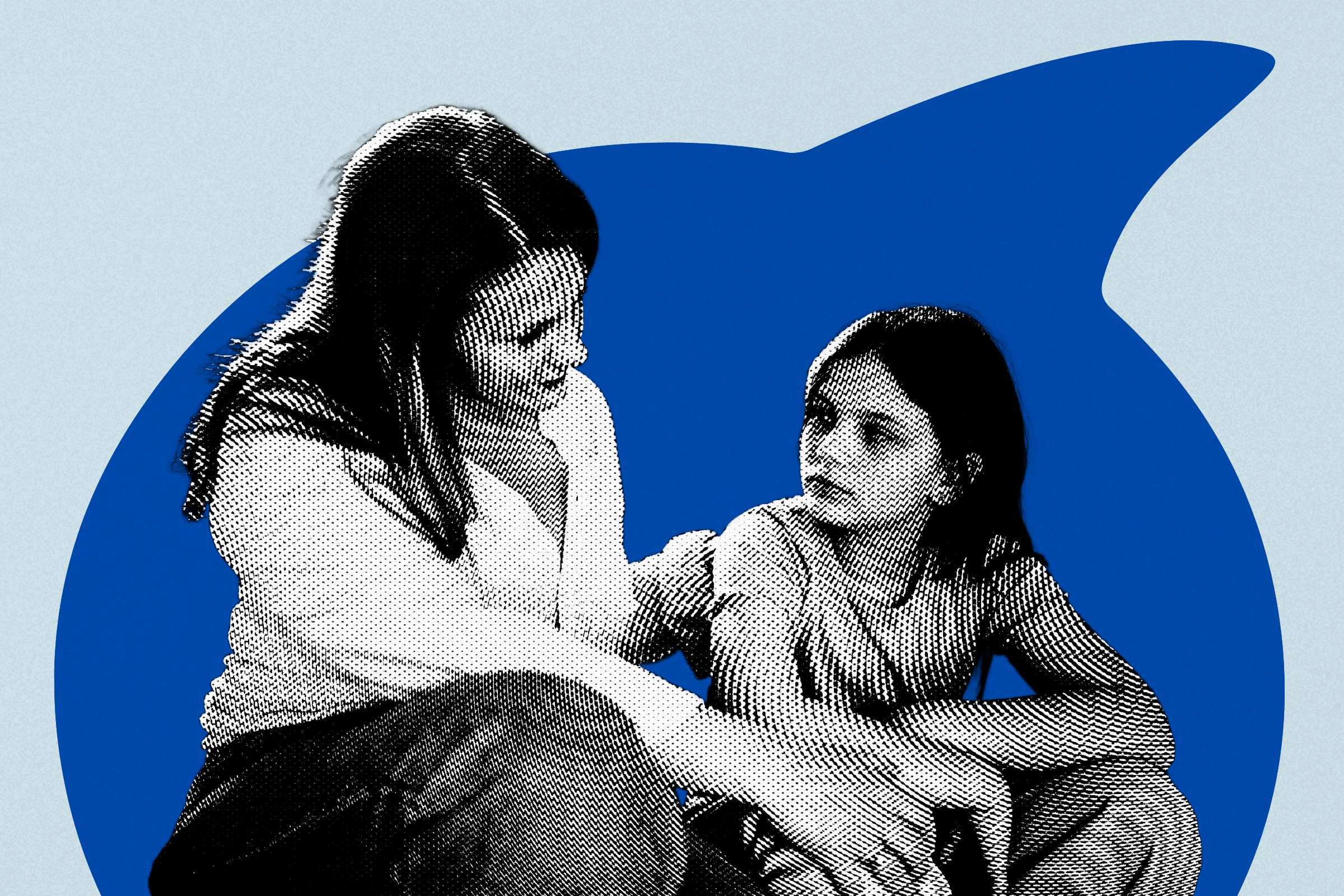
When your kid comes home from school and says they hate their stomach, that nobody wants to be their friend because they’re “fat,” or that everyone in their class is better-looking than they are, you’d probably do anything to help them see what you see—which means the reassurance practically flies out of your mouth. “You’re beautiful!” “You’re perfect!” How could they possibly think otherwise?
That impulse comes from a good place—but it can shut down the very conversation you want to have, says Dr. Whitney Casares, a pediatrician in Portland, Ore., and author of Raising Body-Confident Kids. “It tells a child, don’t feel what you’re feeling,” she says. Instead, start by making room for those feelings. “The goal is to help kids feel heard first and really to keep the door open.”
We asked experts exactly what to say when your child is struggling with how they look.
Before you can help, you need to know what you’re responding to. Did a classmate make a rude comment? Did your child see something triggering online? Or is their body feeling unfamiliar as they go through puberty? Those possibilities call for different conversations, Casares says. A kid who says everyone is thinner than they are might be comparing bodies in dance class—or feeling left out by a best friend and assuming their appearance is the reason.
Give your child time to explain, and let them know you’re glad they trusted you with something hard to say. “It’s a really good sign if your kid’s coming to you with a question,” says Charlotte Markey, a psychology professor at Rutgers University and author of books including The Body Image Book for Girls. Even if you’re scrambling to figure out how to respond, showing that you welcome the conversation makes it more likely they’ll come to you again.
It’s important to validate your kid’s feelings without agreeing with whatever harsh judgment they’re making about themselves. That’s why Markey likes this way of acknowledging the hurt without reinforcing the criticism. “It can be really difficult when we feel like someone doesn’t have a positive opinion of us,” she says.
If a classmate’s comment set this off, follow up with: “Why do you think that person said that?” Maybe Preston the fourth-grader was insulting everyone, or didn’t even understand the word he was using. Exploring what happened can help your child question how much weight to give the remark. “If the kid can get to the place of feeling like, ‘No, they’re wrong,’ on their own, it’s much more powerful,” Markey says. After all, your insistence that they’re beautiful comes with an obvious caveat: You’re their parent. Of course you think that.
“Why am I bigger than my friends?” can feel like a loaded question, but there’s room for a straightforward answer: Genetics help shape our bodies, just as they influence our height and eye color, Markey says. Talking about family resemblance can help make those differences feel ordinary. The message is that your child doesn’t need to look like their best friend—and their body isn’t a project they need to fix.
If they ask, “Am I fat?” resist the reflexive “No!” advises Giulia Suro, a clinical psychologist in Washington, D.C., who specializes in eating disorders. That response can reinforce the idea that being fat is something to fear. Instead, get curious about what the word means to them and where they learned to associate it with something negative. You can acknowledge differences in body size without treating one as better than another or promising your child they’ll eventually be smaller.
During her first week of kindergarten, Suro’s daughter came home and announced: “I’m not the prettiest girl in the class.” Even for a psychologist who specializes in eating disorders, it was startling to hear. Instead of reassuring her daughter about her looks, Suro asked what felt scariest about that. Her daughter worried she wouldn’t make friends—that no one would like her, and she’d end up eating lunch alone.
Now Suro had something concrete to help with. They could talk about which classmates her daughter might sit with, whether she could ask a teacher for help, or whether Suro could volunteer at lunch. Asking about the fear beneath an appearance concern can reveal worries about belonging or being good enough that a compliment won’t resolve. As Suro puts it: “How can we help you address what’s really fearful or threatening about this?”
When your child says something cruel about their appearance—“My stomach is disgusting” or “I look terrible”—try not to immediately argue with them. Instead, Suro suggests helping them create some distance from the thought by saying: “That sounds like a mean thought.” It’s something their brain produced, not an objective fact or a verdict they have to accept.
Then ask: “How does that thought make you feel when it’s in your head?” You might also dive into what it makes them want to do: Skip school? Change into a new outfit? Quit an activity? Avoid their friends? The goal is to help them notice when a harsh thought starts making decisions for them. “We want actions to always be based on the things that are important to us, our values, our passions, excitement, motivation, and not on critical thoughts,” Suro says. “We really don’t want to give them that much power.”
If your son’s Instagram or TikTok feed is full of impossibly muscular men, you might be tempted to tell him to log off. Instead, start by asking him to show you what he’s watching, suggests Brian Pollack, a licensed clinical social worker and founder of Hilltop Behavioral Health in Summit, N.J. If he seems embarrassed, try: “I’m actually interested in what you’re interested in.” Then explore the appeal: Is he hoping to play like that athlete? Look like him? “Is this meaningful to you?” Pollack suggests asking. “Is it meaningful to your friends?” Understanding what he’s drawn to gives you a way to talk about the pressure he might feel to measure up.
You can also discuss what goes into the images your child is comparing themselves with: filters, professional photographers, makeup artists, and, sometimes, an entire team devoted to someone’s appearance. “Our job is not to look like a celebrity,” Markey says.
Your child probably has plenty to say about how their body looks. This question gives them something else to notice, Pollack says: Did they walk the dog? Laugh with a friend? Have a great soccer practice? Build an elaborate Lego creation? Make it part of your everyday conversations, giving them room to appreciate experiences that have nothing to do with a mirror. The lesson: “My body is not for presentation,” Pollack says. “My body is for functionality.”
For children who play sports, that means being mindful of what you celebrate. Rather than admiring emerging abdominal muscles, for example, focus on how their body lets them participate in something they enjoy. And keep the conversation bigger than athletic accomplishments: helping someone, making something, and connecting with friends count, too. Pollack wants kids to experience their bodies as “a vehicle of expression and connection,” not just something to look at.
Sometimes there will be clues that your kid is struggling with their body image. Maybe they don’t want to swim anymore, or they duck out of every family photo. Acknowledge the discomfort before jumping into solutions, Casares says. Then explain that you don’t want them missing out on something they enjoy, and ask: “What are some ways we can get around this so you can still participate?” Ask what would make joining in feel more comfortable—maybe wearing a swim shirt at the pool or taking a photo with the family dog.
If they keep sitting things out or start avoiding more activities, it’s worth getting help from a mental-health professional, Casares says. “It may be that they’re getting bullied. It might be that they’re developing an eating disorder.” Finding out what’s behind the change can help you figure out what kind of support they need.
None of this means you can’t compliment your child’s appearance. Casares suggests noticing choices they’ve made: “I love your haircut,” for example, or “That color looks great on you.” “Those are things that are about choices and decisions kids are making for self-expression,” she says. That gives you something more specific to appreciate than how closely they happen to resemble a beauty ideal.
Some of the most meaningful compliments won’t be about their appearance at all. Pollack recommends pointing to specific things you’ve seen your child do: taking care of a sick sibling, helping a friend who’s having a bad day, or saving money so they can go to the amusement park that summer. “I’m talking about actionable values, things that can be behaviorally seen versus just believed,” he says. You’re showing them exactly what you appreciate about the person they are.
Even adults have days when they don’t like how they look. Kids shouldn’t feel like they’re doing something wrong when that happens to them, too, Suro says. The goal is to help them eat enough, get some rest, and keep doing things they enjoy, even when they’re not feeling particularly confident. “Expecting anyone, even a child, to love their body all of the time is unrealistic and can become another standard they fail to meet,” she says.
That’s something parents can practice alongside them. “Even when you’re not talking directly to your kids, your kids are watching what you say about yourself,” Casares says. They notice the criticism you mutter at the mirror and whether you’re only having a smoothie while everyone else chows down on a full meal. “No script that you can say about self-love to your kids will override what you’re doing in your own body,” she says.