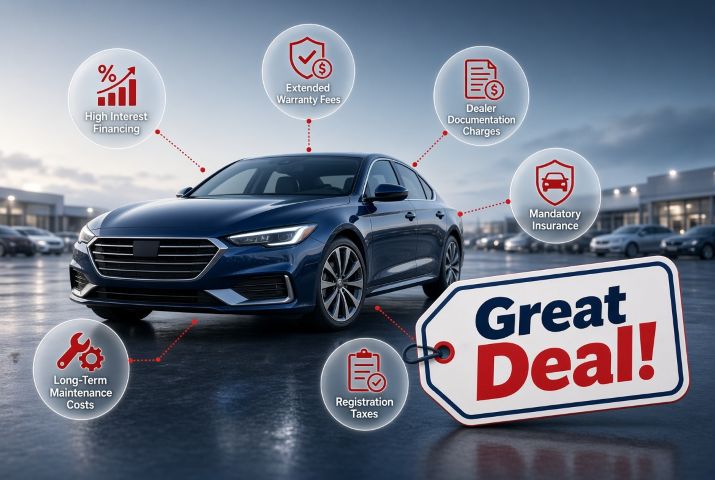
A car can look like a great deal when you focus on the number written on the windshield or advertised online. The problem is that the purchase price is only one part of what that vehicle may ultimately cost you.
Financing charges, dealer fees, insurance, taxes, registration, optional products, maintenance, and depreciation can all change the financial picture. A vehicle with a lower advertised price can sometimes cost more over time than another option once those additional expenses are considered.
That doesn’t mean every extra charge is unreasonable. Many are legitimate costs associated with purchasing and owning a vehicle. The important part is knowing what you’re paying for before signing the paperwork.
Monthly payment shopping makes it easy to lose sight of the total amount being financed. A longer loan term may reduce the monthly payment, but it can also increase the amount of interest paid over the life of the loan.
The interest rate you qualify for can depend on factors including your credit history, the vehicle, the loan term, the amount financed, and the lender. Even a relatively small difference in the annual percentage rate can add up when financing a vehicle for several years.
Before agreeing to a loan, compare the APR, loan term, amount financed, monthly payment, and total of payments rather than concentrating on the monthly payment alone.
The advertised vehicle price may not include every charge that appears on the final paperwork. Documentation fees, electronic filing charges, registration-related expenses, taxes, and other legitimate costs can increase the amount due at closing. What dealers may charge and how those fees must be disclosed varies by state.
Optional products can add even more. Extended service contracts, protection packages, appearance products, wheel-and-tire coverage, GAP products, and other add-ons may be presented during the purchase process.
Some of these products can make sense for a particular buyer, but don’t assume every item presented in the finance office is mandatory. Ask what each charge covers, whether it is optional, and how removing it would affect the final amount financed.

Insurance is another expense worth checking before buying the vehicle rather than afterward. Premiums can vary significantly based on the vehicle, driver, location, coverage selections, driving history, and insurer.
State law generally establishes minimum liability insurance requirements, while lenders or lessors may require additional physical-damage coverage such as comprehensive and collision coverage on financed or leased vehicles. Requirements vary, so buyers should confirm both their state’s rules and their lender’s requirements.
Getting an insurance quote for the exact vehicle before completing the purchase can help prevent an unpleasant surprise when the first premium comes due.
Sales or use taxes, title fees, registration costs, and other government charges can add a substantial amount to the transaction. The exact amount depends on where the vehicle is purchased and registered.
Instead of estimating these costs yourself, ask for an itemized out-the-door price. That number gives you a much better basis for comparing vehicles and dealerships than the advertised price alone.
The cost of buying a vehicle and the cost of owning one are two different things. Tires, brakes, fluids, batteries, scheduled maintenance, repairs, fuel, and other expenses continue long after the paperwork is signed.
This becomes especially important when shopping for used or modified vehicles. An inexpensive performance car that immediately needs tires and brakes may not be as inexpensive as it first appeared. The same applies to a customized vehicle with parts that are more expensive to repair or replace than their factory counterparts.
Before purchasing a used vehicle, consider having it inspected by a qualified independent mechanic. Buyers interested in modified vehicles should also determine what has been changed and whether those modifications affect maintenance, insurance, emissions compliance, or everyday drivability.
Gauge Magazine’s feature vehicle coverage shows just how extensive custom builds can become. Wheels, suspension, engine upgrades, audio systems, body modifications, and custom interiors can transform a vehicle, but they can also change what it costs to maintain and insure.
Depreciation is easy to overlook because no invoice arrives in the mail. It represents the difference between what you paid for the vehicle and what it may be worth when you eventually sell or trade it.
Depreciation varies considerably among vehicles. Purchase price, age, mileage, condition, market demand, accident history, options, and modifications can all influence resale value.
For enthusiasts, this can be particularly important. Thousands of dollars in aftermarket parts do not necessarily translate into thousands of dollars of additional resale value. Build a car because you enjoy it, but don’t automatically assume every modification will be recovered when the vehicle is sold.
Review every document before signing and keep copies of the paperwork you receive. If a charge appears that you don’t recognize, ask for an explanation and determine whether it reflects a government fee, dealer fee, financing charge, or optional product.
Disputes over unauthorized charges, financing terms, or other parts of a vehicle transaction can involve state-specific consumer protection and contract laws. When a disagreement cannot be resolved directly, a consumer may choose to contact the appropriate state consumer-protection agency or seek legal advice. Depending on the circumstances, an attorney experienced in defense against dealer fraud can review the transaction and explain what options may be available.
A smart car purchase starts with one simple question: What will this vehicle actually cost me?
Start with the out-the-door price. Then consider financing, insurance, maintenance, expected repairs, fuel, and depreciation. If you’re shopping for a custom or enthusiast vehicle, take the cost of its modifications into account as well.
There’s nothing wrong with getting excited about a new ride. That’s part of being a car enthusiast. Just make sure the numbers make as much sense as the car does.
Whether you’re buying something stock or looking for ideas for your next project, Gauge Magazine’s car show and automotive event coverage offers a look at the cars, trucks, builds, and trends shaping the enthusiast scene.
The post Hidden Costs That Can Make a Good Car Deal More Expensive appeared first on Gauge Magazine.