
A second car can feel indispensable until a household looks closely at how often it moves, how far it travels and what those trips actually cost. For many families, the vehicle sitting in the driveway handles short errands, school pickups and occasional commutes that may be possible on smaller, less expensive forms of transportation.
Replacing that car completely won’t suit every home. Still, shifting a meaningful share of local trips to an electric bicycle could reduce household expenses without making daily life impractical.
The monthly payment tells only part of the story. The true cost of vehicle ownership also includes insurance, registration, maintenance, repairs, fuel and depreciation. Some of those expenses continue even when the second car spends most of the week parked.
Depreciation deserves particular attention because it doesn’t arrive as a bill. A newer car can lose value each year while still generating insurance and registration costs. Tires, fluids and batteries also age regardless of mileage. Once occasional parking fees and unexpected repairs enter the picture, a lightly used vehicle may cost several hundred dollars a month.
Purchase prices make the calculation more pressing. With affordable new cars becoming increasingly scarce, buyers hoping to add an inexpensive new runabout may find that the market no longer provides many realistic options.
Start your own cost review with the previous 12 months of bank and credit card statements. Total every expense tied to the second vehicle, then divide that figure by the number of miles it traveled. The result gives you a useful cost-per-mile estimate and a clearer basis for comparing alternatives. Include an annual allowance for depreciation so the comparison doesn’t make the car appear cheaper than it is.
Before changing vehicles, document how your household travels for two normal weeks. Record each trip’s distance, purpose, passenger count and cargo requirements. A notes app works fine, though a sheet of paper kept near the keys may encourage everyone to participate.
Patterns tend to appear quickly. One person may drive two miles to a fitness class three times a week, while another makes a four-mile grocery run every Saturday. School pickup could be close enough for an alternative on mild days, but an afternoon involving two children and sports equipment may still call for a car.
Classify each trip into one of three groups:
If many trips land in the first two groups, note which routes you would realistically be willing to ride. Pay particular attention to traffic, hills, storage at your destination and how much cargo you normally carry.
Electric assistance makes local riding practical for people who don’t want every commute to become a workout. Testing an ebike on the routes you use most can show how riding position, battery range and low-speed handling fit your normal routine. Assistance can reduce the effort required on hills, help riders maintain a steady pace and make a five-mile errand feel manageable before work.
Begin with one repeatable trip. A solo commute of three or four miles is a better test than an ambitious day involving several stops. Ride the route during the time you’d normally travel so you can assess traffic, lighting and intersection behavior. A quiet street at noon may feel very different during the evening rush.
Range estimates also need context. Rider weight, hills, temperature, tire pressure, cargo and assistance level all affect how far a charge lasts. Choose a routine that leaves a generous battery reserve instead of treating the advertised maximum as a daily target. Establish a consistent charging location away from exits and use the charger supplied or approved for the bicycle.
Security should be part of the plan from day one. Identify solid locking points at work, stores and community facilities. Use a quality lock through the frame and follow the manufacturer’s instructions for removing the battery if it will be left unattended. Check lights and tire pressure weekly.
Riders should also follow bicycle safety recommendations covering visibility, helmets and predictable road behavior. Local laws can vary, so confirm where electric bicycles may operate and which equipment your area requires.
Weather often determines whether a one-car household feels practical. Light rain may require little more than a waterproof jacket, fenders and a protected bag. Heavy rain, extreme heat, icy pavement and strong winds can make riding uncomfortable or unsafe. A realistic plan leaves room for driving, public transportation, ride services or postponing a nonessential errand.
Look at conditions across the whole year, not just during the pleasant season when you first consider making the switch. If winter regularly brings snow and freezing temperatures, estimate how many months an electric bicycle would receive limited use. The financial case may still work if it replaces enough spring, summer and fall trips, but the household needs a backup plan.
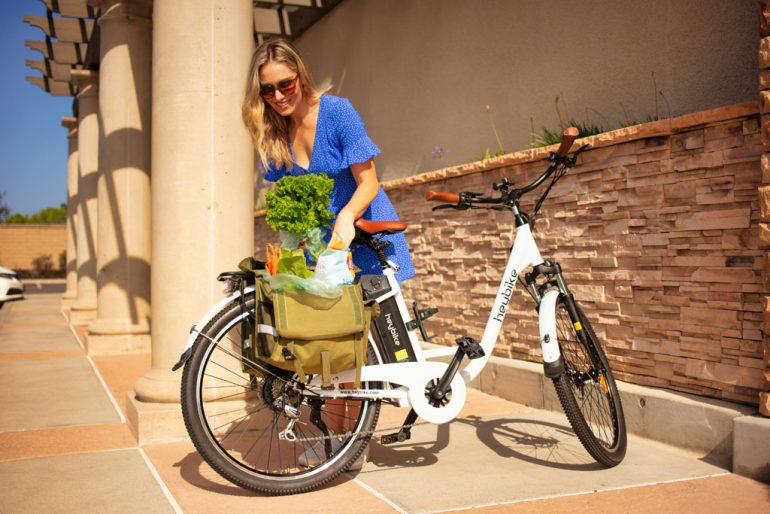
Cargo presents a more solvable challenge. Panniers can handle a small grocery run, a rear rack can carry a work bag and a front basket keeps lighter items accessible. Check the bicycle’s stated weight limits before adding a child seat, trailer or large load. Cargo should sit low and remain balanced so it doesn’t interfere with steering.
Battery care matters during temperature extremes. Follow the manufacturer’s storage and charging instructions, especially during extended periods of cold or heat. The CPSC’s e-mobility safety information also covers approved products and safer charging practices. Inspect the battery and charger for damage, unusual heat or swelling and stop using either component if something seems wrong.
For many households, the workable answer is one car supported by several transportation options. The car remains available for family outings, severe weather and large shopping trips. An electric bicycle handles nearby appointments and solo errands, while walking or public transportation fills other gaps.
A trial period reveals more than a spreadsheet. Park the second car for 30 days without selling it. Continue paying attention to the trips that cause friction, including late-night travel, unexpected schedule changes and days when two adults need to go in opposite directions. Keep a simple count of each time the parked car becomes necessary.
At the end of the month, compare that usage with its annual cost. If the car was needed twice, renting a vehicle or using a ride service on those occasions may cost far less than keeping it all year. If it was needed four times a week, selling may create more inconvenience than savings. Some families may find that replacing an aging second car with a lower-cost transportation mix works, while others may simply reduce its mileage and keep it longer.
Also consider how easily the arrangement can adapt. Work schedules change, children grow and an older relative may need regular transportation. Avoid building a plan that depends on perfect weather or rigid timing.
The clearest signal comes from an ordinary week. If everyone reaches work, school, stores and appointments without repeatedly reaching for the parked car’s keys, the driveway may already have one vehicle more than it needs.