We attended the Concours of Elegance 2026 on Friday 4th Sept, and this wonderful show (we say that every year) ran from Friday 4th to Sunday 6th September. You can see your show walk around here, and our review of the show here.
So we thought we’d feature in this article the super rare cars that we loved (and caught our imagination) at the Concours of Elegance 2026.
What defines super rare? Personally I would say if less than 1000 cars are made than it is a rare car. If 500 cars were made I would call that very rare, less than 100 cars made, I’d call that super rare. I’m sure everyone would have a different opinion, but that’s how I view it.
The cars highlighted here may not be less than 100 cars, but because of their rarity because of age or the colour of the car I think it’s super rare. Let me know what you think in the comments. I have placed the cars in order of rarest car first. Here are my 10 super rare cars that caught my attention and I loved at the Concours of Elegance 2026.
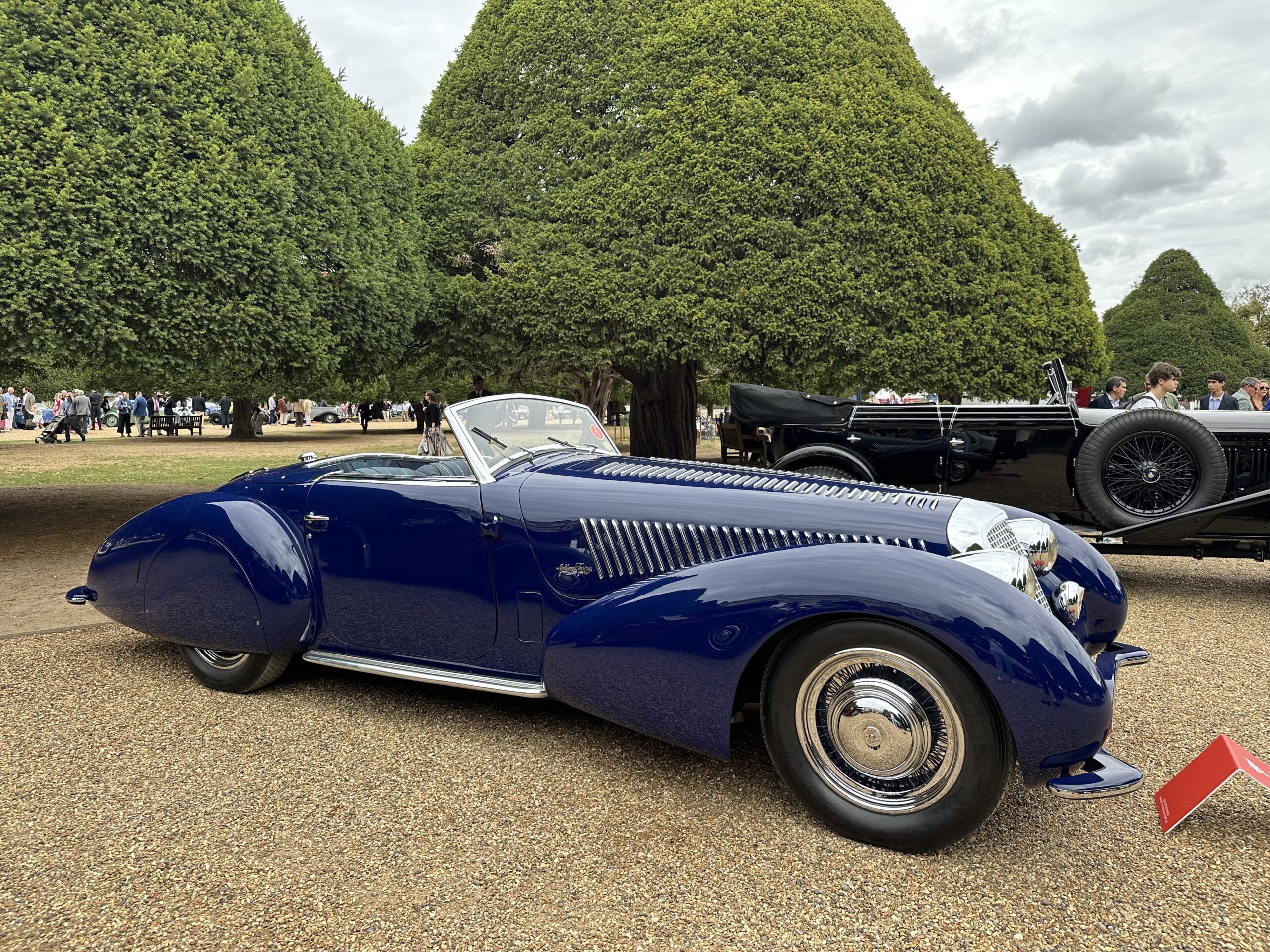
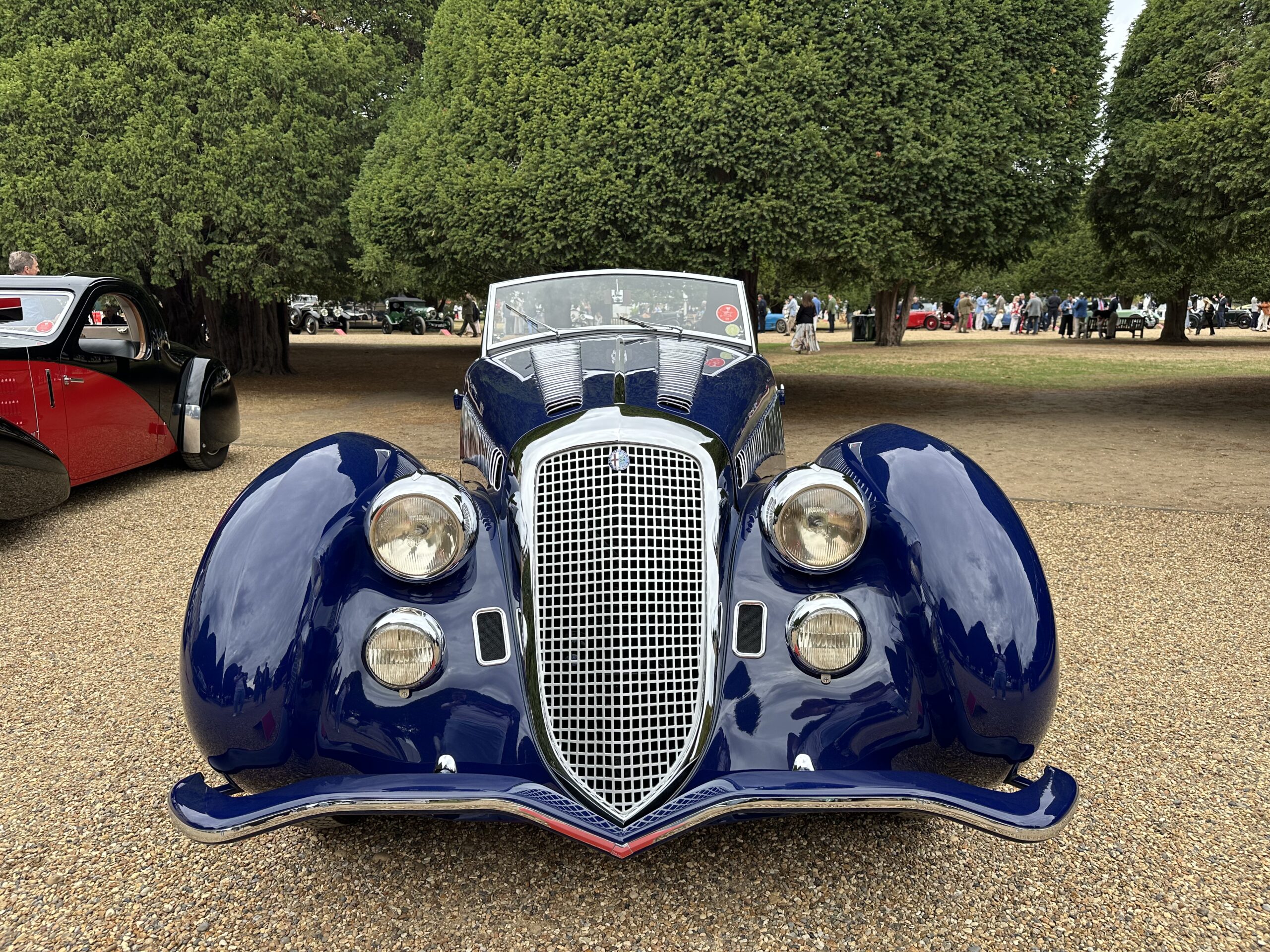
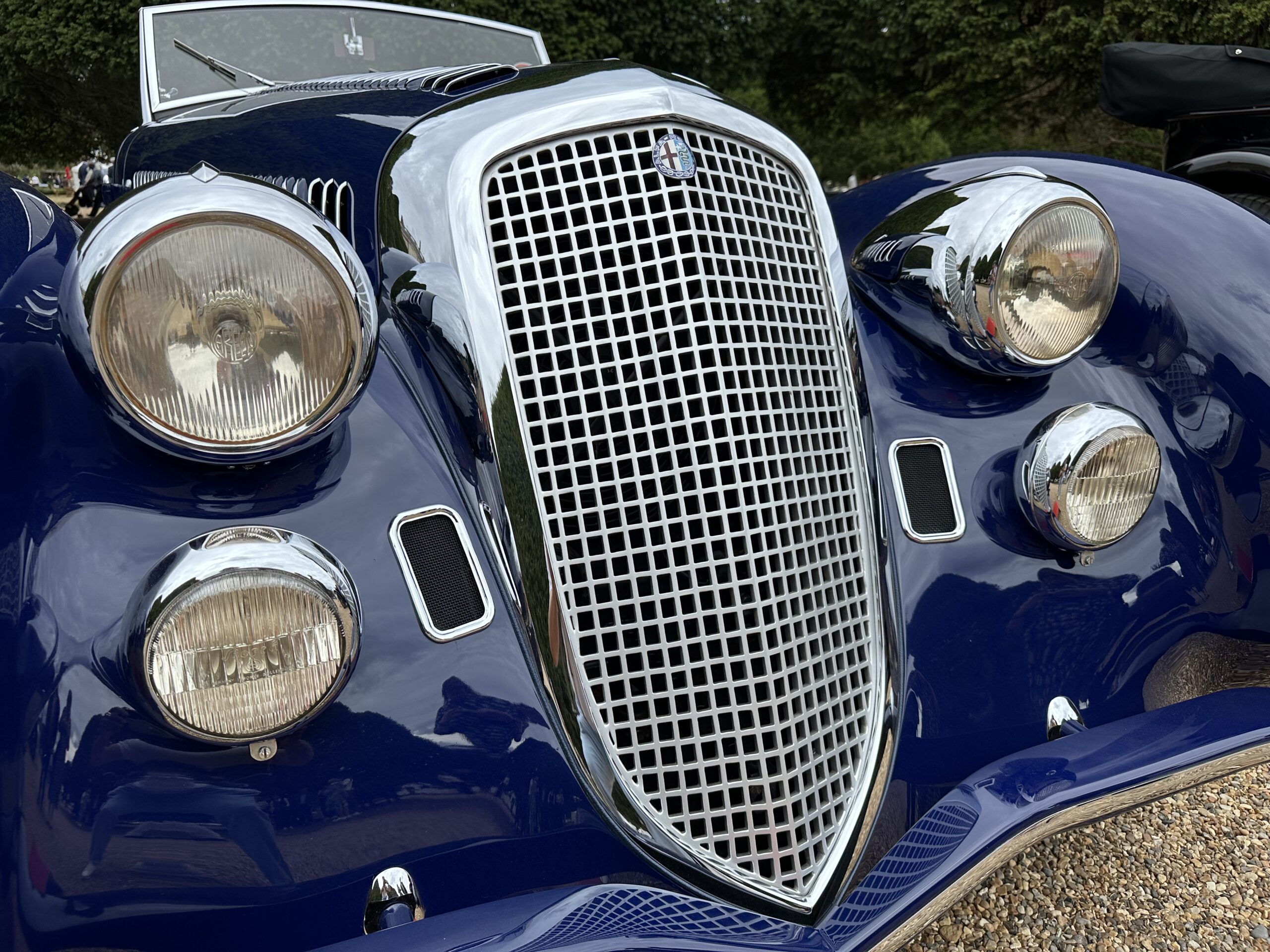
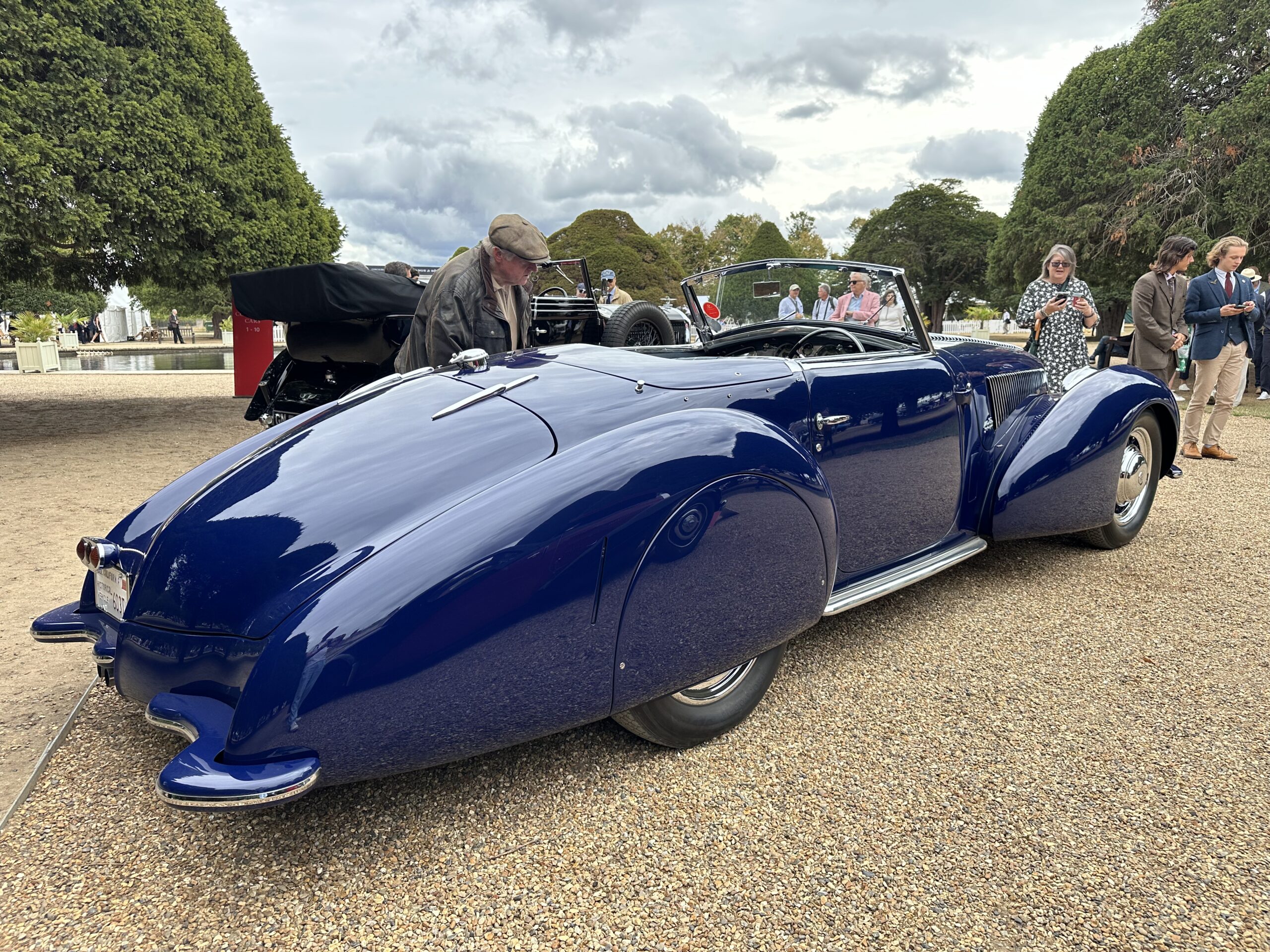
The 1938 Alfa Romeo 8C 2900B Cabriolet by Stabilimenti Farina (Chassis 412028), displayed at Concours of Elegance 2026, is a one-of-a-kind masterpiece. It is also one of the most exclusive prewar supercars ever built.
Chassis 412028 is the only Alfa Romeo 8C 2900B known to have received cabriolet coachwork by Stabilimenti Farina. Launched in 1937, the 8C 2900B was the fastest and most expensive Italian road car of its day. It evolved from the 2900A sports racer, itself closely related to Alfa Romeo’s P3 Grand Prix car. Production ended in 1939 after 20 Corto and ten Lungo examples.
Most 8C 2900Bs were bodied by Touring, but 412028 followed a more personal route. Its first owner was Giuseppe ‘Nino’ Farina, Italian champion in 1937, 1938 and 1939, and later the first Formula One World Champion in 1950. Farina’s father founded Stabilimenti Farina, while his uncle Battista ‘Pinin’ Farina ran a rival company. The body is believed to have been designed by Pinin Farina within that family circle. Its lines recall the prize-winning ‘Bocca’ style, while the blue shagreen interior and matching luggage remain defining features.
The certificate of origin was dated July 13, 1938, and the car was registered to Alfa Romeo in Milan the following day as MI 64169. Photographs taken at the German Grand Prix show it carrying that number, prompting the belief that Farina or another Alfa Corse driver used it to travel to the Nürburgring. In November 1938, Alfa Corse described it as Farina’s 2900B ‘Mille Miglia car’, and in April 1939 it appeared on the cover of Motor Italia.
The Alfa was registered to Farina on January 31, 1939, as TO 53829, but passed to Alesandro Riretti that April. Mario Meregaglia, Luigi Arreglio and Vittorio Bocca followed. After the war, Luigi Chinetti helped arrange its sale to Tommy Lee in the United States. It later appeared on the cover of Road & Track, was shown at Pebble Beach in 1956 and joined Bill Harrah’s collection in 1964.
After the Harrah dispersal, the car passed through Charles Howard, Al Guggisberg and Eric Traber before Arturo Keller acquired it partly restored. Mike Fennell completed the work in California with advice from Simon Moore, and 412028 returned to Pebble Beach in 1995.
In 1996, Keller entered the Monte Carlo Rallye des Voitures Anciennes. An ignition-switch fault stranded the Alfa at a filling station before the prize ceremony, but it was bypassed and the car reached the palace under motorcycle escort. Prince Rainier and Princess Stéphanie presented Keller with Best of Show as the Mexican national anthem played. In 2025, it won Best of Show at The Amelia, then received The Peninsula Classics Best of the Best Award in Paris on January 26, 2026, before appearing at Rétromobile.
ENGINE: 2905cc/inline-eight/twin-supercharged/DOHC
TRANSMISSION: Four-speed manual, RWD
POWER: 180 bhp
TORQUE: N/A
TOP SPEED: 106 mph
0-60 MPH: Roughly 9-10 seconds
WEIGHT: Approx. 1400 kg
NO OF CARS MADE: 1
What do you think of this car? I love it. A work of art. Beautiful.
More Alfa Romeo 8C articles here.
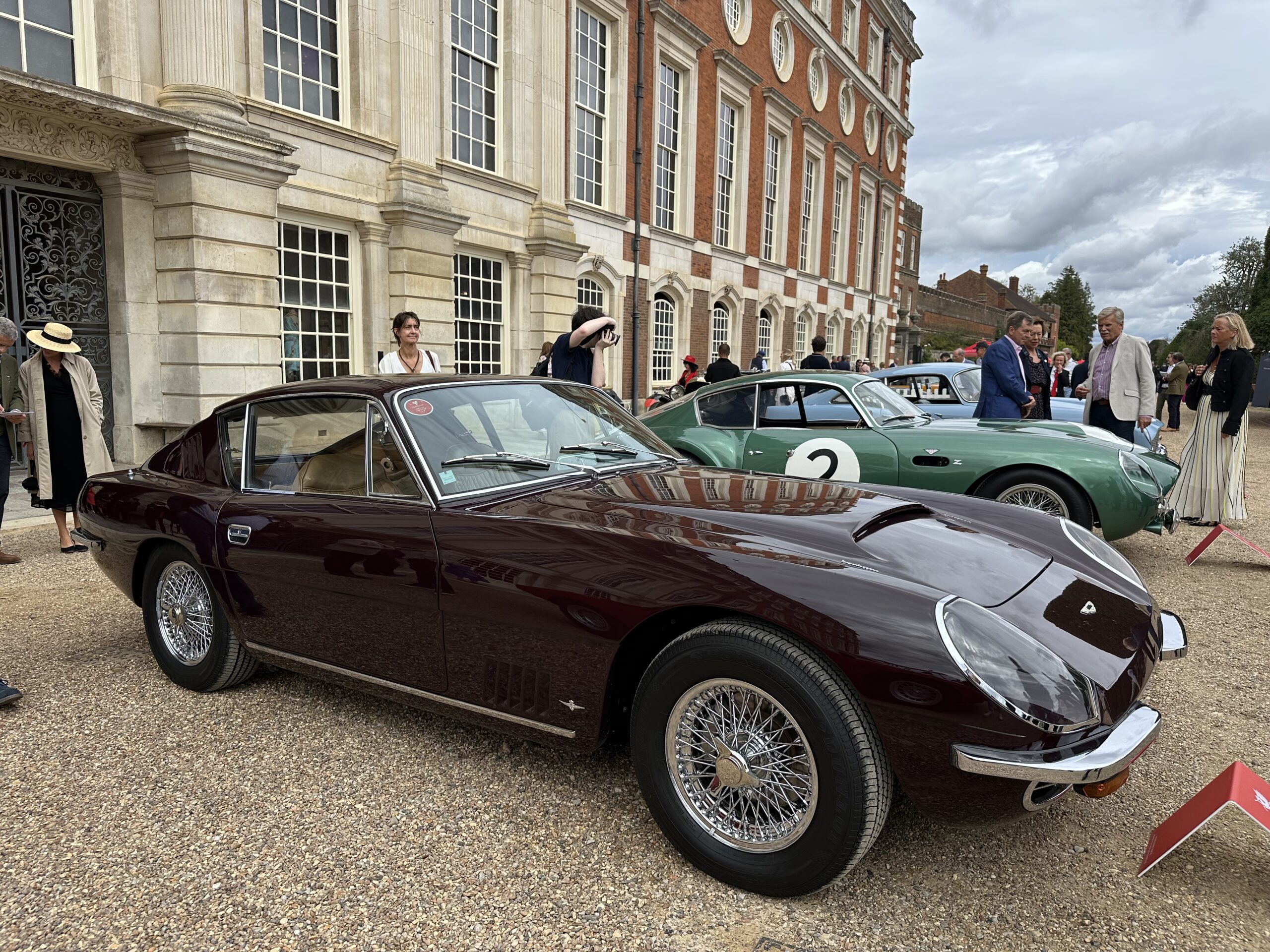
The 1966 Aston Martin DBSC, displayed at Concours of Elegance 2026, is an ultra-rare, coachbuilt two-seater fastback prototype designed by Carrozzeria Touring of Milan.
Chassis 266/2/L represents the left-hand-drive member of two Aston Martin DBSC prototypes that Carrozzeria Touring created in 1966. Aston Martin developed it under the internal code MP226 to test reactions to a fast, two-seat successor to the DB6. Touring finished the car in Black Cherry and fitted engine 400/2775/V, before sending it onto the international motor-show circuit.
Aston Martin’s long-standing relationship with Touring had produced the DB4, DB5 and DB6, but MP226 marked a technical departure. Its platform was derived from the DB6, shortened for two-seat accommodation and altered so that the engine sat 267mm further back in the chassis. This arrangement anticipated Tadek Marek’s forthcoming V8 and improved weight distribution. At the rear, Aston Martin installed an experimental de Dion system developed during the DB6 programme but rejected for the production car.
Federico Formenti shaped the Superleggera body, one of Touring’s final original designs. Covered headlamps, a low horizontal grille and split bumpers gave the nose a markedly different character from the DB6, while the sharply defined roof flowed into an opening fastback rear hatch. The compact cabin and long tail created a purposeful grand tourer rather than a direct continuation of the existing four-seat DB line.
The intended V8 was not ready, so 266/2/L received Aston Martin’s 3995cc twin-cam straight-six in 325bhp Vantage specification, coupled to a ZF five-speed manual gearbox. The engine’s rearward position and de Dion rear suspension distinguished the prototype from the live-axle DB6. Aston Martin promoted the DBSC as a prospective 170mph car, although it never reached series production for that claim to be demonstrated.
Chassis 266/2/L appeared at the Paris Salon in September 1966 and the London Motor Show at Earls Court the following month, wearing ‘DB S’ display plates. It was subsequently exhibited at the 1967 New York International Automobile Show before being sold to a private customer. Aston Martin later adopted the DBSC designation to distinguish Touring’s prototype from the William Towns-designed DBS placed into production.
Touring closed soon afterwards, while Aston Martin concentrated its limited resources on completing the production DBS. The two MP226 cars therefore remained unique. Chassis 266/2/L later appeared at Pebble Beach in 2017, bringing Touring’s abandoned proposal back before an international concours audience.
ENGINE: 3995cc/inline-six/naturally aspirated/DOHC
TRANSMISSION: Five-speed manual, RWD
POWER: 325bhp
TORQUE: N/A
TOP SPEED: 170mph, claimed
0-60MPH: N/A
WEIGHT: N/A
NO OF CARS MADE: 2
More Aston Martin articles here.
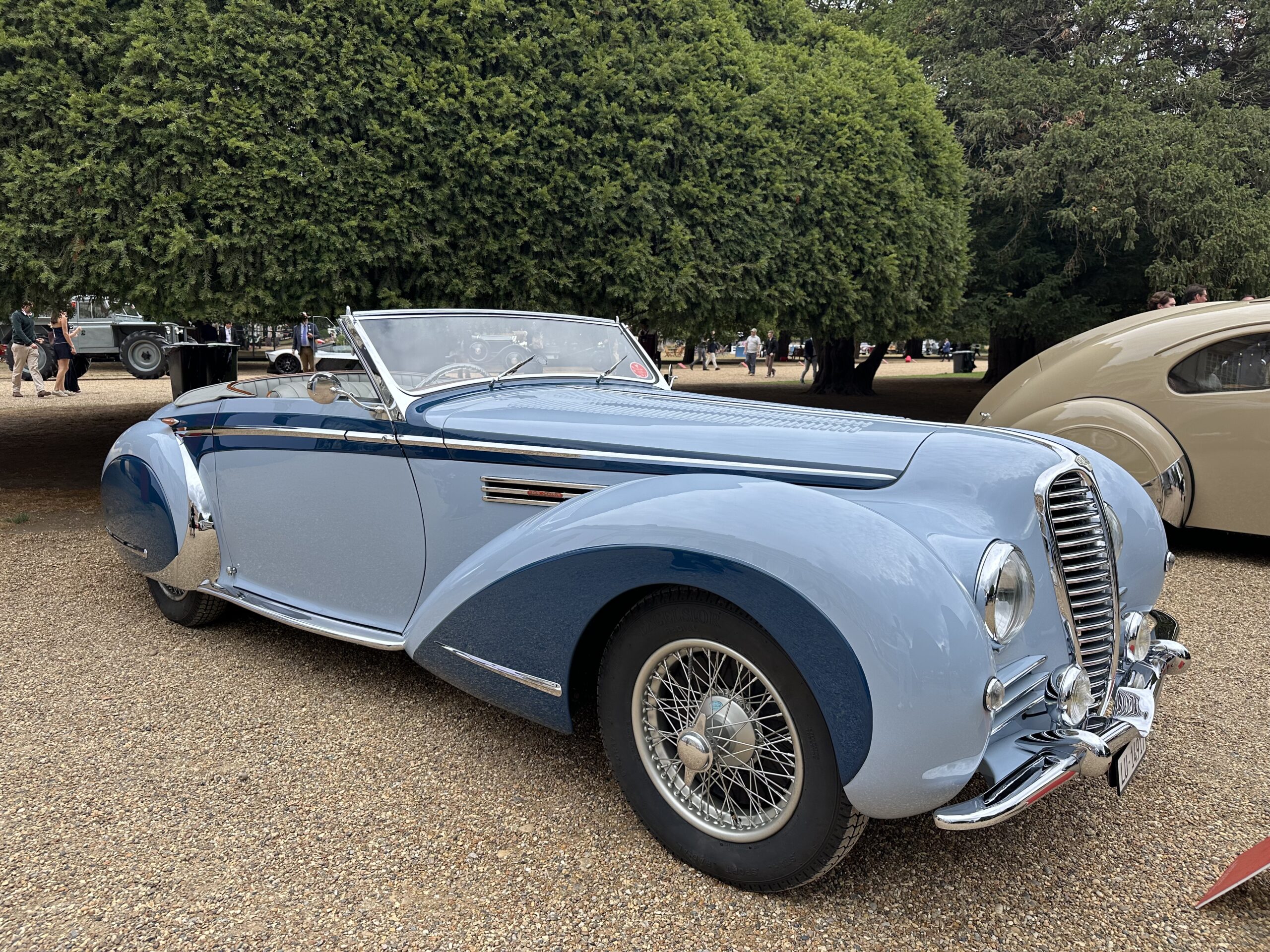
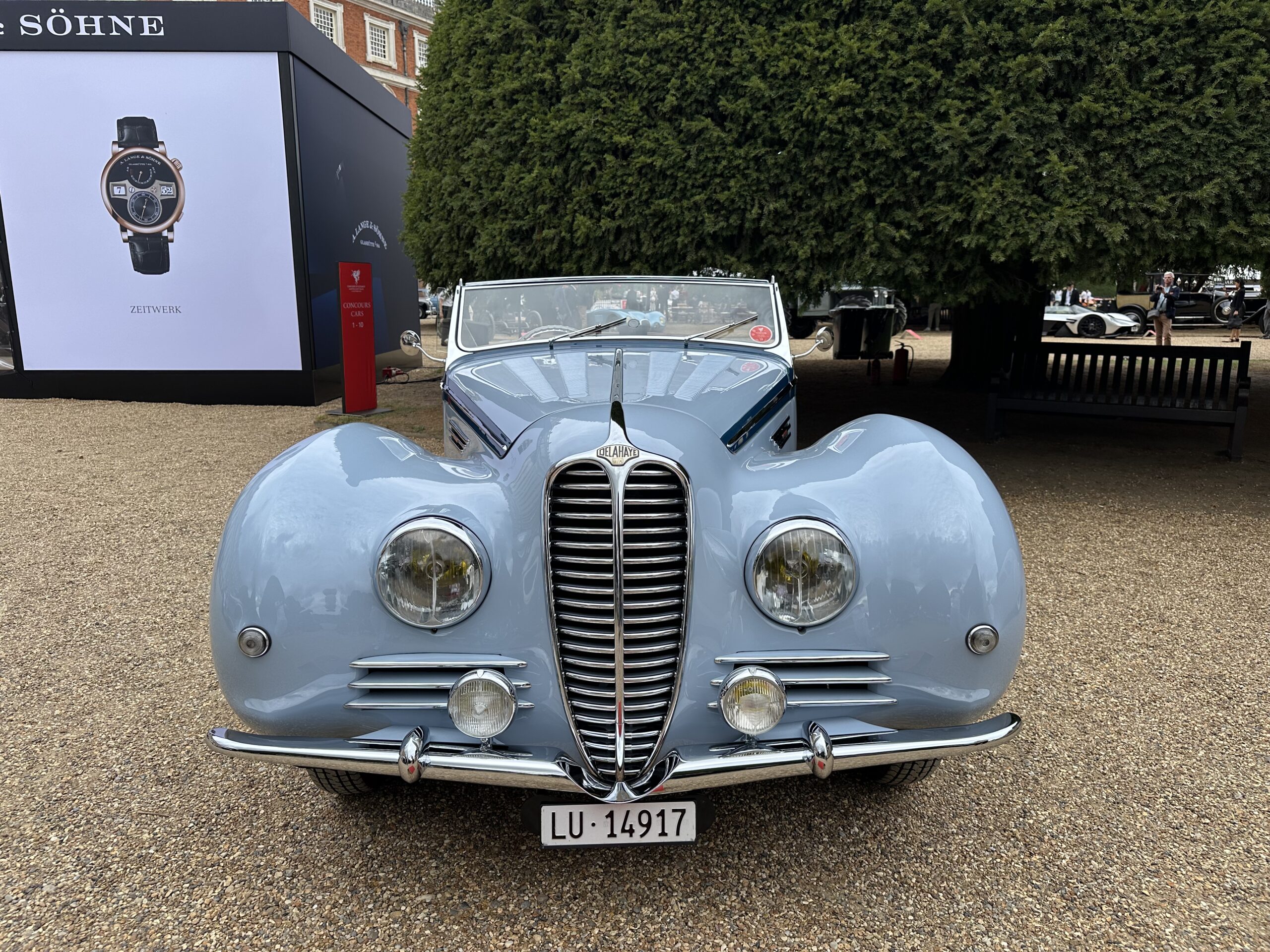
The 1947 Delahaye 135 MS Chapron Vedette Cabriolet, displayed at Concours of Elegance 2026, is an ultra-rare post-war French luxury convertible. It features bespoke coachwork by Henri Chapron and uses Delahaye’s most potent “MS” high-performance chassis.
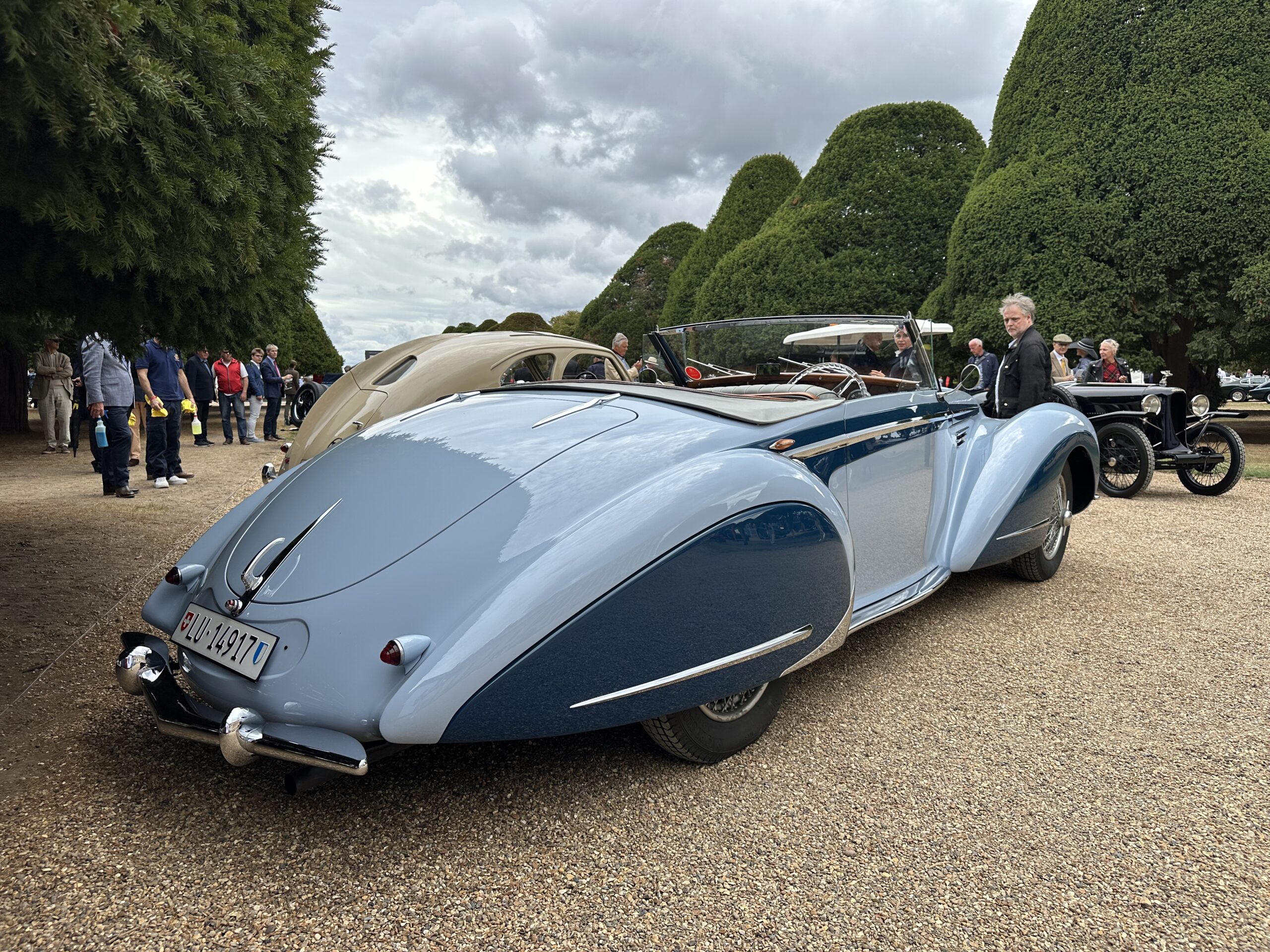
Chassis 800486 is a Delahaye 135 MS Vedette Cabriolet, bodied by Henri Chapron and displayed on the Delahaye stand at the 1947 Paris Motor Show. It is one of five examples believed to have been built and one of four known survivors. Recessed exterior door handles and rear wheel spats distinguish it from most other Vedette cabriolets.
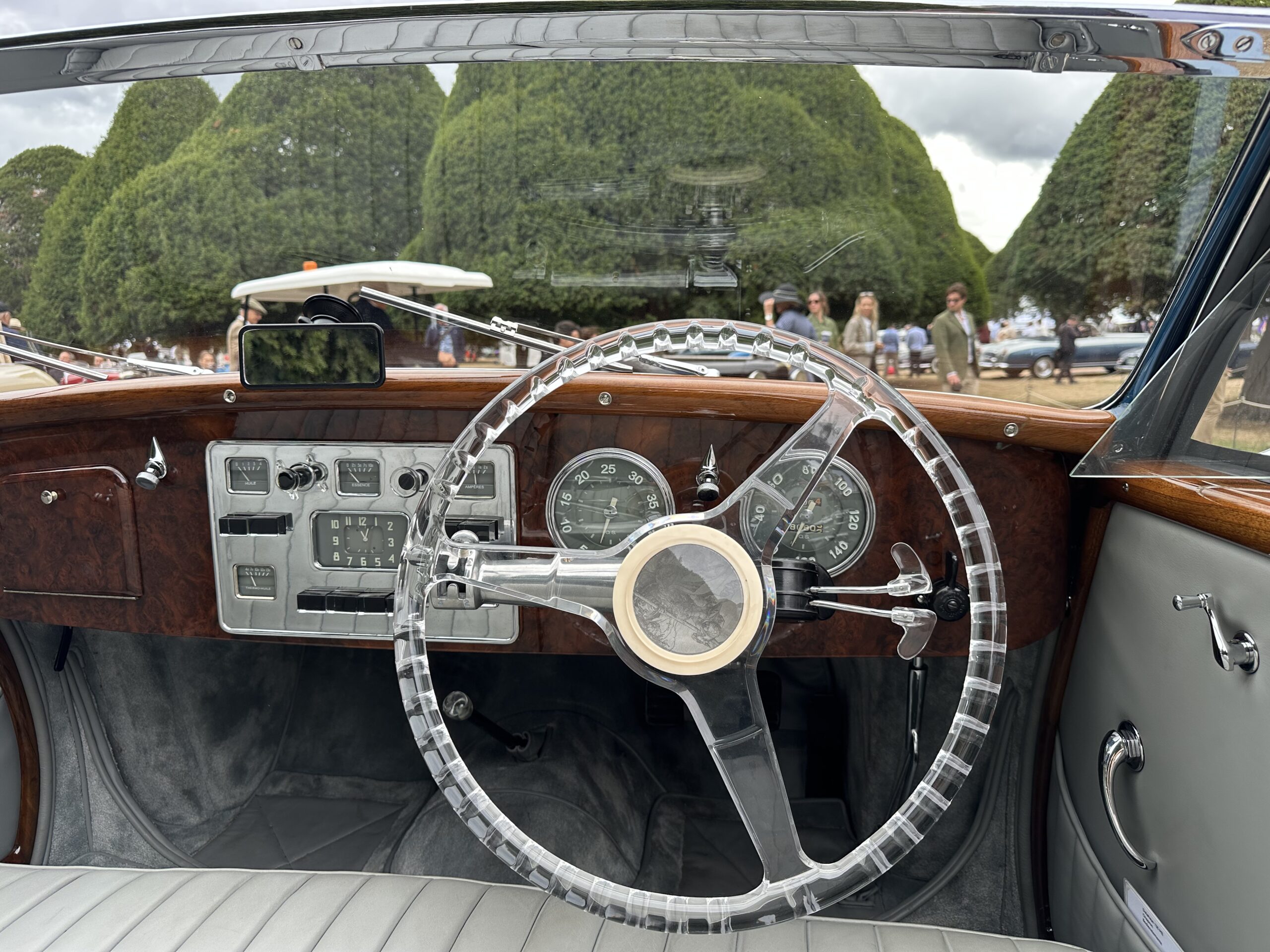
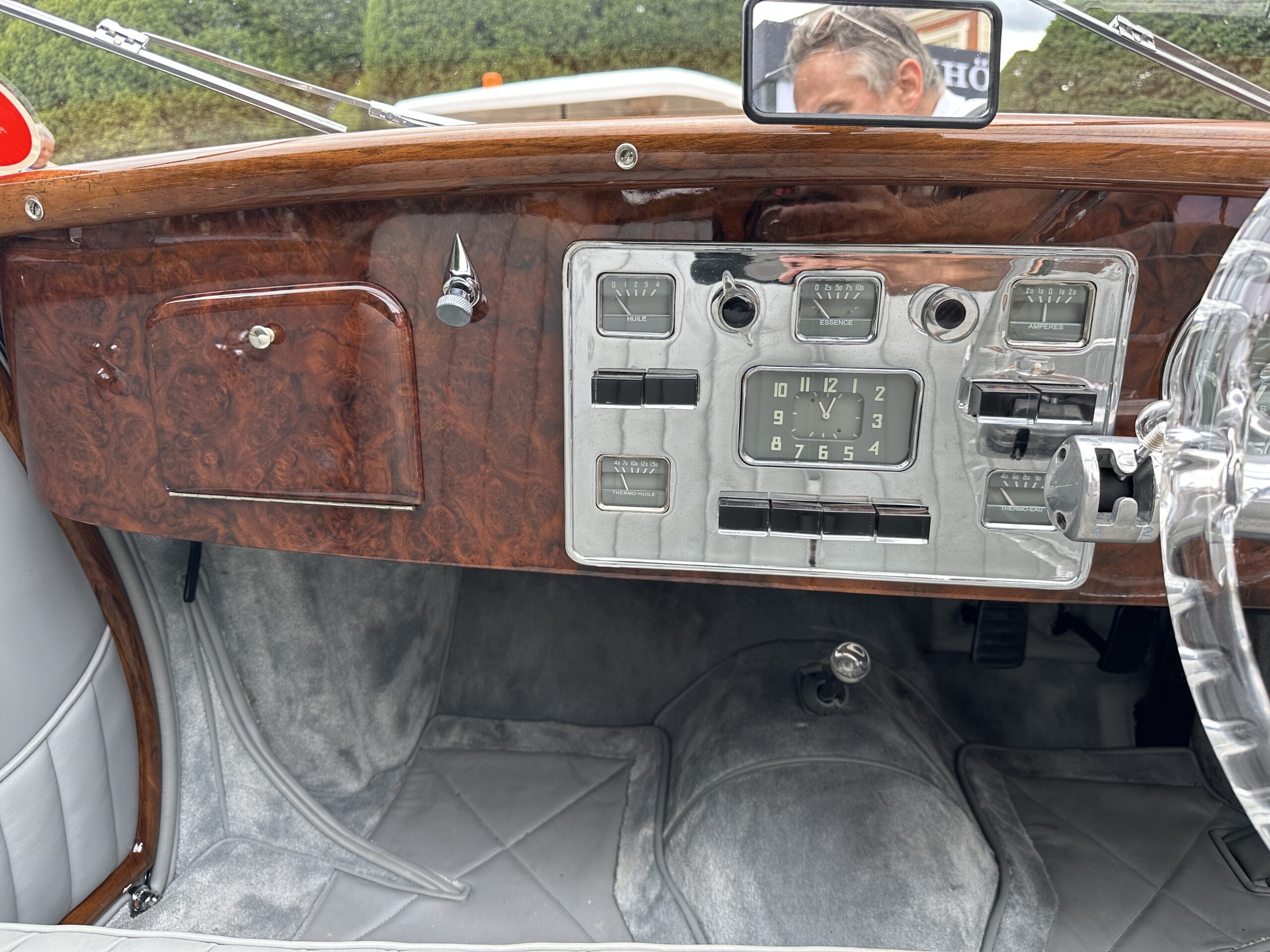
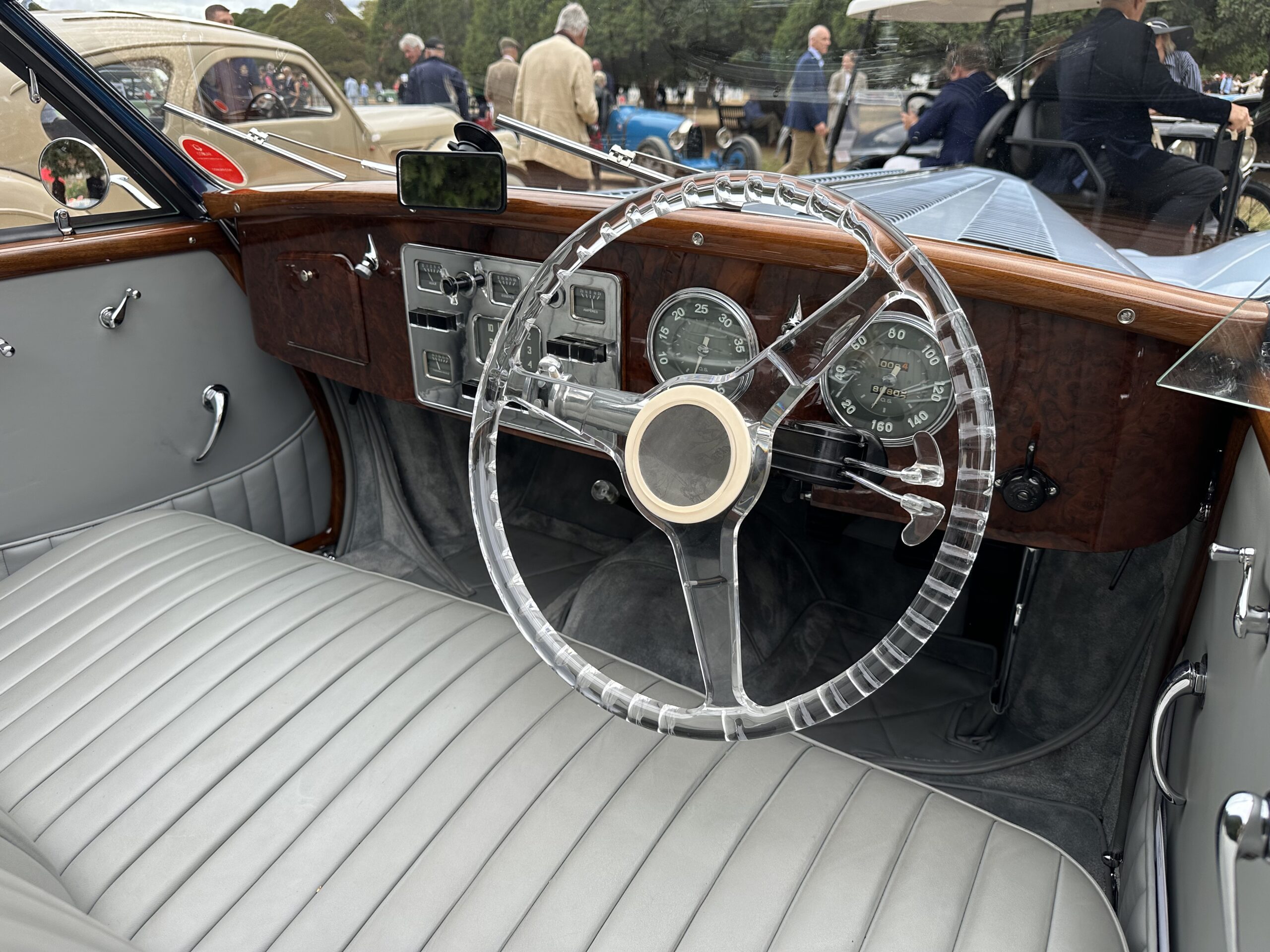
Delahaye resumed production of the Type 135 after World War Two, retaining the separate chassis that allowed specialist coachbuilders to create individual bodies. Chapron’s Vedette combined the separate, flowing wings of pre-war French design with more integrated post-war volumes. Its concealed door hinges, retracting hood and two-seat front bench gave the cabriolet an unusually clean profile. Chassis 800486 also received a two-tone finish for its Paris appearance, with a lighter upper body and darker mouldings and wing panels. Photographs taken at the show also record engine-turned brightwork beneath the bonnet, together with a translucent steering wheel and matching control knobs.
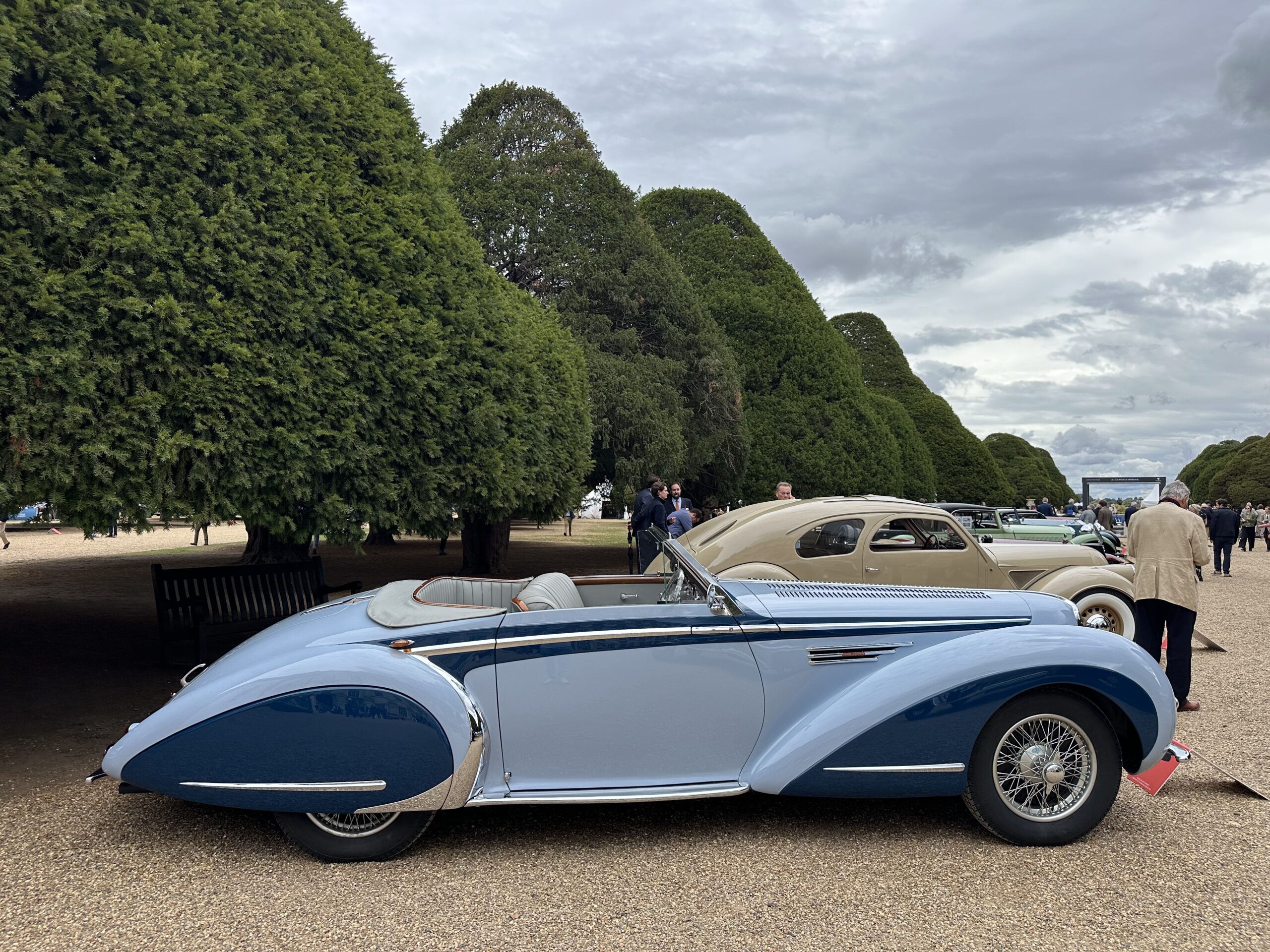
The chassis entered Chapron’s Levallois-Perret works on June 5, 1947. Beneath the body was Delahaye’s 3557cc overhead-valve straight-six, the MS specification using three carburettors to produce approximately 135bhp. A four-speed Cotal transmission drove the rear wheels, while independent front suspension, a live rear axle and cable-operated drum brakes followed established Type 135 practice. Its 2955mm wheelbase gave Chapron sufficient length for the sweeping bonnet and closely coupled open body without disturbing the car’s proportions. Its front and rear tracks measured 1380mm and 1490mm respectively, and it rode on 5.25/5.50 x 17 tyres. Right-hand drive followed Delahaye’s customary sporting arrangement.
The car was acquired at the Paris Salon by Mr and Mrs Dandelot. Correspondence with Delahaye and Chapron records the purchase process, final personalisation and the licensing required in post-war France. It was delivered on January 24, 1948, and registered as 7088 DU 5. After the Dandelots, it passed through several French owners before Hubert Sabrié acquired it during the early 1960s. He retained the Delahaye for more than five decades.
JWA Classic of Belmont-de-la-Loire acquired chassis 800486 in 2017 and undertook a comprehensive restoration in its Touraine workshops. The work preserved its Chapron body, matching-number engine and the details that identified it as the 1947 show car. Ralph Stadler acquired the Delahaye in 2024 and imported it into Switzerland. I’m so glad I got to see it at Concours of Elegance 2026.
ENGINE: 3557cc/inline-six/naturally aspirated/OHV
TRANSMISSION: Four-speed manual, RWD
POWER: 135bhp
TORQUE: Unknown
TOP SPEED: Around 100 mph
0-60MPH: Estimated 12 to 14 seconds
WEIGHT: Approximately 1406 kg
NO OF CARS MADE: 5
More Delahaye 135 articles here.
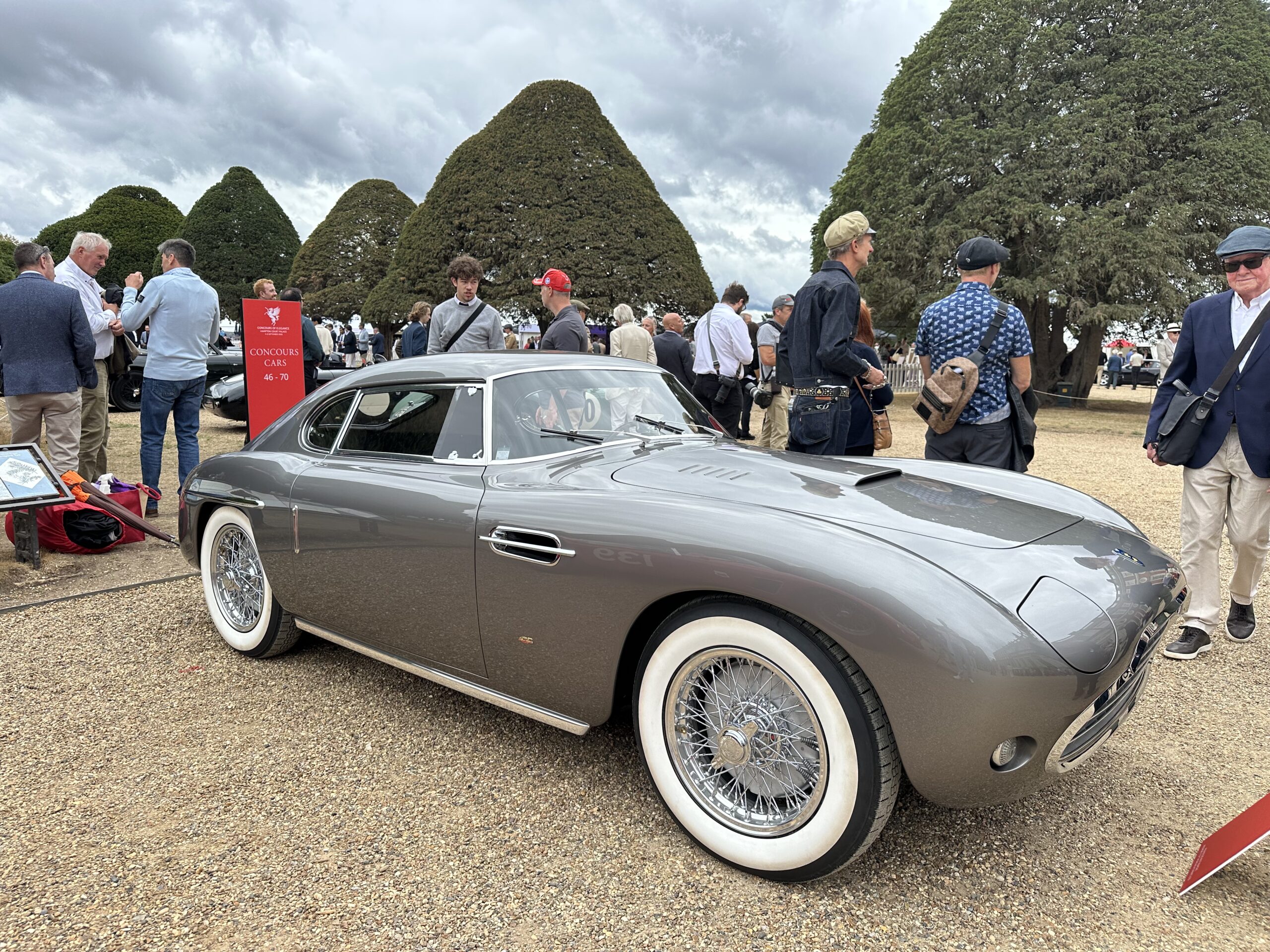
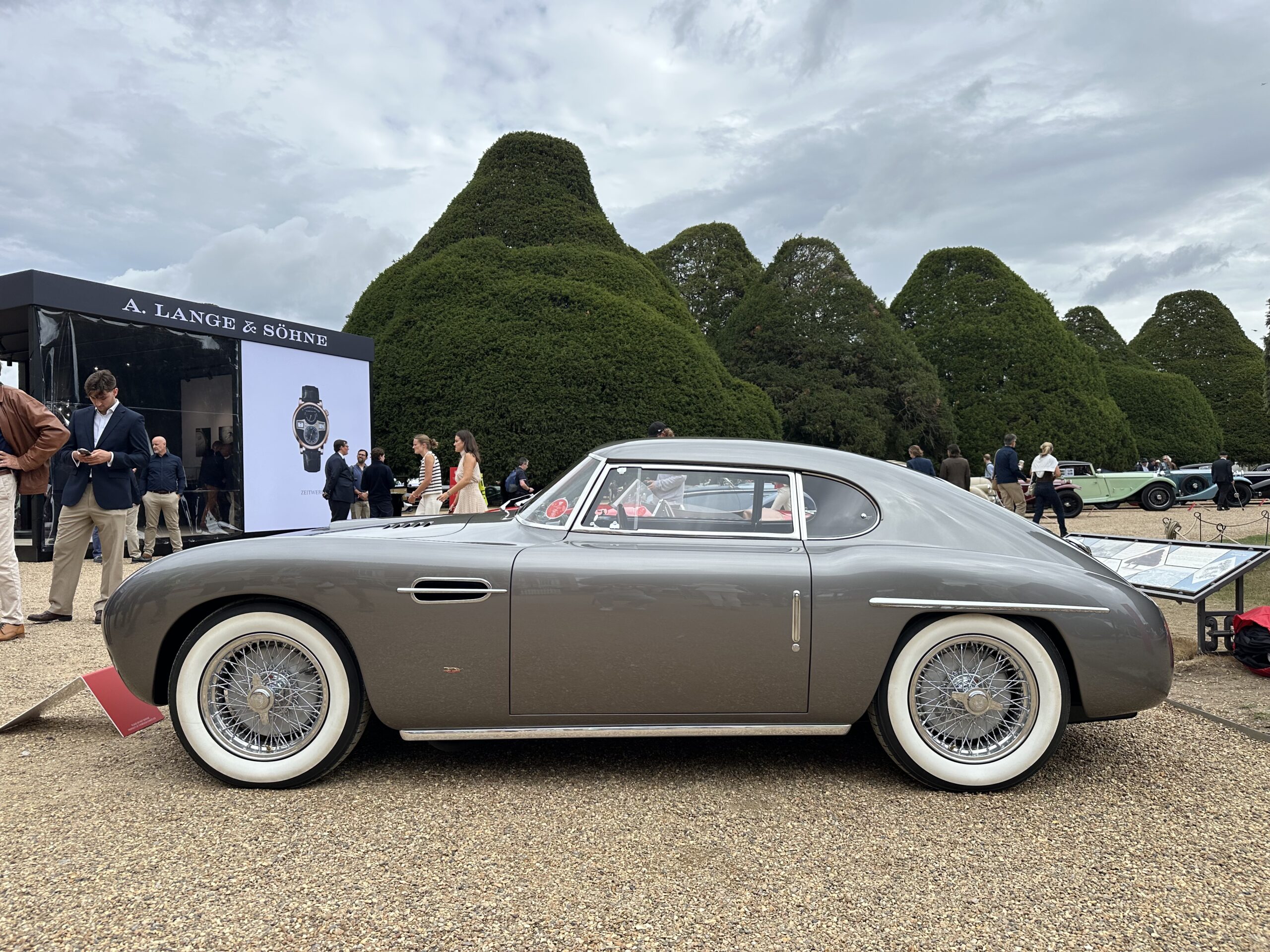
Displayed at Concours of Elegance 2026, the 1953 Siata 208 CS by Balbo is an ultra-rare, hand-crafted Italian sports car. It features an aluminium Berlinetta body by Carrozzeria Balbo and a Fiat “Otto Vu” V8 engine.
Chassis CS072 is one of nine Siata 208 CS Berlinetta’s bodied by Carrozzeria Balbo of Turin, of which six are known to survive. First registered in August 1953, it combines Balbo’s hand-formed aluminium coachwork with Siata’s tubular chassis and the 2.0-litre Fiat Tipo 104 V8 developed for the 8V.
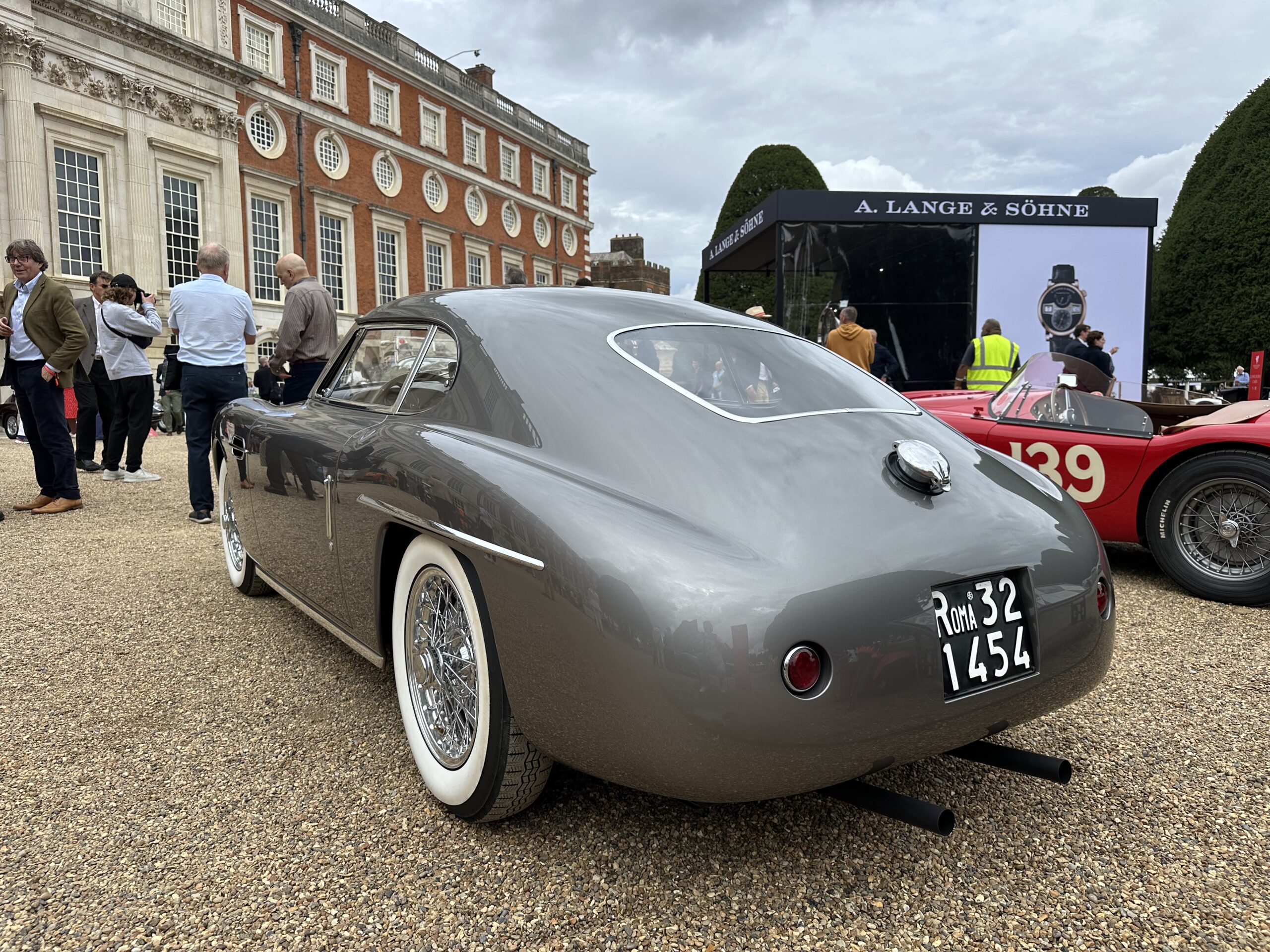
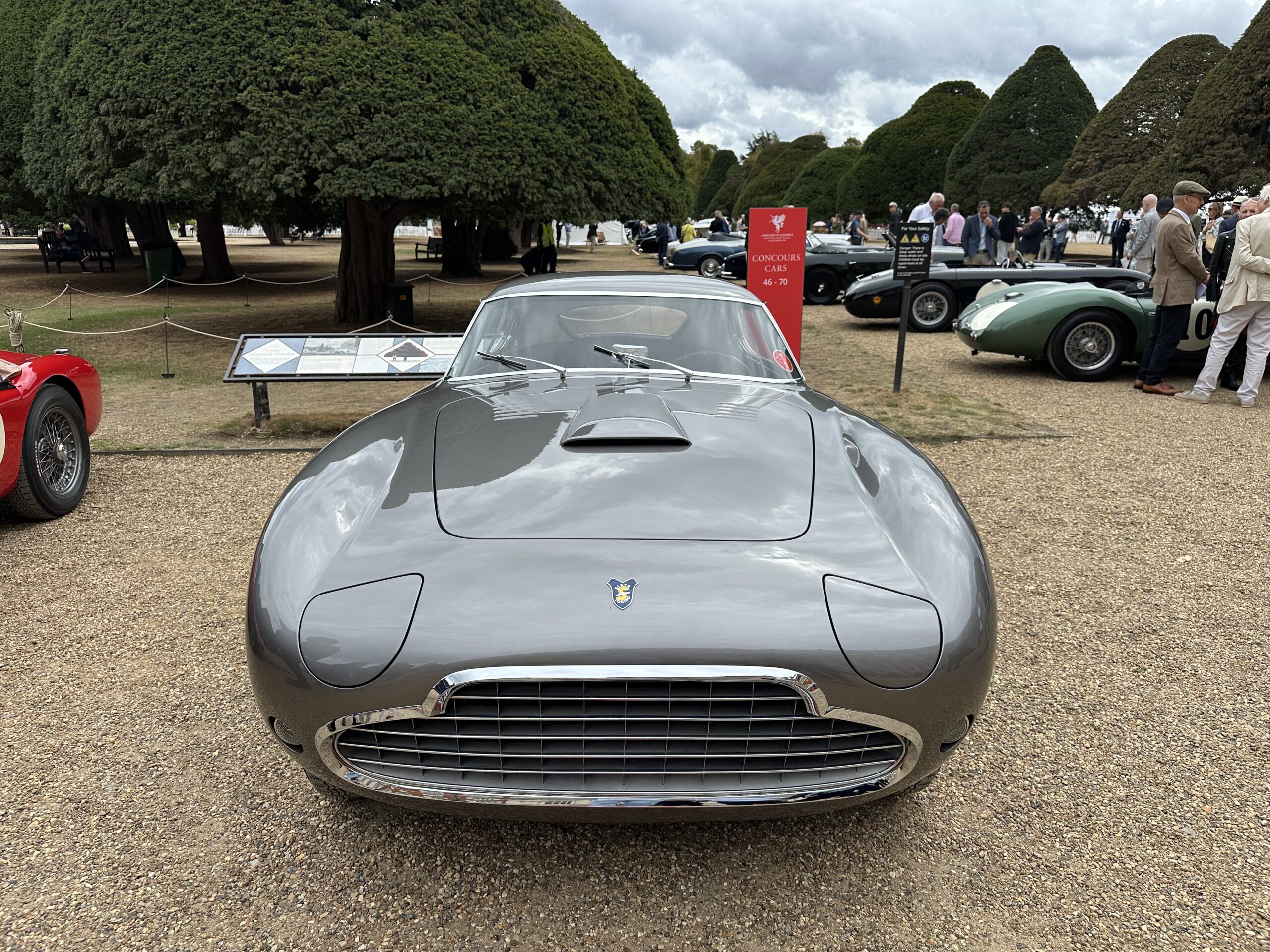
Siata had developed the chassis under Rudolf Hruska while assisting Fiat with the 8V programme. The coil-sprung independent suspension and hydraulic drum brakes gave the compact Berlinetta unusually sophisticated underpinnings, while twin Weber carburettors fed the alloy 70º V8. Balbo clothed the mechanical package with a low roofline, broad grille and concealed headlamps.
CS072 likely went first to a Milanese businessman. By March 1959, the car had a French registration in Clermont-Ferrand before its export to the US. In 1964, Gordon Gumble of Tucson bought it from a Triumph dealer in Denver. Registered as a 1959 Siata with the Arizona plate JGJ940, it appears with Gumble in period photographs reproduced in Tony Adriaensens Otto Vu.
Marque enthusiast Charles Betz acquired the car from Gumble in July 1968. Although well used, it remained complete and roadworthy. Betz retained it until 1984, when it was sold to German collector Peter Kaus and entered the Rosso Bianco Collection at Aschaffenburg. Evert Louwman acquired much of that collection in 2004, including CS072, and began a partial restoration before the Siata passed to Tim Walker of Pasadena.
Walker undertook several years of research before commissioning a total restoration. During disassembly no record of its authentic colour was discovered, but original construction details including welds, enamel badges and hand-shaped panels were retained. Completed with its matching Tipo 104 engine, polished Borrani wire wheels and period Pirelli tyres, CS072 made its concours debut at Pebble Beach in 2017, taking third in class.
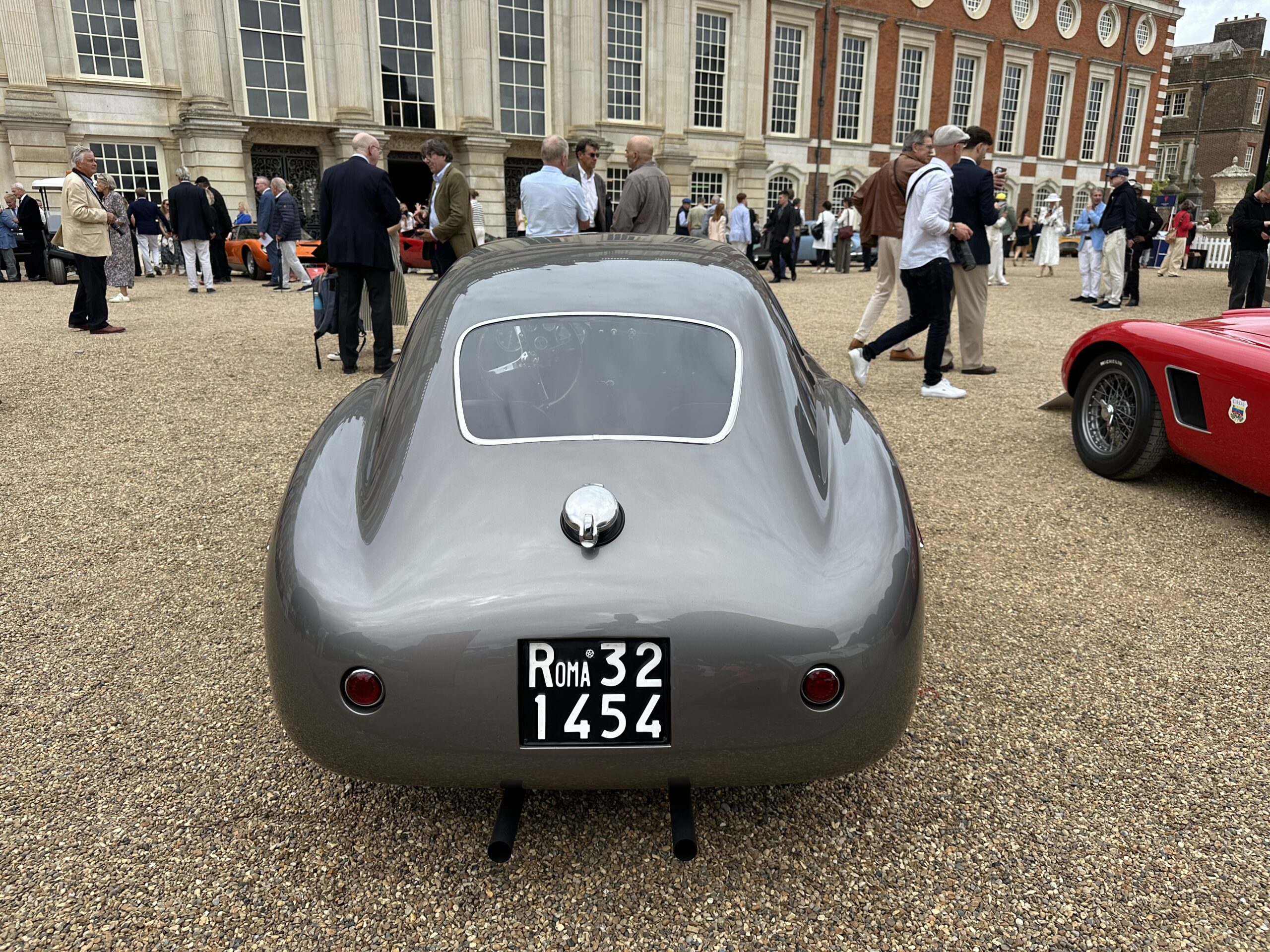
The Siata appeared at The Quail in 2019 and won its class at The Amelia in 2022. It later joined the collection of Stephen Bruno in Florida, where minor mechanical and maintenance work was completed. Jonathan and Wendy Segal acquired CS072 from Bruno in 2023.
The Segals entrusted it to RX Autoworks in Vancouver. The car was refinished in silver-grey metallic, with further attention paid to its period presentation and Balbo details. It returned to Pebble Beach in 2025, where it won Class O-1 for Post-war Sports Touring. The judges also selected CS072 for the Strother MacMinn Most Elegant Sports Car award.
ENGINE: 1996cc/V8/naturally aspirated/OHV
TRANSMISSION: Five-speed manual, RWD
POWER: 110bhp
TORQUE: 107-108 lb-ft
TOP SPEED: 125 mph
0-60MPH: Roughly 12 to 15 seconds
WEIGHT: 900 kg
NO. OF CARS MADE: 9
More Siata articles here.
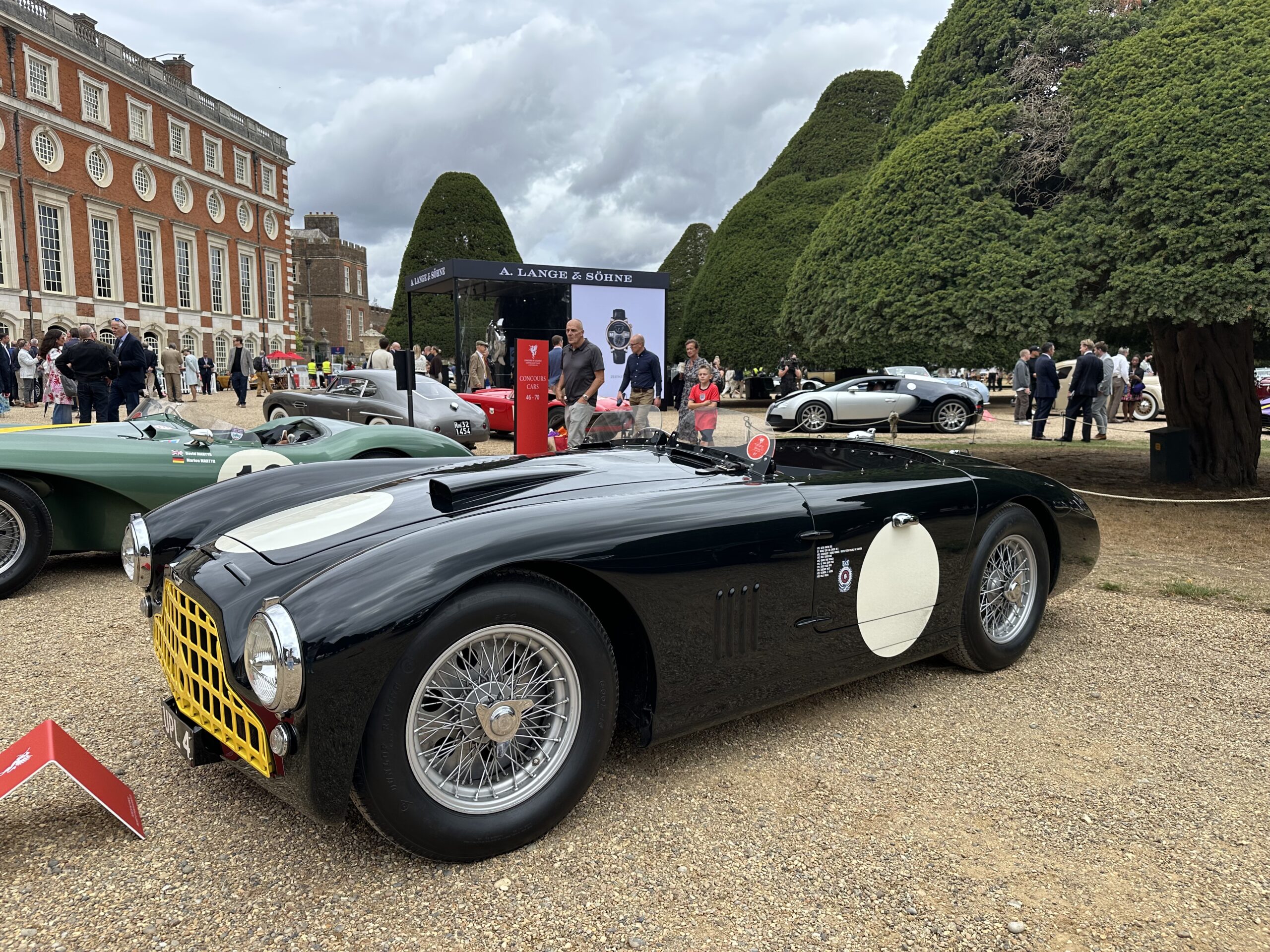
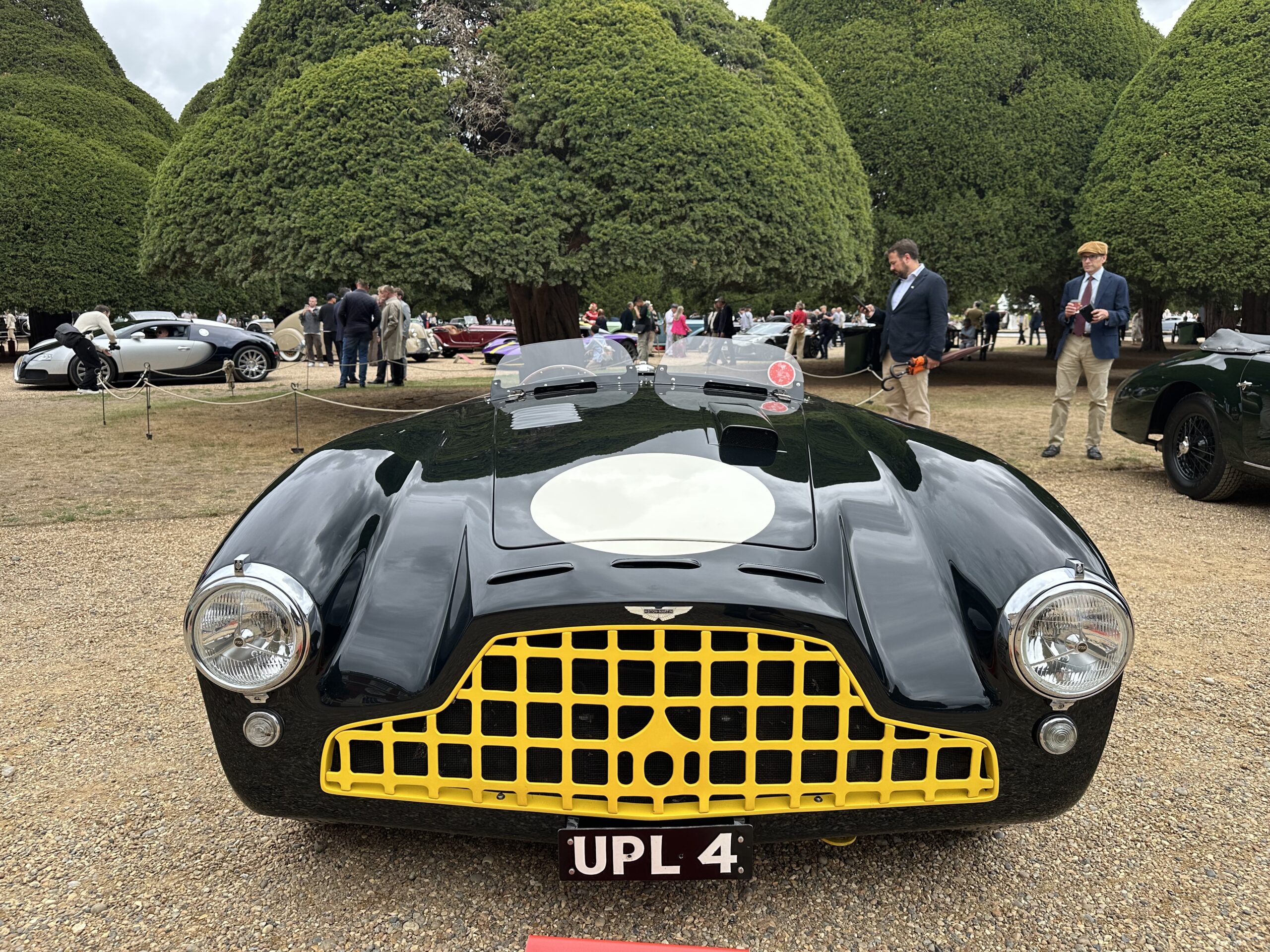
Displayed at Concours of Elegance 2026, the Aston Martin DB3/5 (chassis number DB3-5, registration UPL 4) is a legendary 1952 works-team sports-racing car. It was the fifth of only ten DB3s built as Aston Martin’s first ground-up, pure racing car.
Aston Martin built a total of 10 DB3 models between 1951 and 1953. 5 units built for the factory racing team. 5 units built and sold to privateer racers. This car is Chassis DB3/5 is one of three surviving Aston Martin DB3 Works team cars. The DB3 was Aston Martin’s first serious sports-racing model, designed in 1951 by Robert Eberan von Eberhorst around a 3.0-litre, six-cylinder Lagonda engine, a twin-tube chassis, torsion-bar suspension and a de Dion rear axle. Five cars were built initially for factory competition, followed by another five for private customers.
DB3/5 became the most raced of the Works cars. Its 1952 season began at the BRDC meeting at Silverstone, where Lance Macklin finished fourth overall and third in class. He then drove it in the Monaco Grand Prix sports-car race as number 76, retiring with mechanical trouble.
At Le Mans, Macklin shared number 25 with Peter Collins. The Aston ran for 20 hours and had reached fourth overall before mechanical failure ended its race. Reg Parnell subsequently drove DB3/5 in the Jersey Road Race, taking fourth overall and third in class, before finishing third overall and first in class at the West Essex Car Club meeting at Boreham.
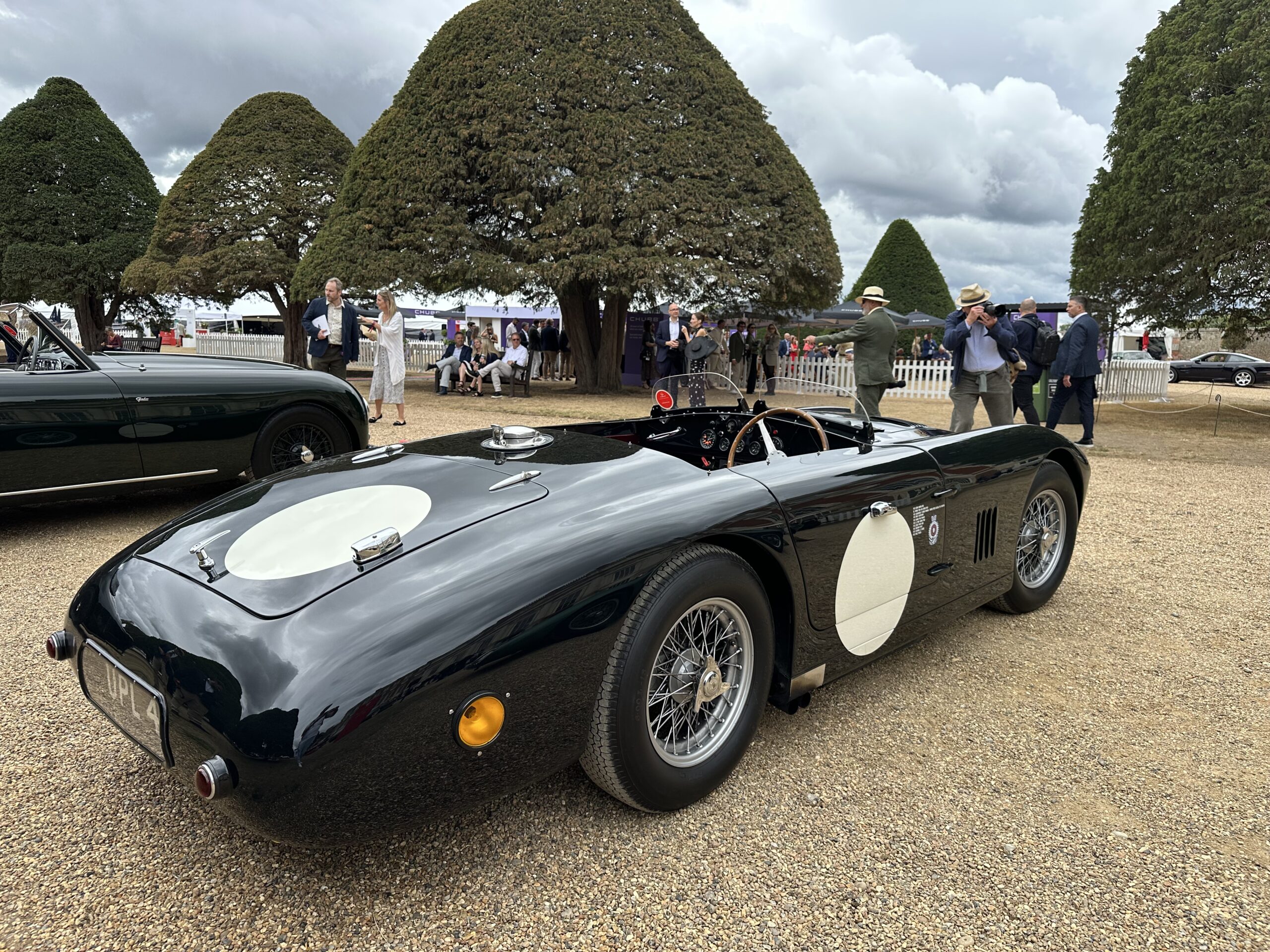
The season’s principal result came at the inaugural Goodwood Nine Hours. Peter Collins and Pat Griffith shared the car, carrying number 17, and won overall. A photograph reproduced with its history shows Collins pressing DB3/5 through the chicane during the race.
DB3/5 returned to international competition in 1953. Parnell and George Abecassis finished second overall and first in class in the Sebring 12 Hours. Abecassis and Griffith then entered the Mille Miglia as number 612 but retired on the final stage shortly before the finish in Brescia.
Across those two Works seasons, DB3/5 appeared at many of the period’s principal road, airfield and endurance events. Its record ranged from short British races at Silverstone, Jersey and Boreham to internationally important long-distance contests at Le Mans, Sebring and across Italy in the Mille Miglia.
The car received Ministry of Transport approval for road use in 1955 and was registered UPL 4, a number it retains. Its competition career later resumed in historic racing, beginning with appearances in the Stirling Moss Trophy in the Algarve, the Spa Six Hours and the Freddie March Trophy at the 2011 Goodwood Revival.
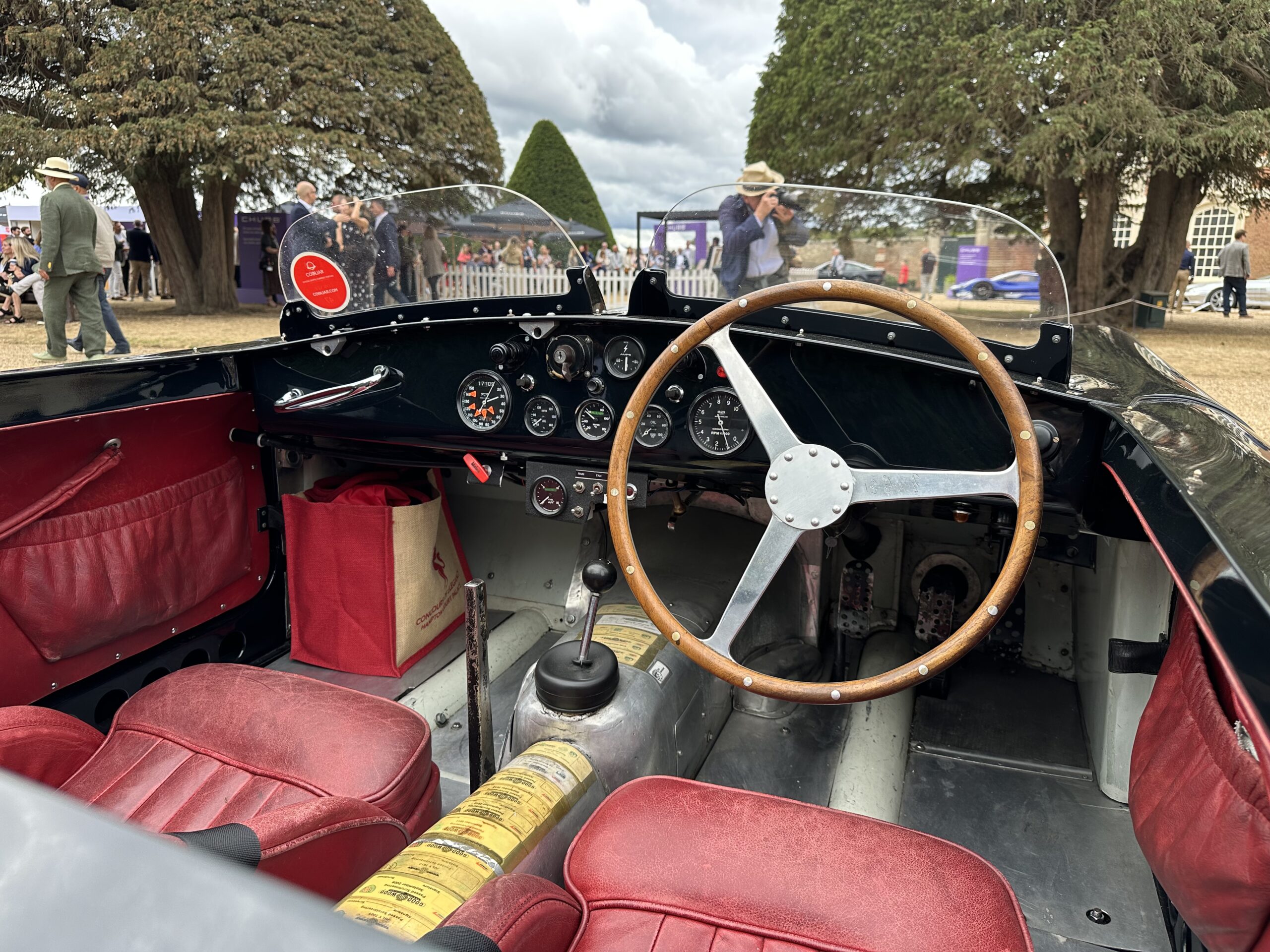
Further Goodwood results included fifth in the 2014 Freddie March Trophy and second in 2016. In 2017, it returned to the Freddie March Trophy and won, 65 years after Collins and Griffith had taken the same chassis to victory in Goodwood’s first Nine Hours race.
ENGINE: 2922cc/inline-six/naturally aspirated/DOHC
TRANSMISSION: Four-speed manual, RWD
POWER: 163 bhp
TORQUE: 140 lb-ft @ 3,000 rpm
TOP SPEED: Approximately 131 to 140 mph
0-60MPH: Approximately 8.2 to 9.3 seconds
WEIGHT: Approx. 914 kg
NO OF CARS MADE: 10
More Aston Martin DB3 articles here.
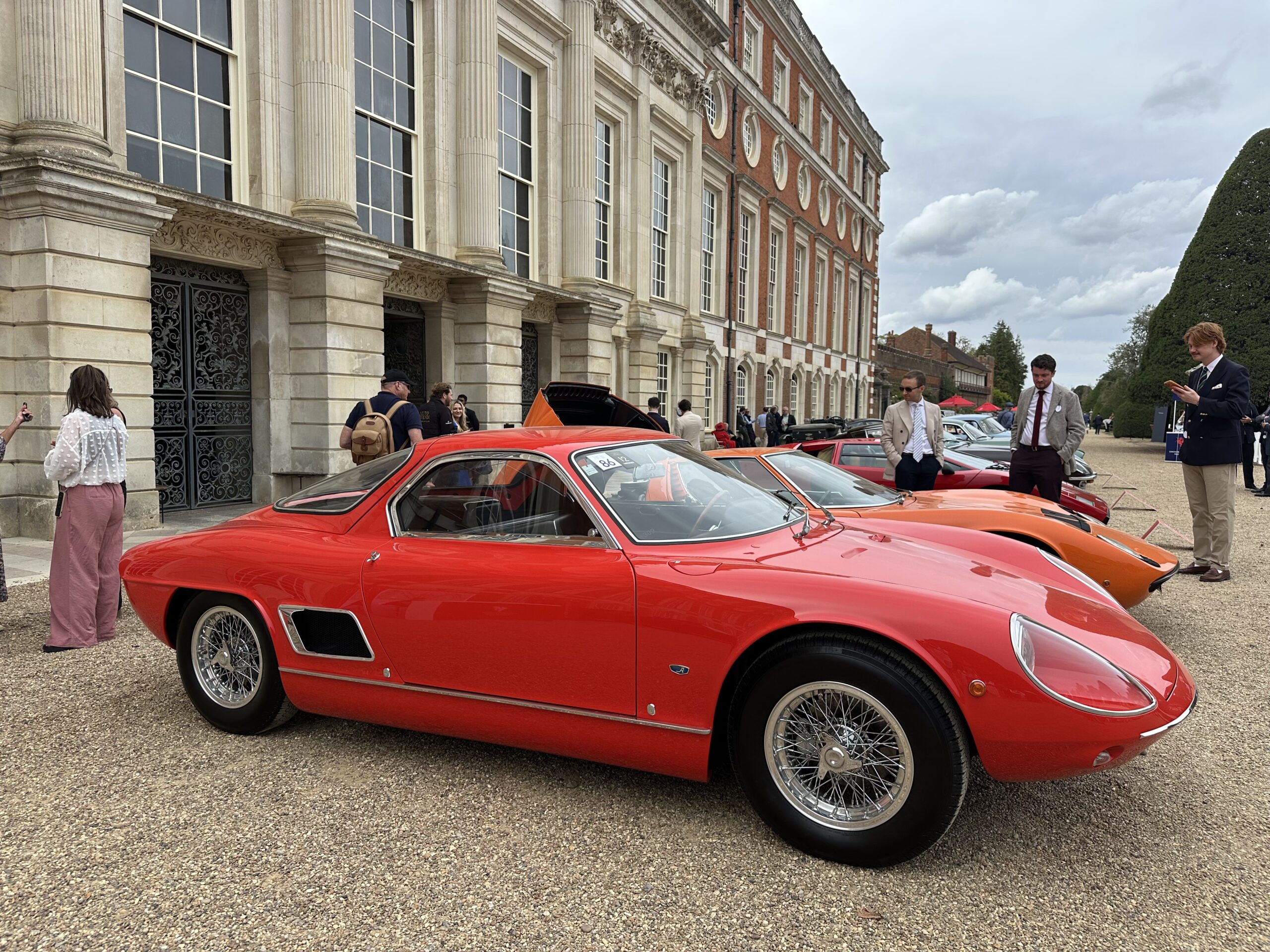
The 1964 ATS 2500 GTS is an ultra-rare, lightweight, mid-engined Italian sports car built by former Ferrari engineers who wanted to challenge Enzo Ferrari. Displayed at Concours of Elegance 2026, it remains a fascinating example of Italian automotive ambition.
ATS emerged from 1961’s Ferrari upheaval, when engineers including Giotto Bizzarrini and Carlo Chiti left Maranello in dispute with Enzo Ferrari and established Automobili Turismo e Sport. The 2500 placed its engine behind the cockpit in a tubular spaceframe, with double-wishbone independent suspension, disc brakes and a five-speed transaxle. Franco Scaglione shaped the body, which was constructed by Carrozzeria Allemano.
Chassis 2008 ranks among the few ATS 2500 road cars completed during the marque’s brief existence. The factory built only two cars to lightweight competition specification with aluminium coachwork. Its combination of an alloy body, 3.0-litre V8 and racing kit distinguishes it from the steel-bodied 2500 GT models intended principally for road use. Chassis 2008 received the smoother, bumperless GTS treatment, together with front air scoops.
In 1974 Nicholas Begovich acquired 2008, complete with a 3.0-litre version of Chiti’s aluminium V8, four carbs and Nürburgring gearing. Begovich found the competition ratios poorly suited to roads, so he obtained a lower gear set from ATS and installed it to improve everyday usability.
Engineer and scientist Begovich collected cars for their technical interest rather than just their styling, assembling a group that included a Lamborghini Miura, Porsche 904 Carrera GTS, De Tomaso Pantera and other uncommon European designs. The ATS remained with him for 46 years and was preserved with a large collection of notes, drawings and technical records relating to its construction.
The Audrain Collection acquired Begovich’s cars in 2020. Chassis 2008 was sent to Automotive Restorations in Connecticut ahead of the museum’s Engineering + Design = Passion exhibition. Initial plans favoured preserving the car much as Begovich had kept it, but corrosion where aluminium met steel required more extensive work.
During disassembly, the restorers documented the car carefully and found traces of its original paint. Period notes identified it as an Alfa Romeo red, allowing a close match to be prepared. Begovich’s retained diagrams and mechanical data provided further guidance for components about which little factory documentation survives.
The project included structural repairs, mechanical recommissioning, body restoration and the recreation of period finishes. Despite parts shortages and a compressed timetable, the ATS was completed in late 2021. It made its first public appearance after restoration at the Audrain Automobile Museum in Newport, Rhode Island, as part of the exhibition devoted to Begovich’s collection. I’m so glad I got to see it at Concours of Elegance 2026.
ENGINE: 3000cc/V8/naturally aspirated/DOHC
TRANSMISSION: Five-speed manual, RWD
POWER: 256 bhp
TORQUE: 188 lb ft
TOP SPEED: 162 mph
0-60MPH: N/A
WEIGHT: 750 kg
NO OF CARS MADE: 13
More ATS articles here.
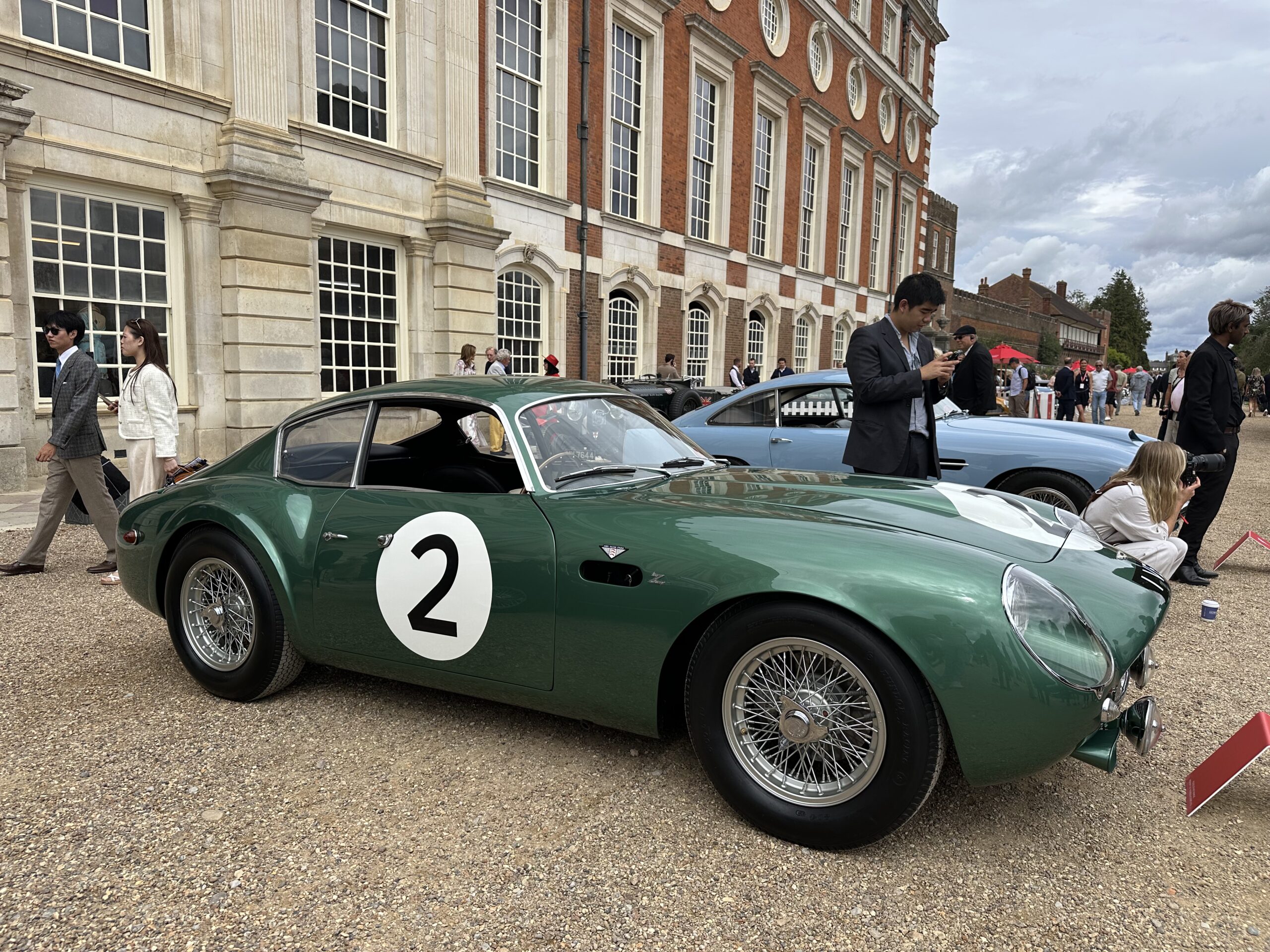
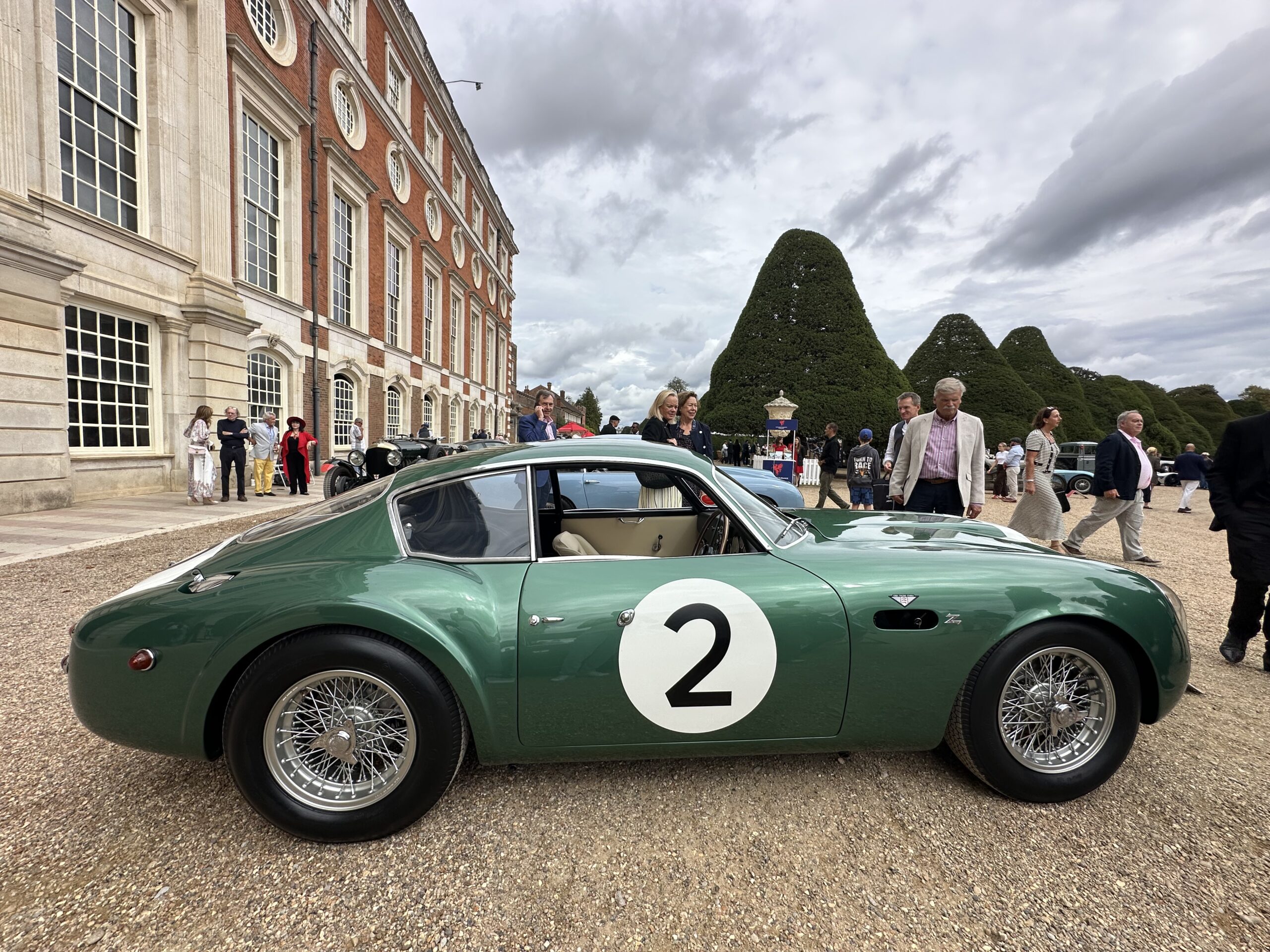
Displayed at Concours of Elegance 2026, the 1961 Aston Martin DB4 GT Zagato is an ultra-rare, high-performance grand tourer. Aston Martin built it with Italian design house Zagato to rival Ferrari on European racetracks.
Chassis DB4GT/0182/R, better known by its registration 1 VEV, was completed in 1961 for John Ogier’s Essex Racing Stable. The team ordered two DB4 GT Zagatos, 1 VEV and 2 VEV, and prepared both for competition. Only four DB4 GT Zagatos received lightweight competition specifications.Finished in Aqua Verde Caliente with a black interior, it combined Aston Martin’s shortened DB4 GT chassis with an aluminium body shaped by the 23-year-old Ercole Spada at Zagato.
Aston Martin unveiled the DB4 GT Zagato at the 1960 London Motor Show as a lighter, more aerodynamic answer to Ferrari’s 250 GT. Aston Martin planned 25 cars but completed only 19. Its 3670cc twin-plug straight-six officially produced 314bhp, although Essex Racing Stable mechanic Ian Moss later recalled that 1 VEV produced closer to 270bhp in period.
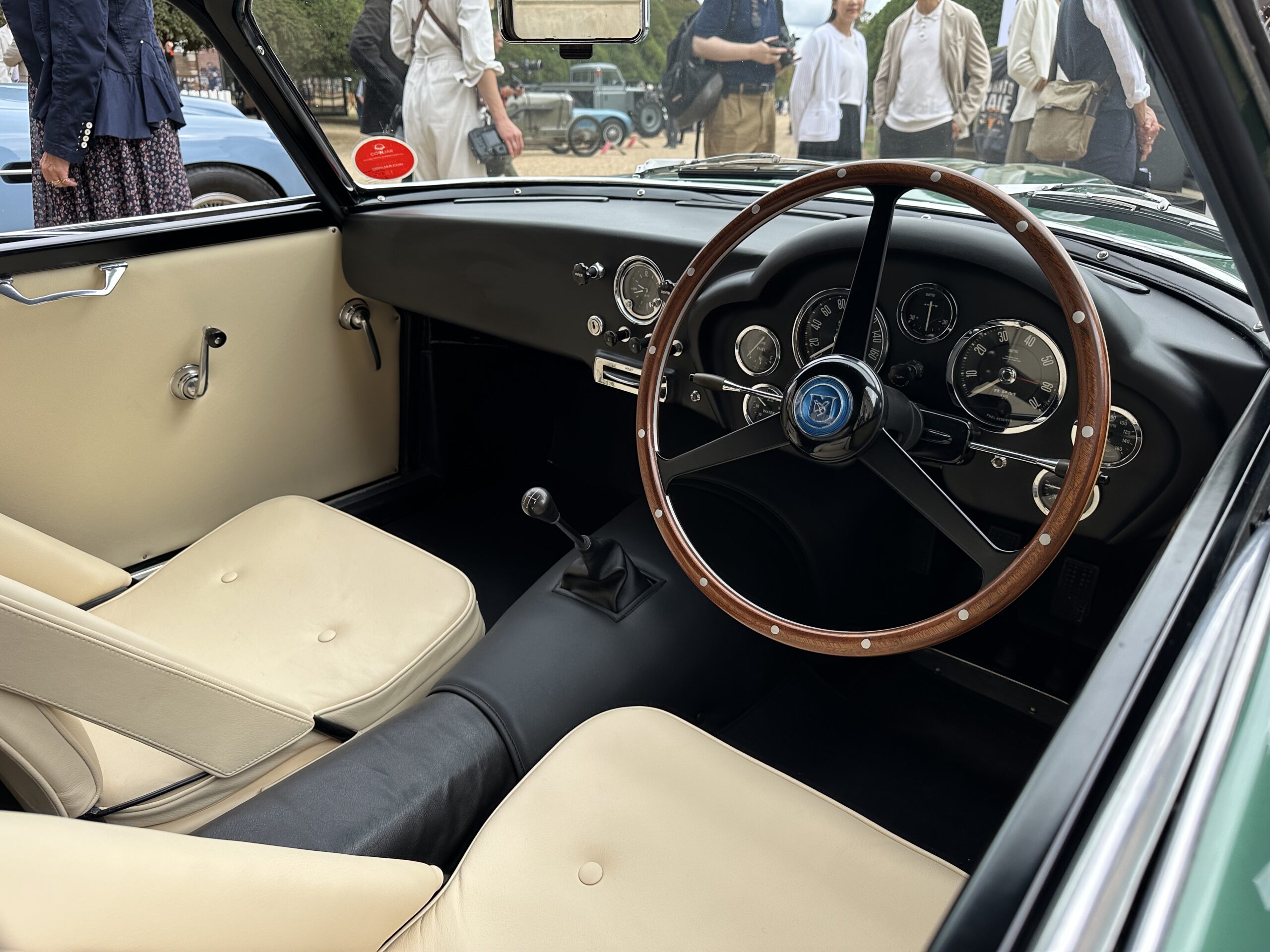
Its first major start came at the 1961 Le Mans 24 Hours, where Jack Fairman and Bernard Consten carried number two. A head-gasket failure ended their race, but the remainder of the season established 1 VEV as the more consistent of the Essex Zagatos. Roy Salvadori finished third in the RAC Tourist Trophy at Goodwood, behind the Ferrari 250 GT SWBs of Stirling Moss and Mike Parkes. Tony Maggs then took second in the Coppa Inter-Europa at Monza, before Jim Clark and Innes Ireland finished sixth in the Paris 1000 Kilometres.
The lightweight DB4 GT Zagato returned in 1962. Maggs finished third at Oulton Park and won the over-3.0-litre GT class at the Trophée d’Auvergne, while Clark brought it home fourth at Silverstone’s International Trophy meeting. Graham Warner also raced it at Goodwood and in the Tourist Trophy, where engine trouble caused its final recorded period retirement.
Ogier retained 1 VEV until around 1968. During the later 1960s, it changed colour several times, appearing in white, maroon and finally Ferrari red, and acquired alterations to its wheelarches, trim and interior. It then remained with Mr Gregory until 1990. Unlike its sister car, which suffered major accidents, 1 VEV escaped serious damage and retained much of its original structure.
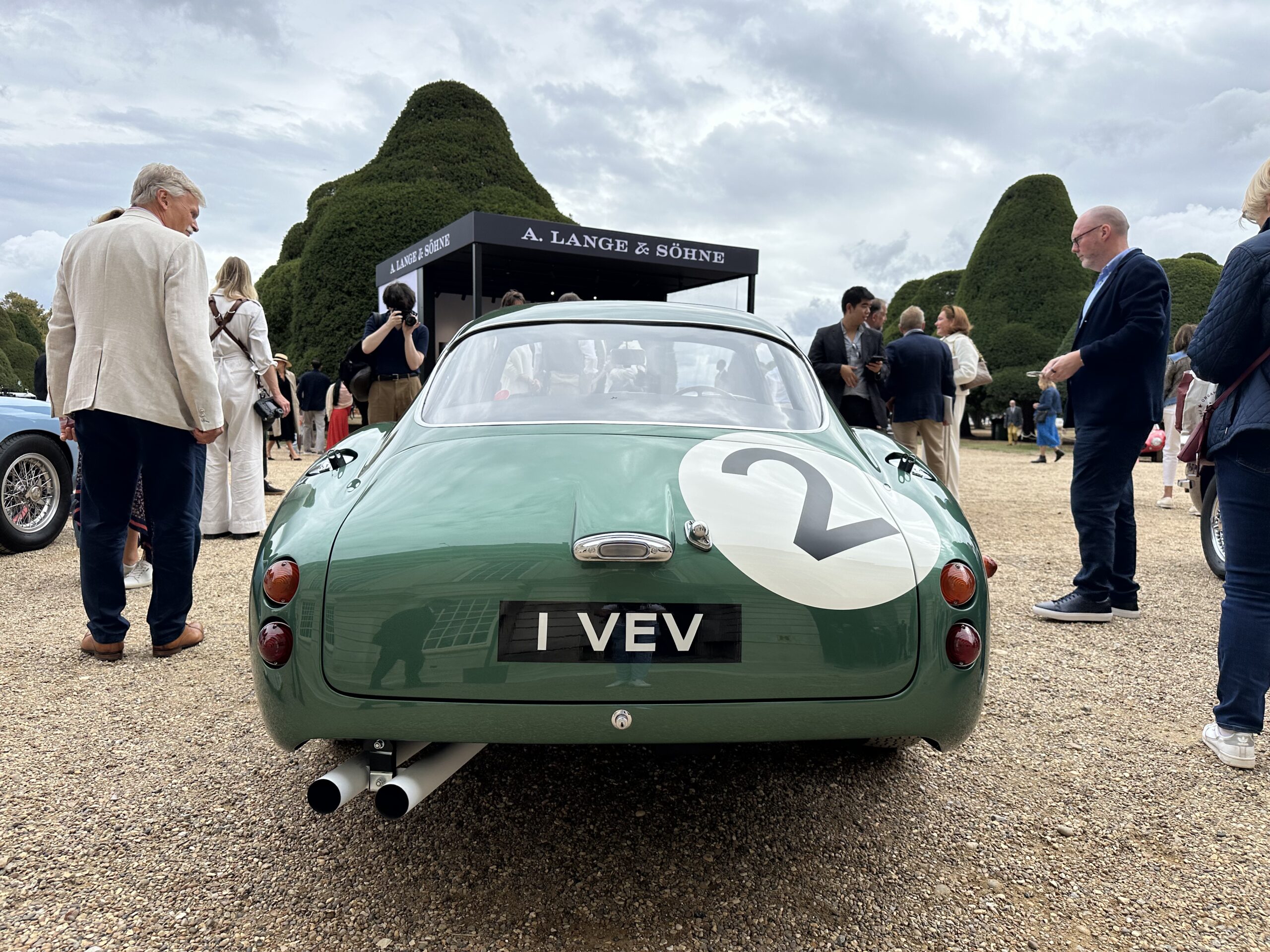
A restoration around 1990 returned the Aston to appropriate form, followed by a further programme in 2007. That work reinstated its original 1961 appearance, including the Aqua Verde Caliente finish and Essex Racing Stable details. Its surviving competition body, documented international race history and association with Salvadori, Clark, Ireland and Maggs make 1 VEV one of the most important Aston Martin Zagatos.
ENGINE: 3670cc/inline-six/naturally aspirated/DOHC
TRANSMISSION: Four-speed manual, RWD
POWER: 314 bhp
TORQUE: 278 lb ft
TOP SPEED: 153.5mph
0-60MPH: 6.1 seconds
WEIGHT: 1171 kg
NO. OF CARS MADE: 19
More Aston Martin DB4 GT Zagato articles here.
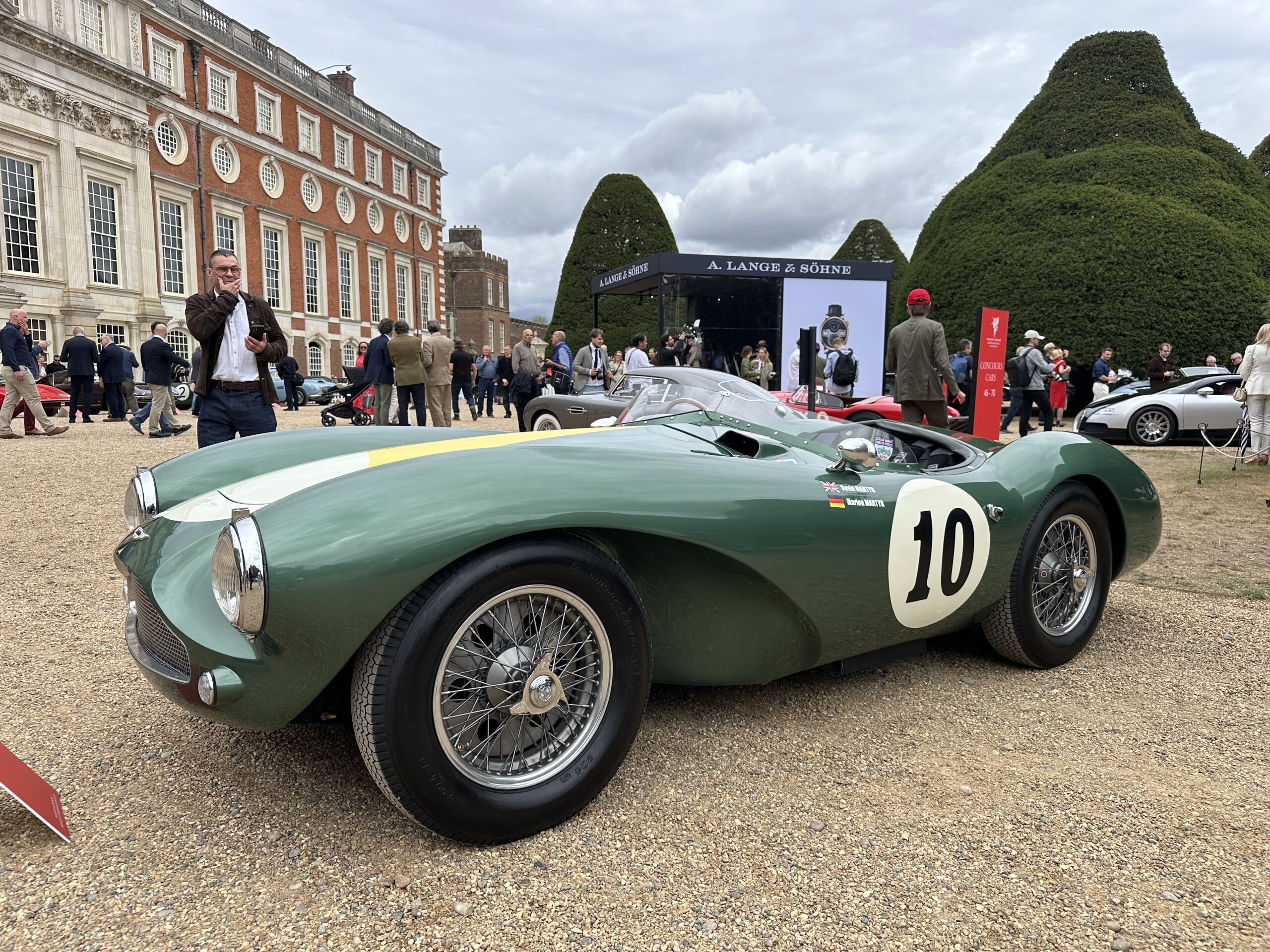
The Aston Martin DB3S team built 31 cars in total, including 11 works team cars and 20 customer cars. At Concours of Elegance 2026, visitors could admire chassis DB3S/104, the fourth customer car in that 20-car production run.
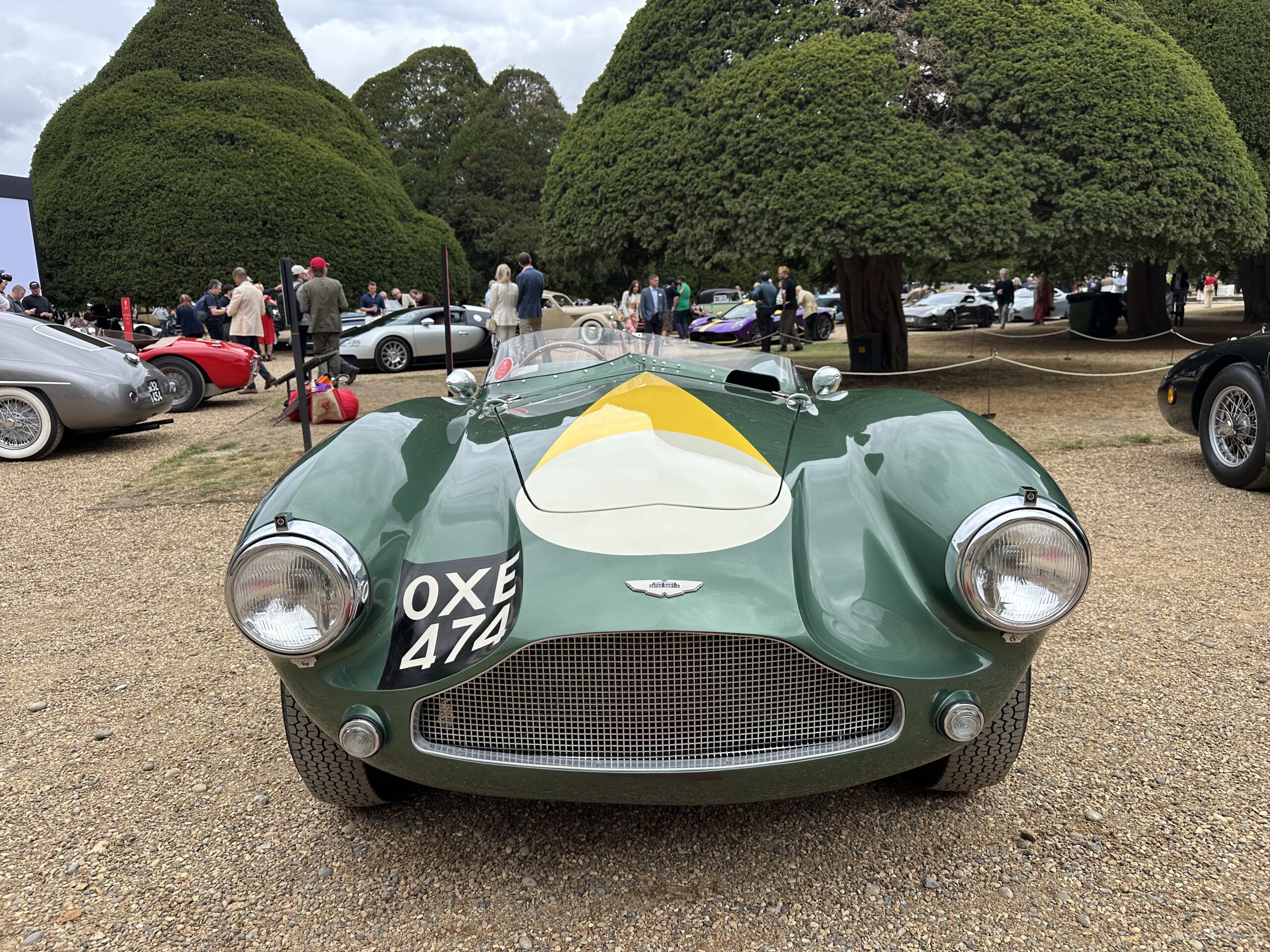
INTRODUCED IN 1953, THE DB3S WAS ASTON Martin’s follow-up to the heavier and bulkier DB3. Willie Watson revised the chassis, while Frank Feeley created a lighter and more aerodynamically efficient aluminium body. The result helped establish the marque as a regular contender in international sports car racing, including second places at Le Mans in 1955, ’56 and ’58. Eleven team-spec models were constructed, followed by 20 customer examples identified by three-digit chassis numbers.
The DB3S’s tubular frame carried independent front suspension and a de Dion rear axle, while the 2922cc twin-cam straight-six drove the rear wheels through a four-speed gearbox. Customer cars used a single-plug version of the competition engine, with output varying according to specification and preparation.
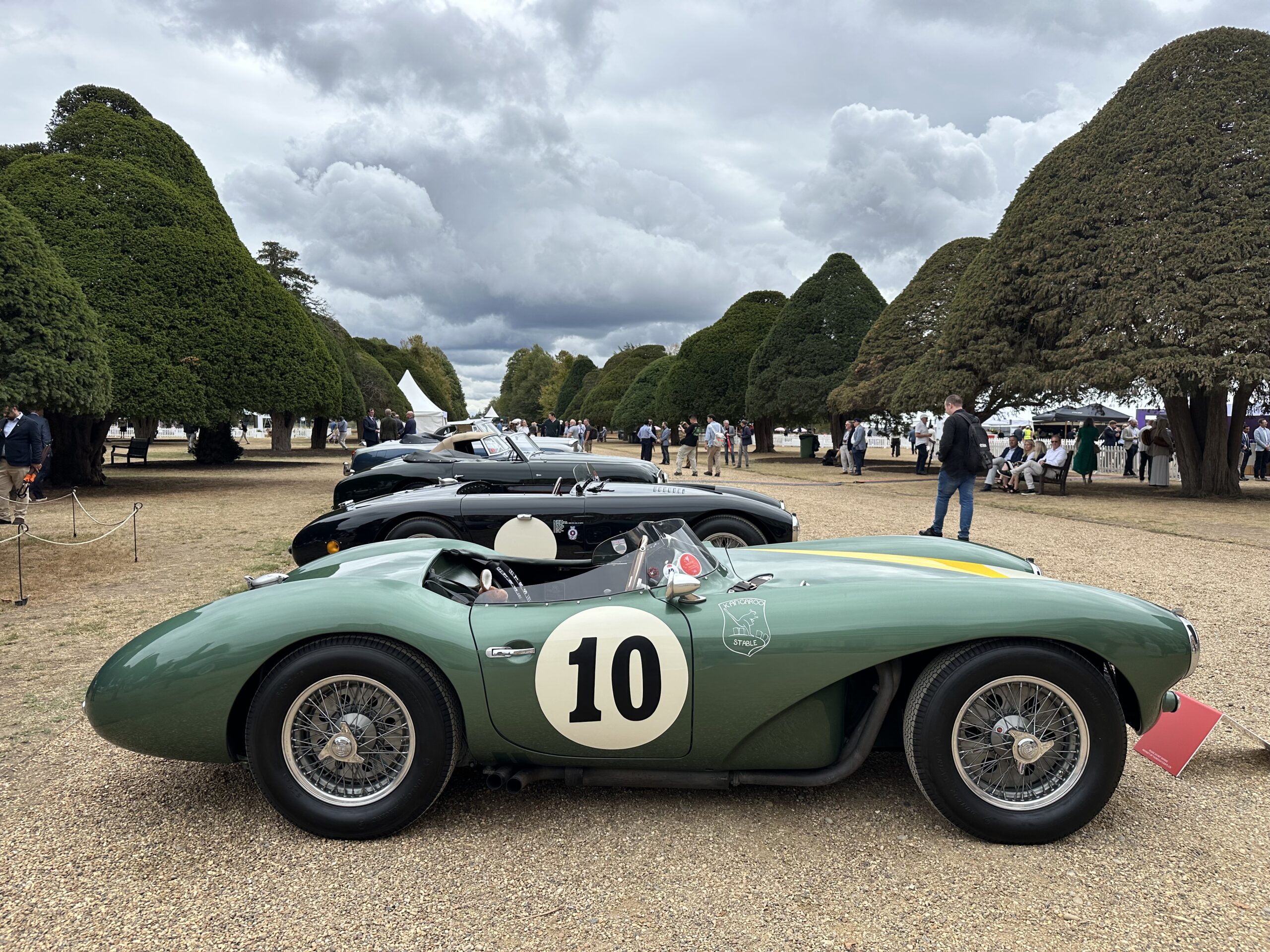
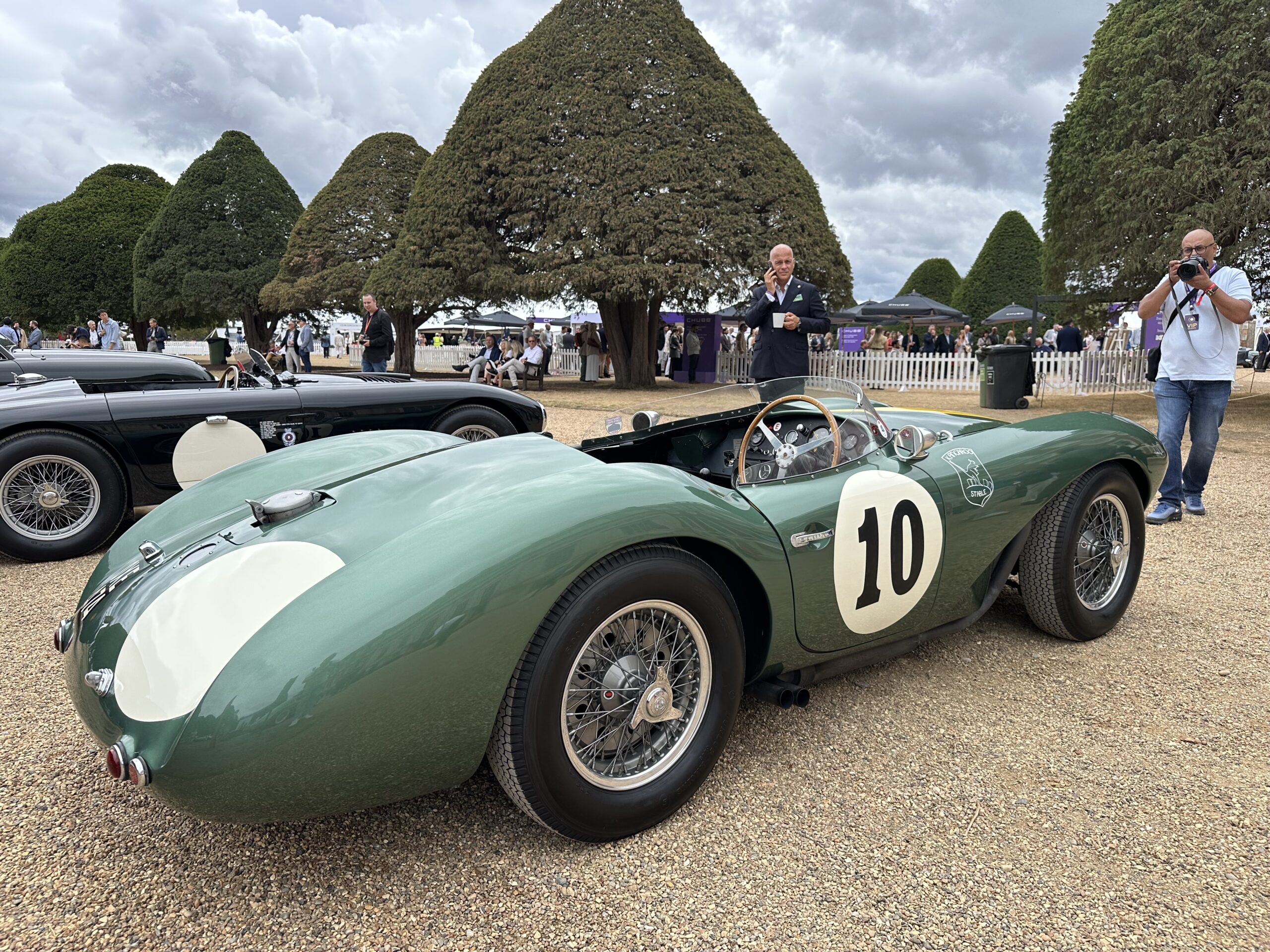
Aston Martin completed chassis DB3S/104 at Feltham on May 23, 1955, and registered it as OXE 474. Australian drivers Tony Gaze and David McKay acquired it as one of three customer DB3Ss for their Kangaroo Stable. Six days after completion, it started the Hyères 12 Hours in France, driven by Les Cosh and Dick Cobden. The pair finished third, with the Kangaroo Stable cars also placing second and fourth.
Cosh subsequently took ninth in the Oporto Grand Prix on June 26, followed by 11th in the Lisbon GP on July 24. The European season concluded with 13th place in the International Trophy at Oulton Park on August 27.
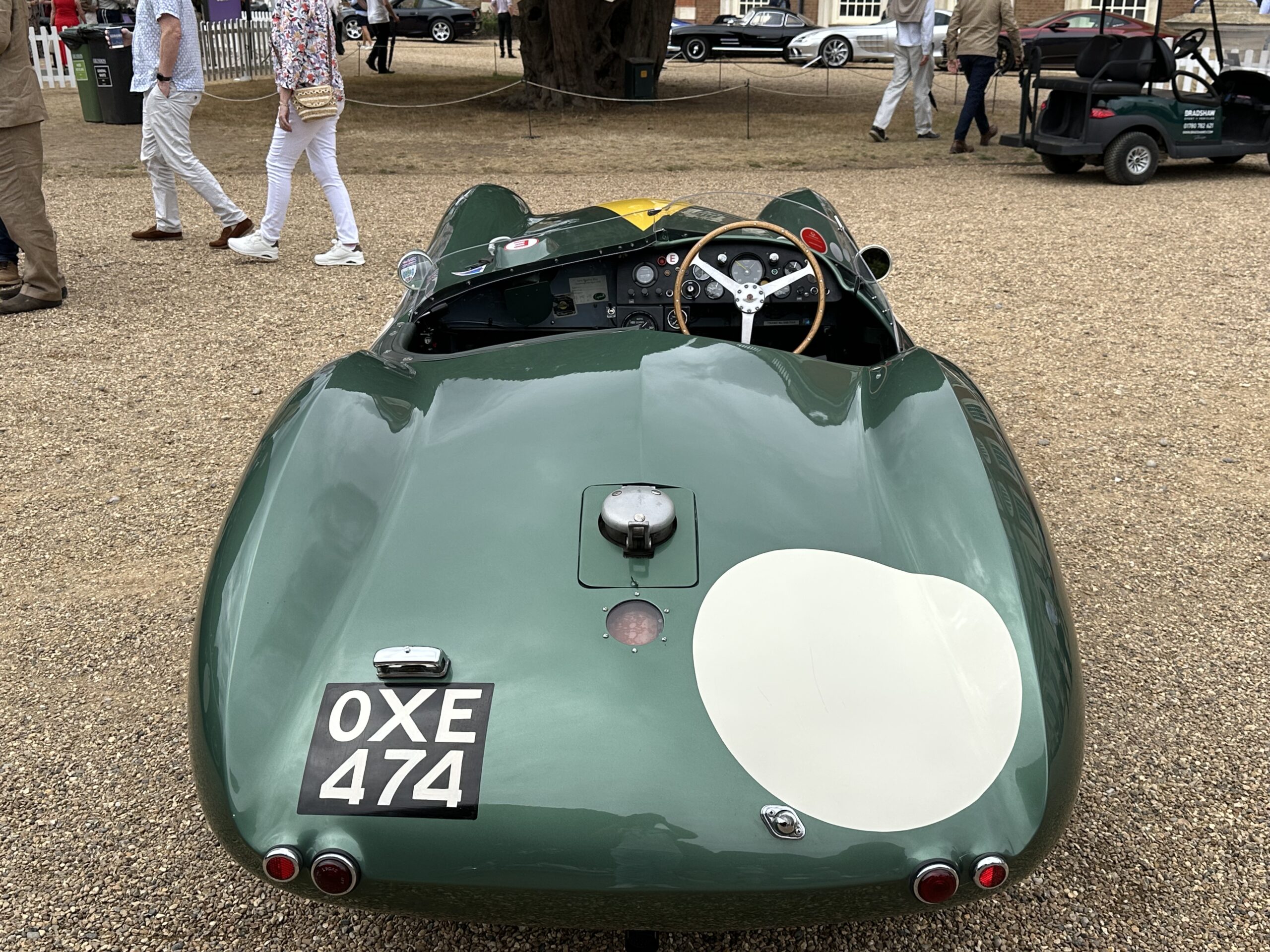
Following the disruption to European racing after the 1955 Le Mans disaster, DB3S/104 was sold to Californian Rod Carveth. He campaigned it frequently in 1956-58, appearing at venues including Pebble Beach, Laguna Seca, Watkins Glen, Lime Rock and Road America. Its results included several class victories and overall podium finishes, among them first in class in the 1956 Road America 500.
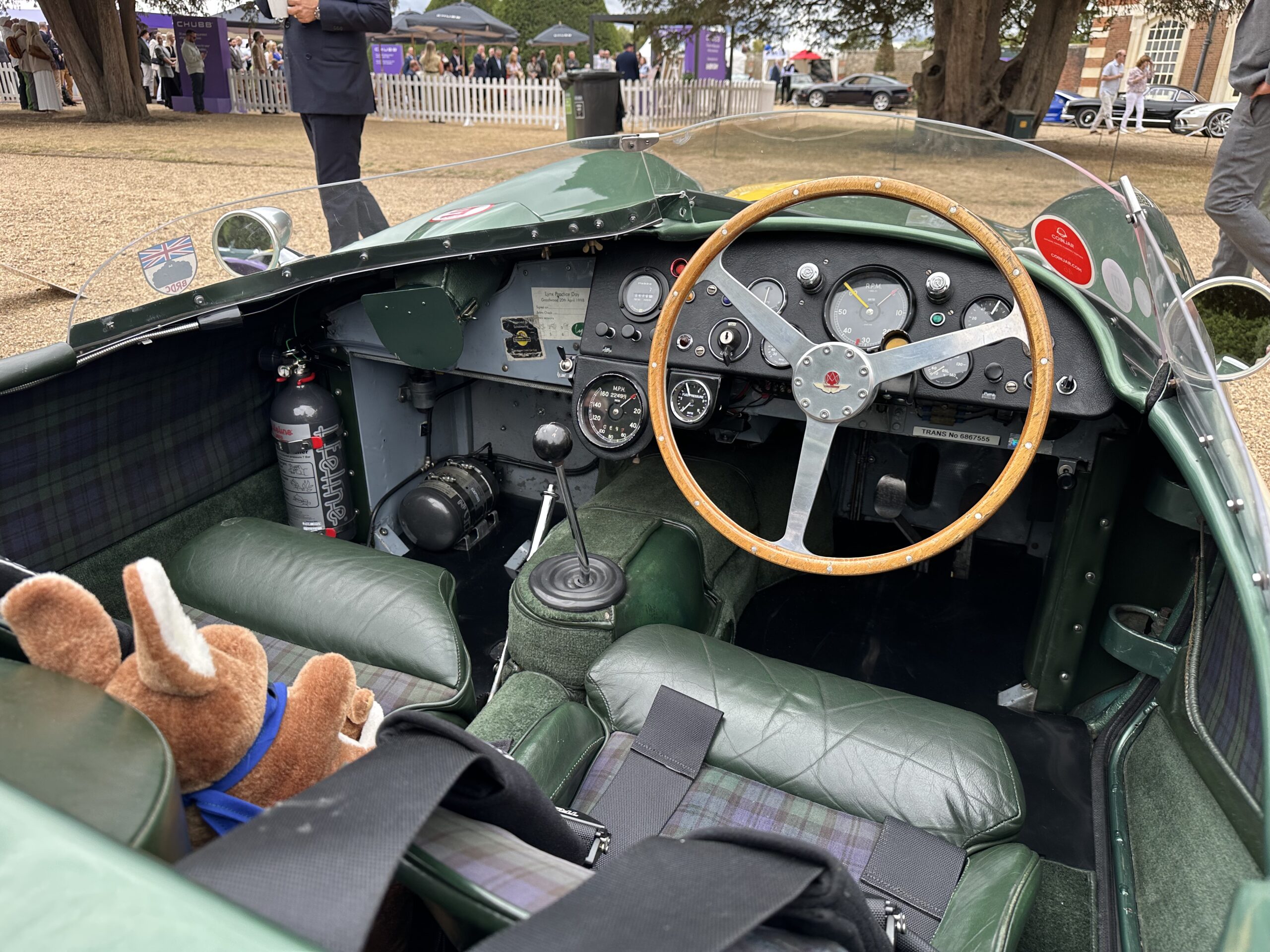
The car returned to Britain in 1989 after its acquisition by Peter Agg and was reunited with its original OXE 474 registration. During Agg’s 15-year ownership, it appeared in the 1992 Mille Miglia in Italy, the 1992 Mille Miglia in Japan, the 1994 Sicilia Storico, the 1996 Goodwood Festival of Speed and the 2000 Louis Vuitton Classic.
Steve Boultbee-Brooks acquired DB3S/104 in 2011 and returned it to competition. Its appearances included the 2014 and 2016 Goodwood Members’ Meetings, the 2014 Monaco Historique and the 2015 VSCC Spring Meeting at Silverstone. Stirling Moss drove it at Goodwood in 2016 during a celebration of his career. David and Marion Martyr became the Aston’s custodians in 2023. David and his son Chris subsequently drove it in Austria’s 2025 Ennstal-Classic.
ENGINE: 2922cc/straight-six/naturally aspirated/DOHC
TRANSMISSION: Four-speed manual, RWD
POWER: 240 bhp
TORQUE: 215lb ft
TOP SPEED: 145 mph
0-60MPH: 6.0 seconds
WEIGHT: 930kg
NO. OF CARS MADE: 31
More Aston Martin DB3S articles here.
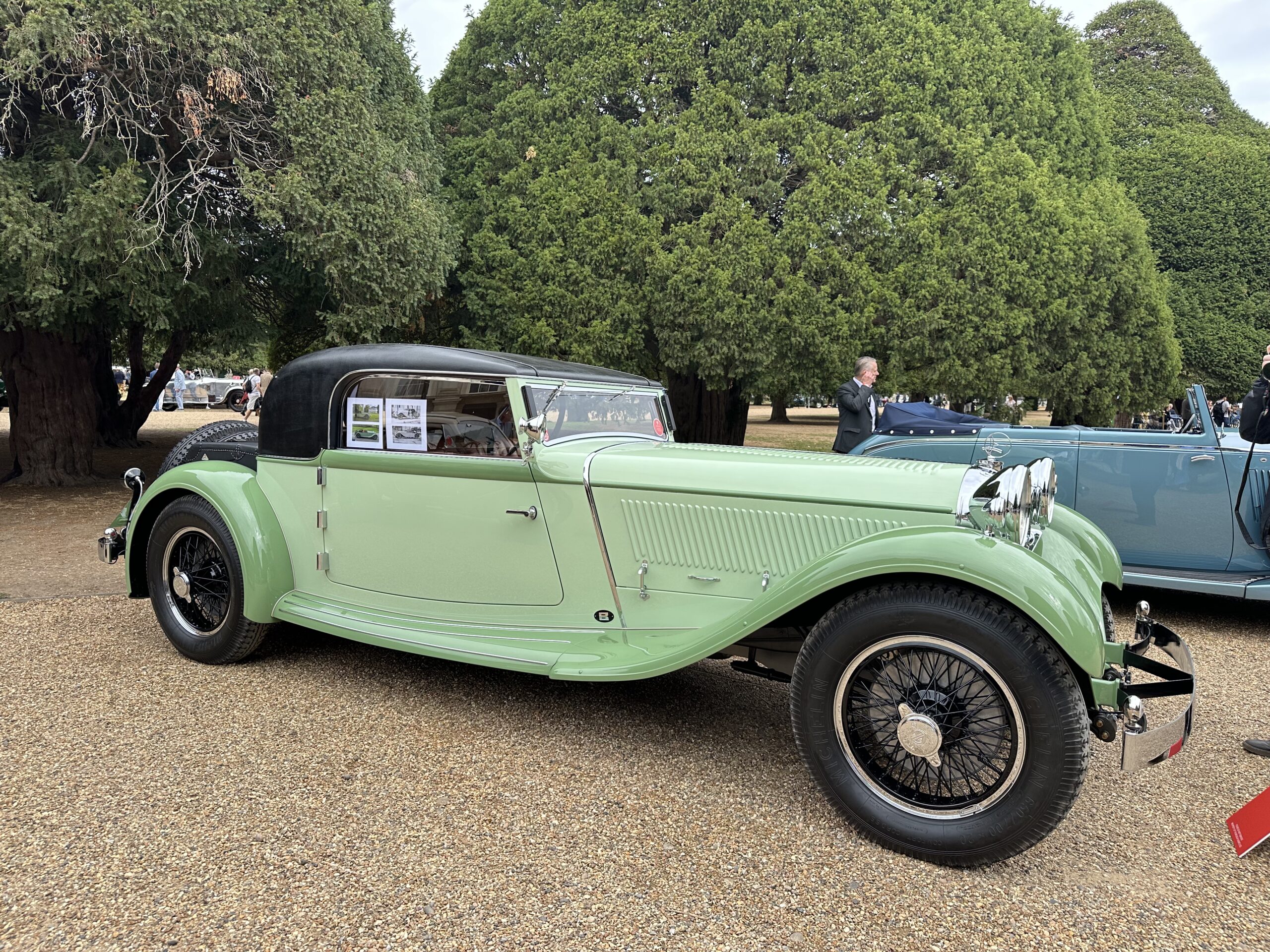
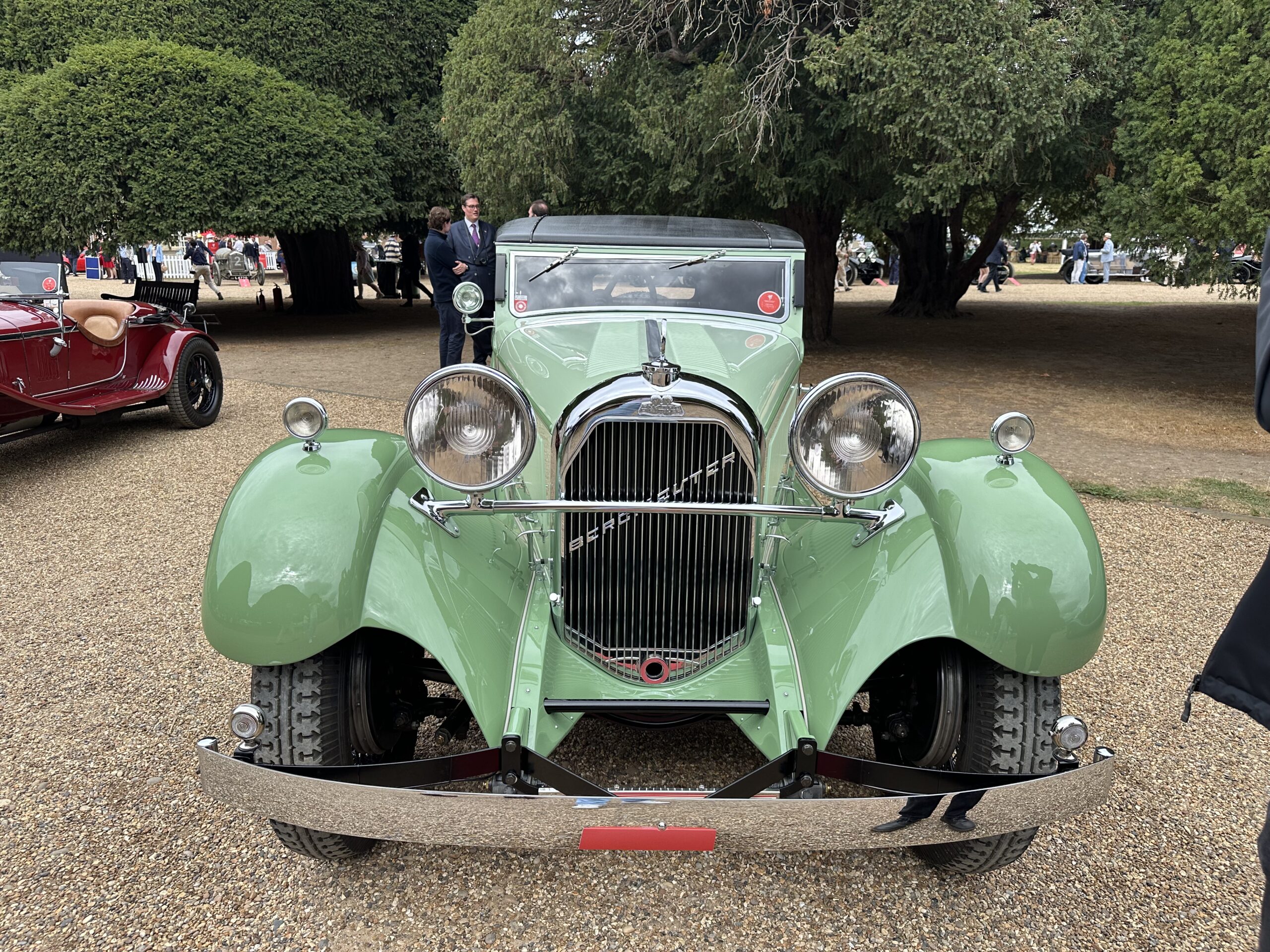
The 1932 Austro-Daimler ADR 6 Bergmeister displayed at Concours of Elegance 2026 is an ultra-rare, high-performance luxury automobile. It represents the engineering peak of the Austrian manufacturer before its merger and dissolution.
Established at the Wiener Neustadt in 1899, Austro-Daimler played an important role in the development of the car world’s key names – Ferdinand Porsche served as technical director from 1906-23. The Bergmeister represented the final sporting development of the marque’s ADR range. Its 3614cc straight-six used an aluminium crankcase, a shaft-driven overhead camshaft and twin carburettors, producing approximately 118bhp. Drive passed through a four-speed manual ’box to the rear wheels, while the tubular backbone chassis and swing-axle independent rear suspension reflected the brand’s advanced engineering during the late 1920s. The Bergmeister name, meaning ‘mountain champion’, followed the marque’s successes in hill climbing by Hans Stuck and came to identify its most sporting road car. Production ended after Austro-Daimler’s 1934 merger into Steyr-Daimler-Puch.
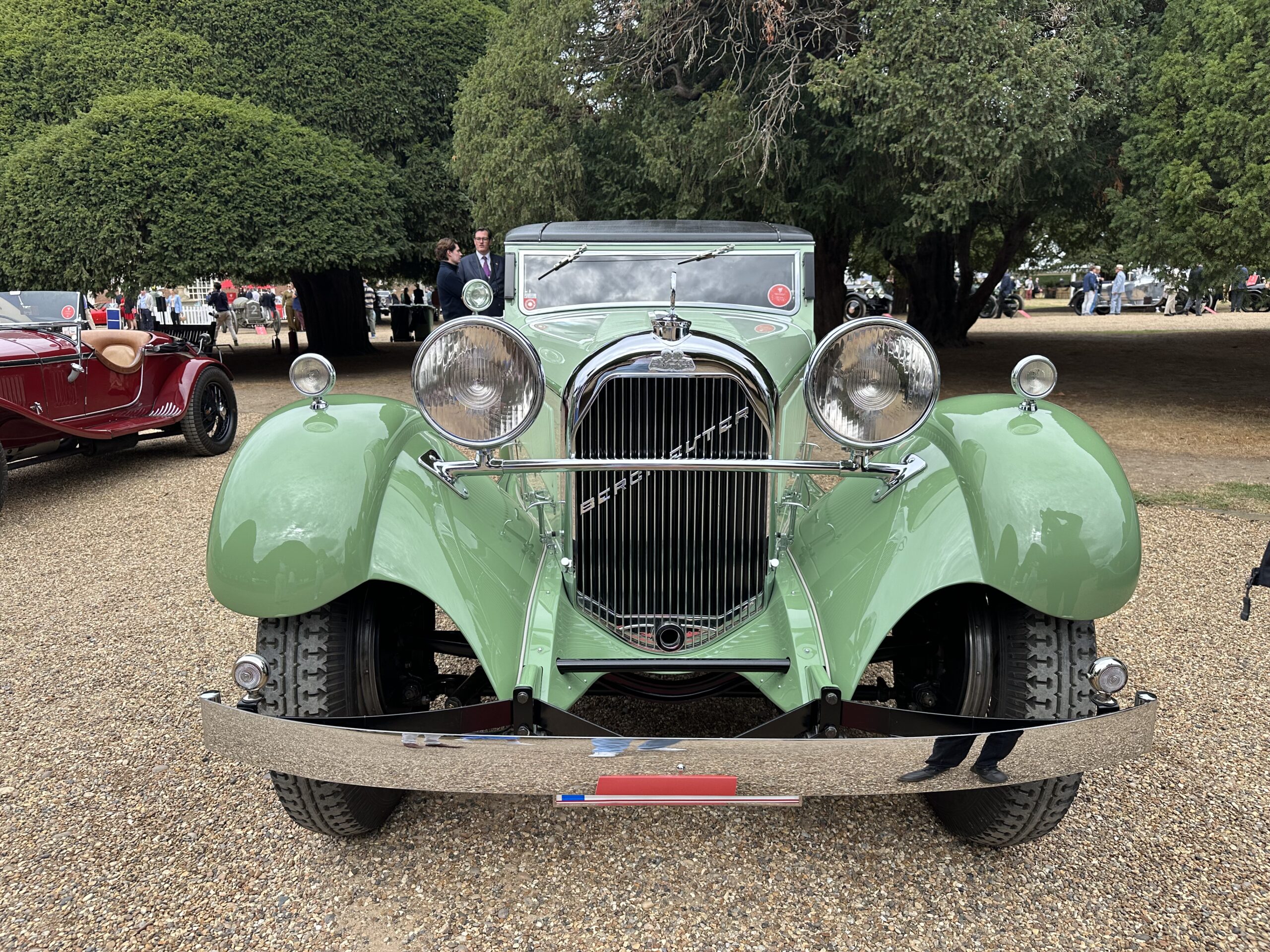
The Bergmeister made its debut in Berlin in 1932 with bespoke coachwork by Heinrich Buhne. Austro-Daimler supplied its larger cars as rolling chassis, allowing independent coachbuilders to create bodies for clients. Buhne fitted this car with both a folding soft-top and a detachable hard-top. As a result, owners could use it as an open tourer or an enclosed long-distance coupé.
Founded in Berlin in 1919, Buhne’s workshop produced bodies for prestigious chassis such as Mercedes-Benz, Maybach, Rolls-Royce and Hispano-Suiza. This car’s two-roof arrangement makes it a particularly good example of the adaptable coachwork commissioned by wealthy inter-war motorists for continental travel.
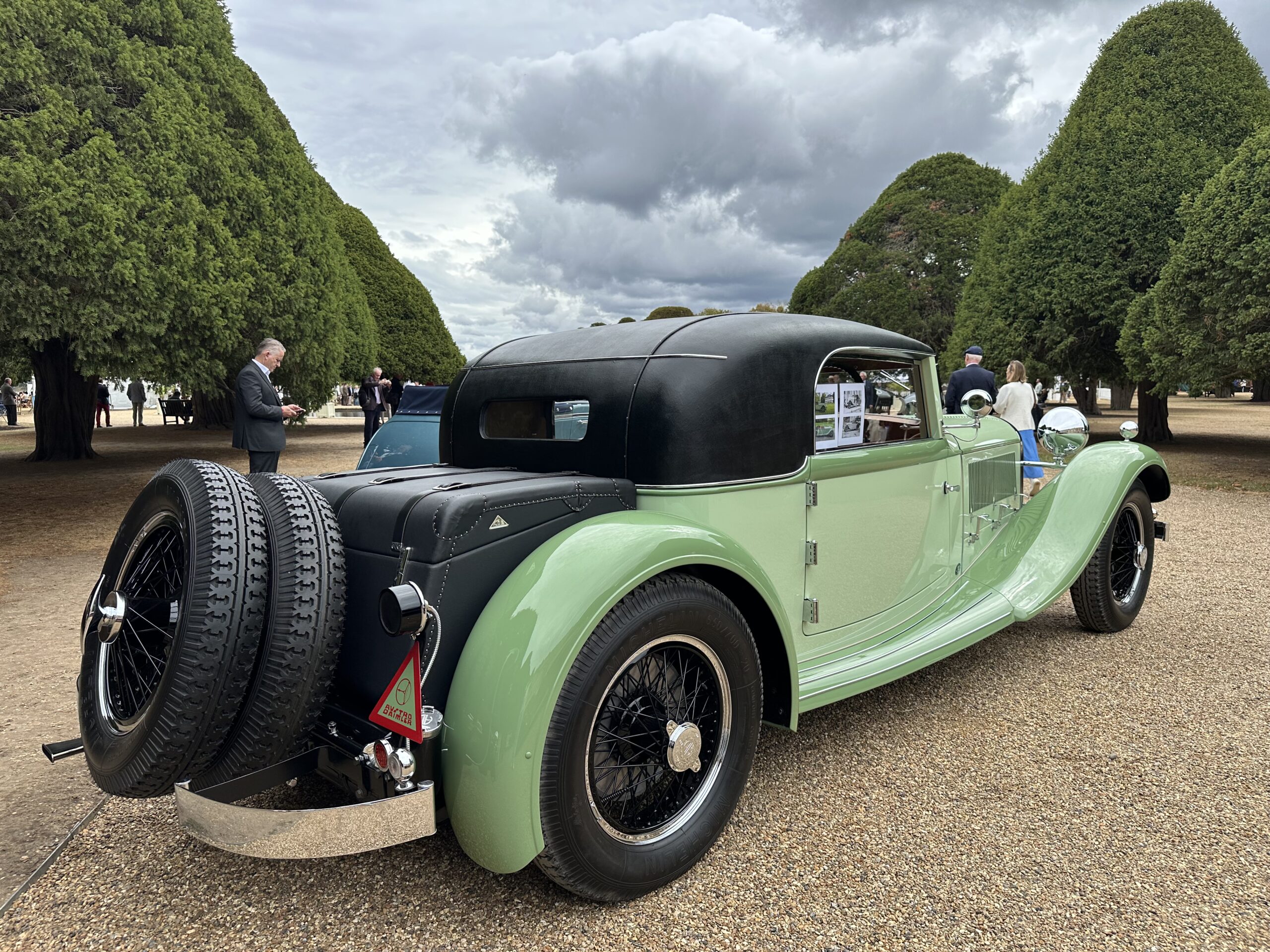
Its first owner was Berlin-born actress, dancer and later screenwriter Maria Matray. Having worked in Germany during the late 1920s and early ’30s, the Jewish performer left Germany after the National Socialists came to power, travelling through France and Britain before reaching the US in 1934. The Austro-Daimler therefore belongs to the final period of her career in pre-war Berlin. The car subsequently passed into Poland, where it remained for much of its life. It was restored during the 1980s and returned to use, continuing to be driven until around 2000. A collector then acquired and retained it until 2014.
Gerhard Huber subsequently purchased the Bergmeister and commissioned an extensive restoration. The work addressed the chassis, drivetrain, body and interior, while retaining the distinctive Buhne coachwork and its unusual dual-roof arrangement. Both the soft-top and hard-top remain with the car, preserving the versatility intended when it was first shown in Berlin.
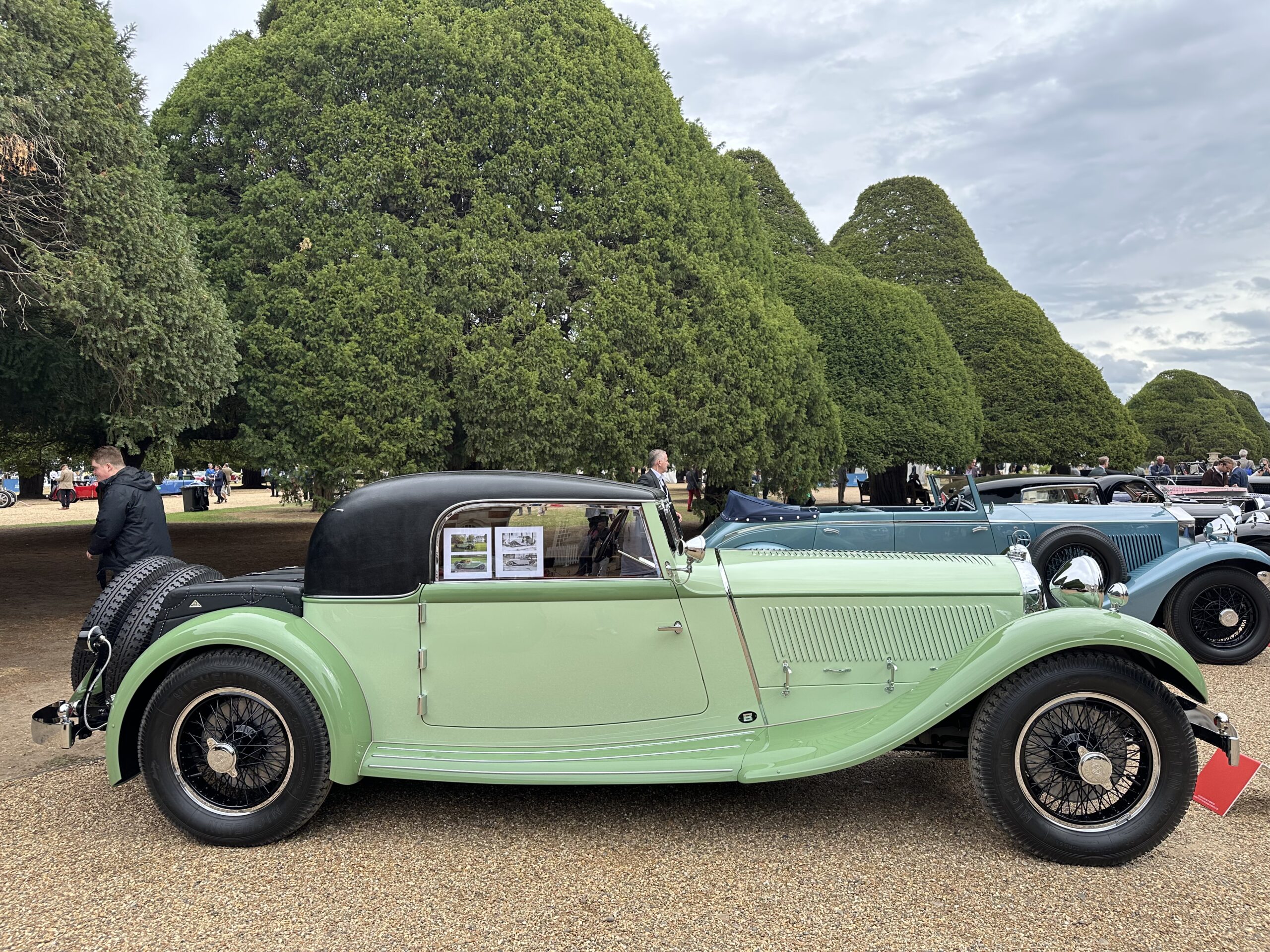
ENGINE: 3614cc/inline-six/naturally aspirated/SOHC
TRANSMISSION: Four-speed manual, RWD
POWER: 118 bhp
TORQUE: Not known, estimated at 175 to 190 lb-ft
TOP SPEED: 87 mph
0-60MPH: 55 seconds
WEIGHT: 1935 kg
NO OF CARS MADE: Approximately 50 cars were produced between 1931 and 1934.
More Austro-Daimler articles here.
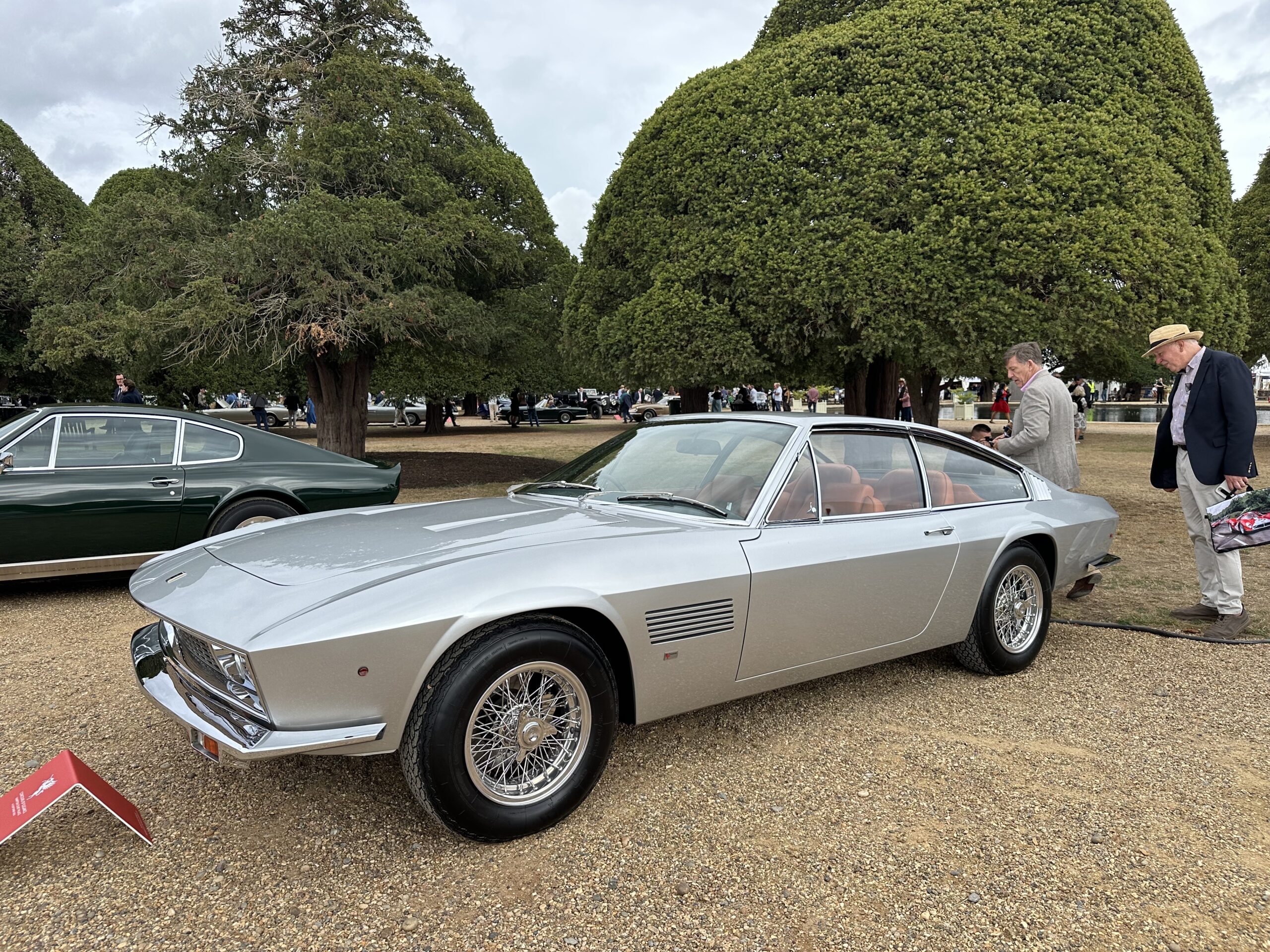
The 1971 Monteverdi High Speed 375 L, displayed at Concours of Elegance 2026, is an ultra-rare, hand-built 2+2 Grand Tourer. It beautifully fuses Swiss precision engineering, Italian styling, and raw American muscle.
This Monteverdi 375L is a matching-numbers example presented in its original colour, with continuous and well documented history from new. Factory records show that Ferrari built 66 examples of the 375L, including nine right-hand-drive cars. Experts believe chassis 2037R is the only roadworthy RHD example and the sole car the factory delivered new to Australia.
Completed in early 1971, the 375L left for Monteverdi’s UK concessionaire, Simpsons of Wembley, on February 15, 1971. It then reached Dennis Gowing in Melbourne. The entrepreneur co-founded Kevin Dennis Motors and registered the car as KDM 000 in early 1972. He registered it to his Richmond, Victoria business.
In March, the 375L appeared at the Pace Age International Motor Show at Melbourne’s Royal Exhibition Building, where the owner offered it for AUS$32,000. In August 1972, Modern Motor magazine featured the car, while period photos show it driving on Melbourne roads.
Ownership later passed to Sydney solicitor Joanna Webster. Then, in 1978, Cars of Distinction sold the 375L, registered as GOL 403, to Gary Bruce. Bruce undertook a recommissioning programme with racing mechanic John Leffler, including mechanical work, a colour change to gold metallic and a retrim. During his seven-year ownership, Bruce entered the car in several events and featured it in Sports Car World in December 1982.
The 375L was sold in October 1985 to Achalen Holmes, and again in February 1989 via Tickford Sales to Llynden Riethmuller. He initially refinished the Monteverdi in maroon before returning it to silver. In 1991 he stripped the car to a bare shell but did not complete the work.
After a prolonged period in storage, Mark Jansen acquired the 375L in August 2010. He undertook an eight-year restoration, while GT Motors in Queensland carried out the bodywork. Carle Rheinberger completed the final assembly. After completing the car in 2018, Jansen presented it at Motorclassica. He later showed it internationally at the Carmel Concours on the Avenue and The Quail, where it won multiple awards. Retromotive also featured the car.
In February 2024, the Monteverdi’s current custodian acquired the car and returned it to the UK. Since then, the owner has maintained and regularly exercised it, while McGrath Maserati recently carried out its recommissioning. It was featured in Classic & Sports Car in September 2025.
ENGINE: 7211cc/V8/naturally aspirated/OHV
TRANSMISSION: Three-speed automatic, RWD
POWER: 375bhp
TORQUE: 480 lb ft
TOP SPEED: 155 mph
0-60MPH: 6.5 seconds
WEIGHT: 1800kg
NO OF CARS MADE: 66 to 68 (9 in RHD)
More Monteverdi articles here.
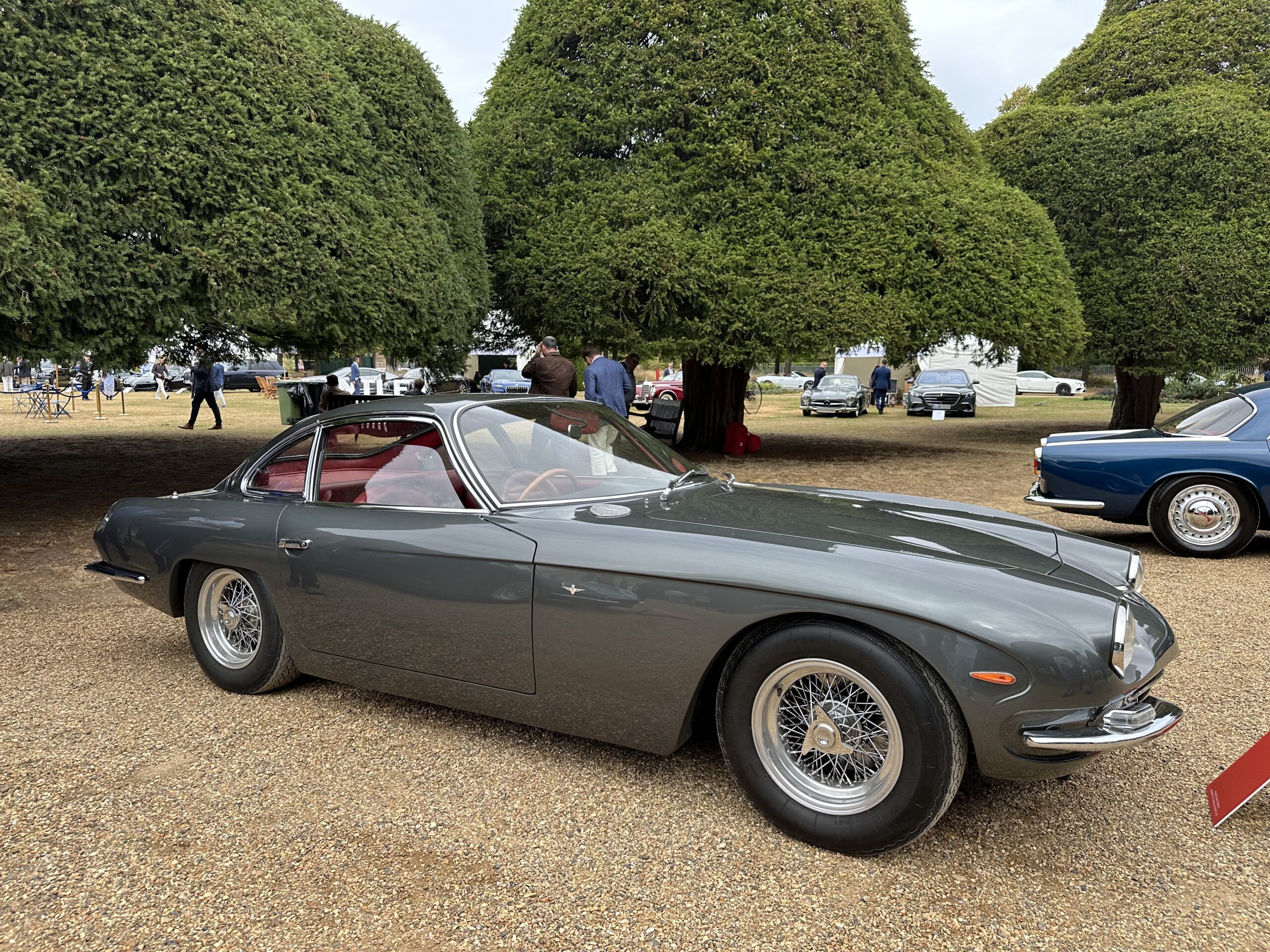
The 1967 Lamborghini 400 GT 2+2 is a classic V12-powered grand tourer. Displayed at Concours of Elegance 2026, it features steel bodywork designed by Carrozzeria Touring. Lamborghini also fitted the car with a 2+2 seating configuration.
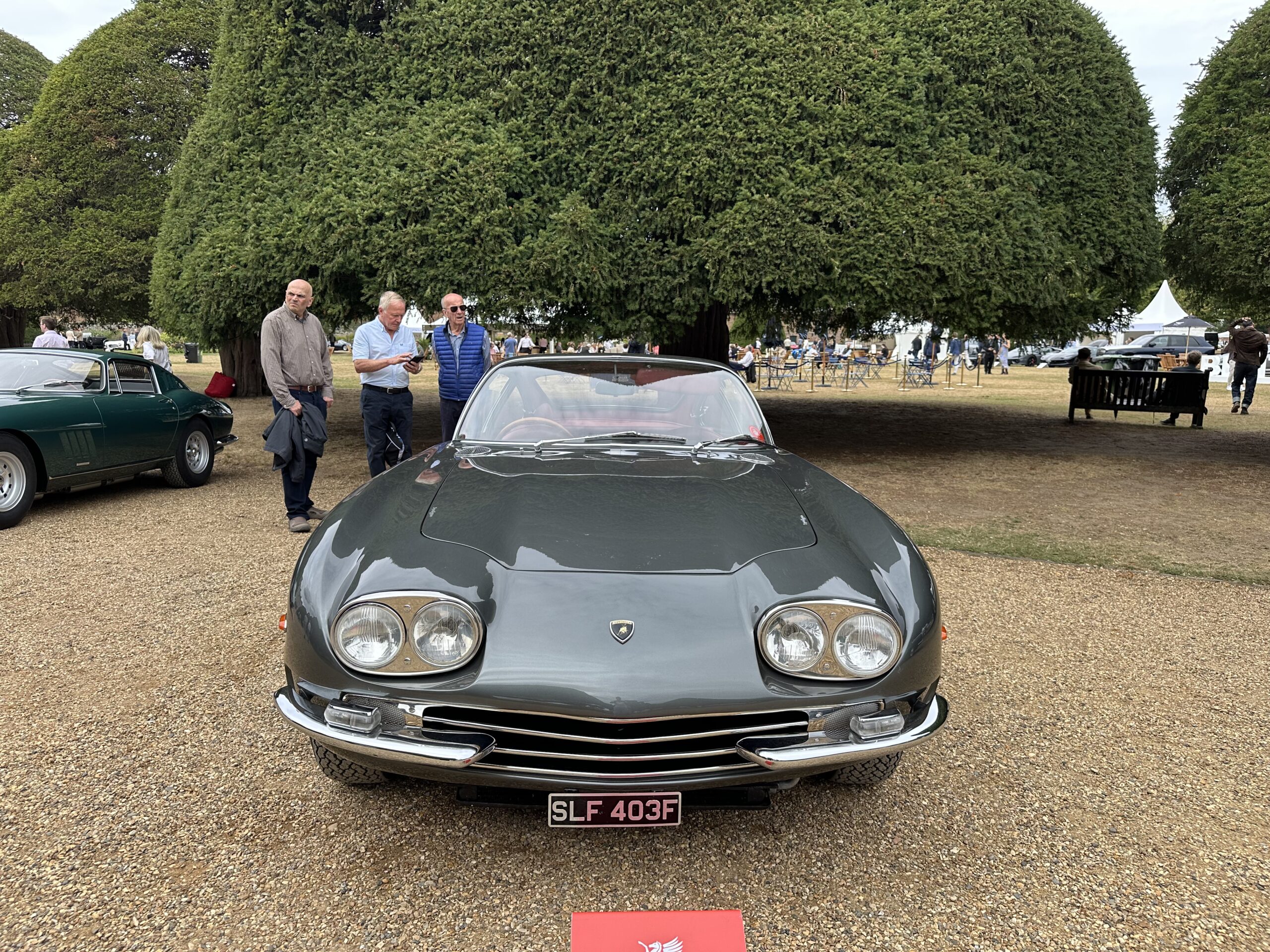
Manufactured in late 1967, SLF 403F belongs to a group of just four Lamborghini 400 GT 2+2s that the factory built in right-hand-drive form. This rarity makes the car one of the model’s rarest surviving variants. Most of the 224 examples manufactured were left-hand drive, with four of these converted by Portman, Lamborghini’s British importer.
Finished originally in bright red, the car first belonged to a company within the EMI music group, the Beatles’ record label. The car has also long been associated with Paul McCartney. For years, people based this connection largely on recollections and repeated claims. However, Mark Dixon investigated the car’s history in detail for Octane magazine in 2020. McCartney confirmed that he remembered driving a 400 GT. He also explained that group members sometimes registered their cars through associated companies for tax or privacy reasons. As he told Dixon, such arrangements were common at the time and could easily explain why the Lamborghini did not appear in his own name.
The car was also captured during filming of one of the most familiar episodes in the Beatles’ history. On January 30, 1969, the group staged its unannounced final public performance on the roof of Apple Corps’ offices on Savile Row. Film crews positioned around the building recorded both the performance and the reactions at street level. In one brief shot, a bright red Lamborghini 400 GT is shown parked at the kerb with a security man standing beside the open driver’s door, presumably awaiting the band’s departure. The registration is clearly visible as SLF 403F, confirming that this car was present during the filming, and this registration has remained with the car ever since.
By then the 400 GT 2+2 was still a comparatively new car. Introduced at the Geneva Motor Show in March 1966, it used Lamborghini’s 3929cc V12, a five-speed manual gearbox and revised coachwork by Touring of Milan, with increased cabin space and occasional rear seating compared to the earlier 350 GT. Production ended in 1968 after 224 examples had been completed.
SLF 403F underwent an extensive restoration from 2012. XK Engineering stripped the body to bare metal and repainted it, while Graham Dean completed the interior retrim. Shiltech rebuilt the V12. In 2014, Bob Houghton carried out further work under the guidance of former Lamborghini development driver Valentino Balboni, bringing the restoration to completion.
ENGINE: 3929cc/V12/naturally aspirated/DOHC
TRANSMISSION: Five-speed manual, RWD
POWER: 320 bhp
TORQUE: 276 lb ft
TOP SPEED: 155 mph
0-60MPH: 7.5 seconds
WEIGHT: 1472 kg
NO OF CARS MADE: 247
More Lamborghini articles here.
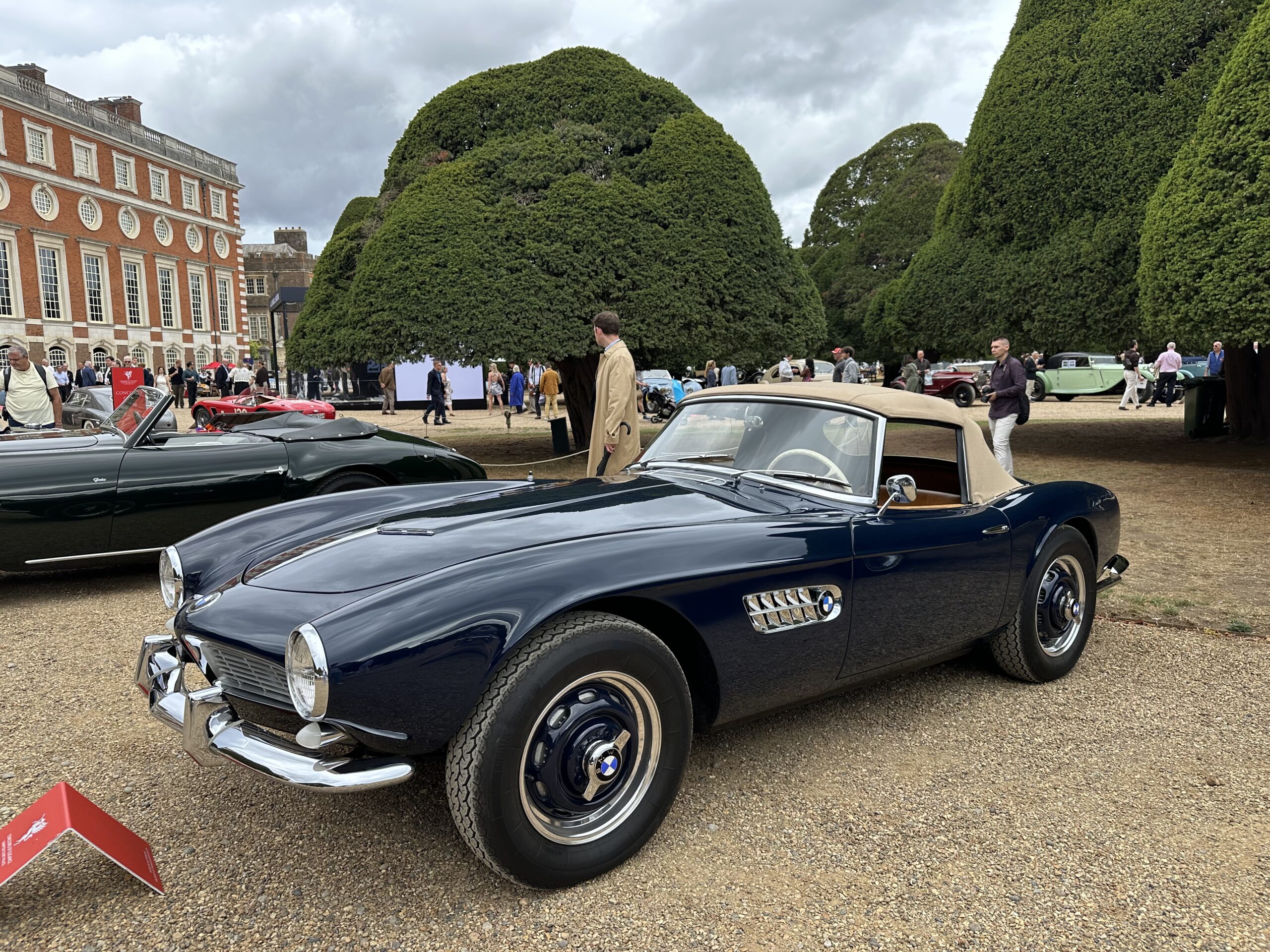
The BMW 507 Series II, displayed at Concours of Elegance 2026, is an ultra-rare, hand-formed aluminium roadster produced from 1957 to 1959. It features a relocated fuel tank that increases passenger cabin and luggage space.
American importer Max Hoffman suggested the BMW 507 because he believed BMW needed a sophisticated open two-seater for the US market. BMW designer Albrecht Graf von Goertz created its long bonnet, compact cockpit and restrained detailing. Meanwhile, BMW adapted the mechanical foundations from the 502 saloon. BMW introduced the 507 at Frankfurt in 1955, combining a hand-formed aluminium body with a shortened chassis. The chassis measured 35.5cm shorter and supported an all-alloy V8. Short overhangs, a low waistline and a shallow kidney grille between the headlights defined its proportions. Its price and labour-intensive construction restricted production to 251 cars between 1956 and 1959.
Chassis 70183 is one of approximately 218 Series II examples. It left the Munich factory on September 30, 1958, in Papyrus White, a seldom-seen shade on the model, and was shipped to the US. In April 1959, it arrived at Hoffman’s Frank Lloyd Wright-designed showroom at 487 Park Avenue, New York.
The Series II revisions were largely practical. The designers replaced the original 110-litre fuel tank behind the seats with a smaller tank beneath the boot floor. This change increased luggage capacity and improved cabin accommodation. A fuel filler on the right rear wing also gave the car a distinctive visual detail. However, the basic mechanical layout remained unchanged. The 3168cc overhead-valve V8 drove the rear wheels through a four-speed manual gearbox. The car also retained hydraulic drum brakes and its aluminium body.
The engine developed 150bhp at 5000rpm, an increase over the related saloon unit achieved through a higher compression ratio. BMW quoted a top speed of 127mph, placing the 507 among the faster road cars of its period.
According to the BMW Car Club of America, the team restored chassis 70183 during the late 1960s. Munich BMW dealer Georg ‘Schorsch’ Meier later sold the car. It passed to collector Oscar Davis of Nashville, Tennessee, whose other BMWs included a unique Vignale-bodied 507 and several competition 328s.
Al Marino of Staten Island, New York, became the next recorded owner in 1975. Marino sold the car in 1982 to Anthony ‘Tony’ Wang, a highly regarded New York-based collector whose stable includes 1958 Ferrari 250TR #0722.
The BMW remained in Wang’s collection for almost three decades before passing in 2012 to Keith Anderson, a senior executive at BlackRock in New York. The current owners acquired chassis 70183 in March 2023.
ENGINE: 3168cc/V8/naturally aspirated/OHV
TRANSMISSION: Four-speed manual, RWD
POWER: 150 bhp at 5000 rpm
TORQUE: Approx. 173 lb ft
TOP SPEED: 127 mph
0-60MPH: Approx. 9 seconds
WEIGHT: 1330 kg
NO. OF CARS MADE: 251
More BMW 507 articles here.
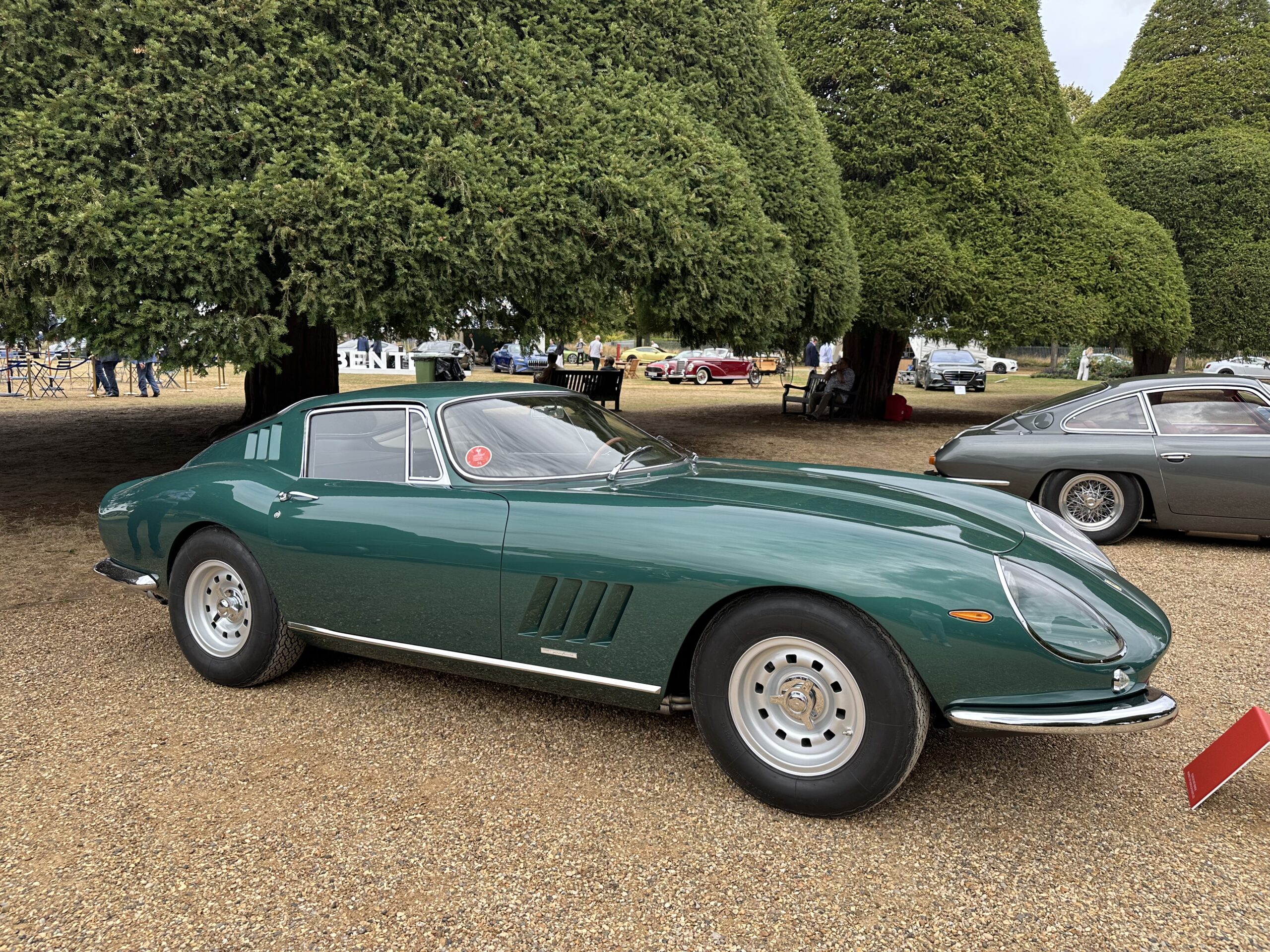
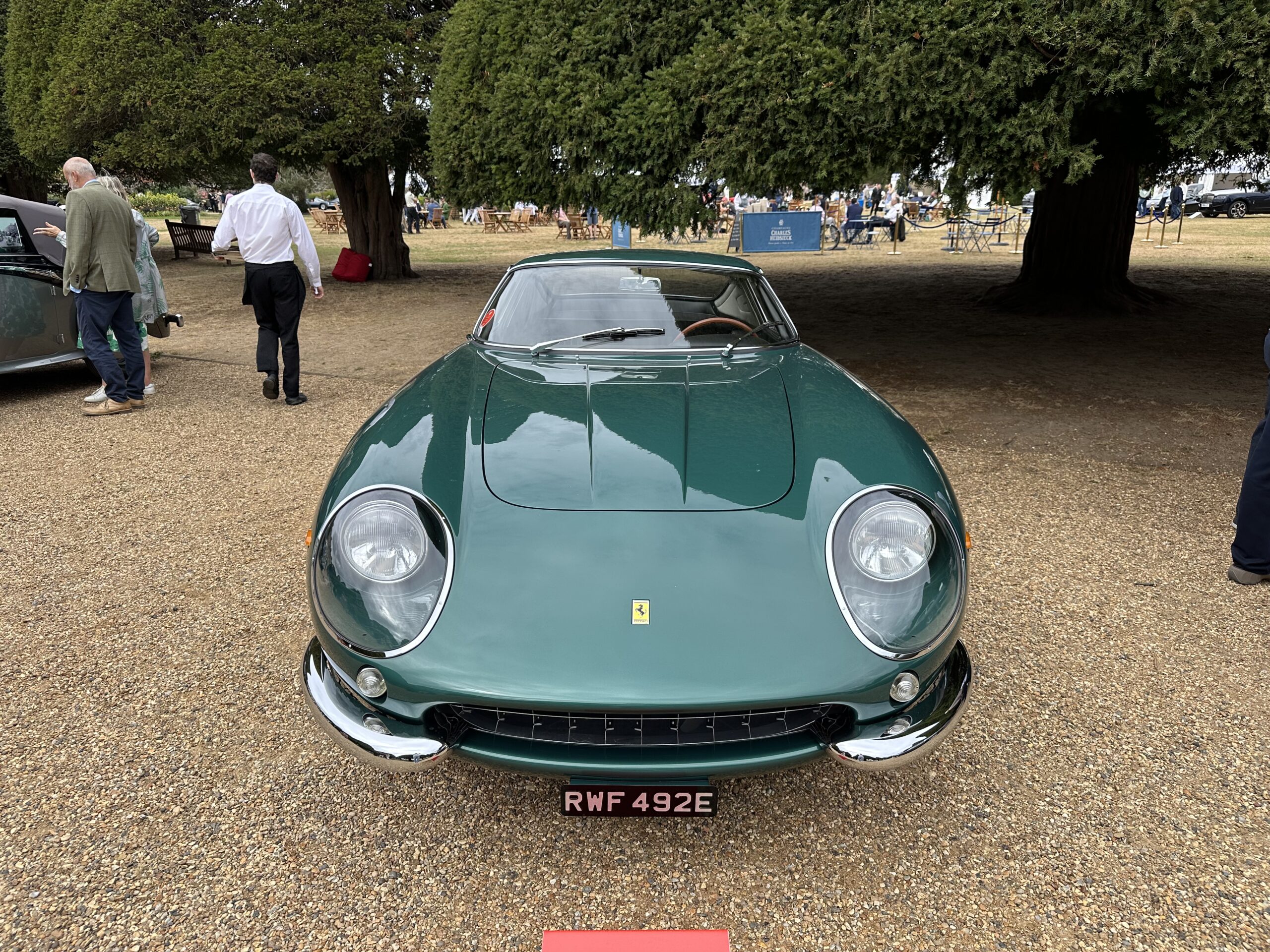
The 1967 Ferrari 275 GTB/4 is a legendary V12-powered grand tourer displayed at Concours of Elegance 2026. Scaglietti designed its aluminium or steel body, while Ferrari equipped it with an advanced four-overhead-camshaft engine.
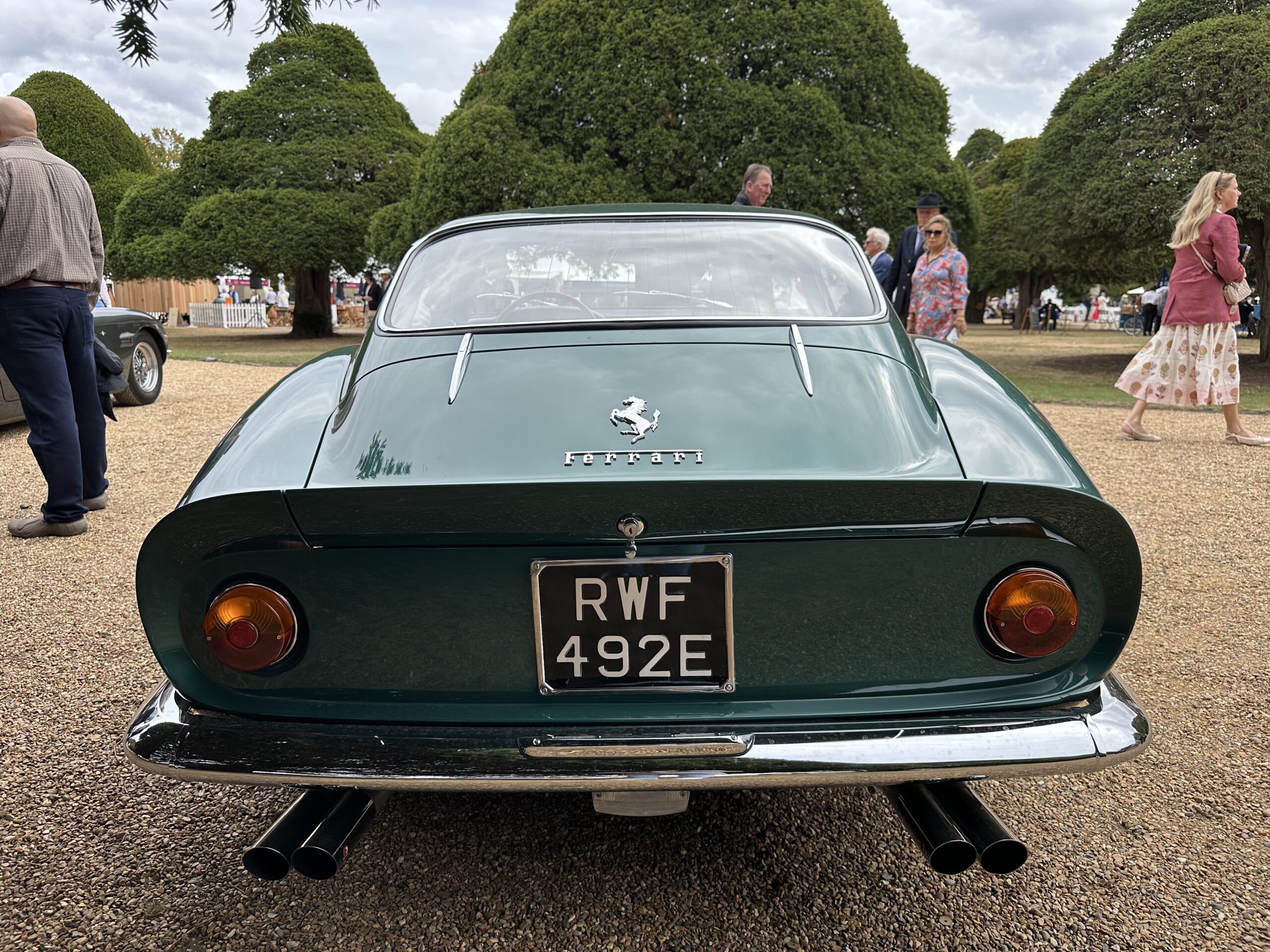
Chassis 10413 is a Ferrari 275 GTB/4 completed in 1967 with Scaglietti-built Berlinetta coachwork, finished in Verde Pino over Nero leather. Ferrari sent the chassis frame to Carrozzeria Scaglietti in June, starting the body construction and final assembly process. In September, Motor S.a.s. di Carla Allegretti e C. in Bologna received the completed car.
The car retains chassis number 10413, engine number 1824 and gearbox number 517/I. The model used Ferrari’s 3286cc V12 with four overhead camshafts and six Weber carburettors, coupled to a five-speed rear transaxle.
By 1969, 10413 was with dealer Dino Armando Genghini in Milan. The car remained in Italy until the early 1970s, when its owners exported it to the United States. In 1976, Joel Fierman of Rye, New York, acquired the Ferrari, beginning a 45-year period of ownership. During Fierman’s custodianship, he repainted the Ferrari burgundy, replacing its original Verde Pino finish.
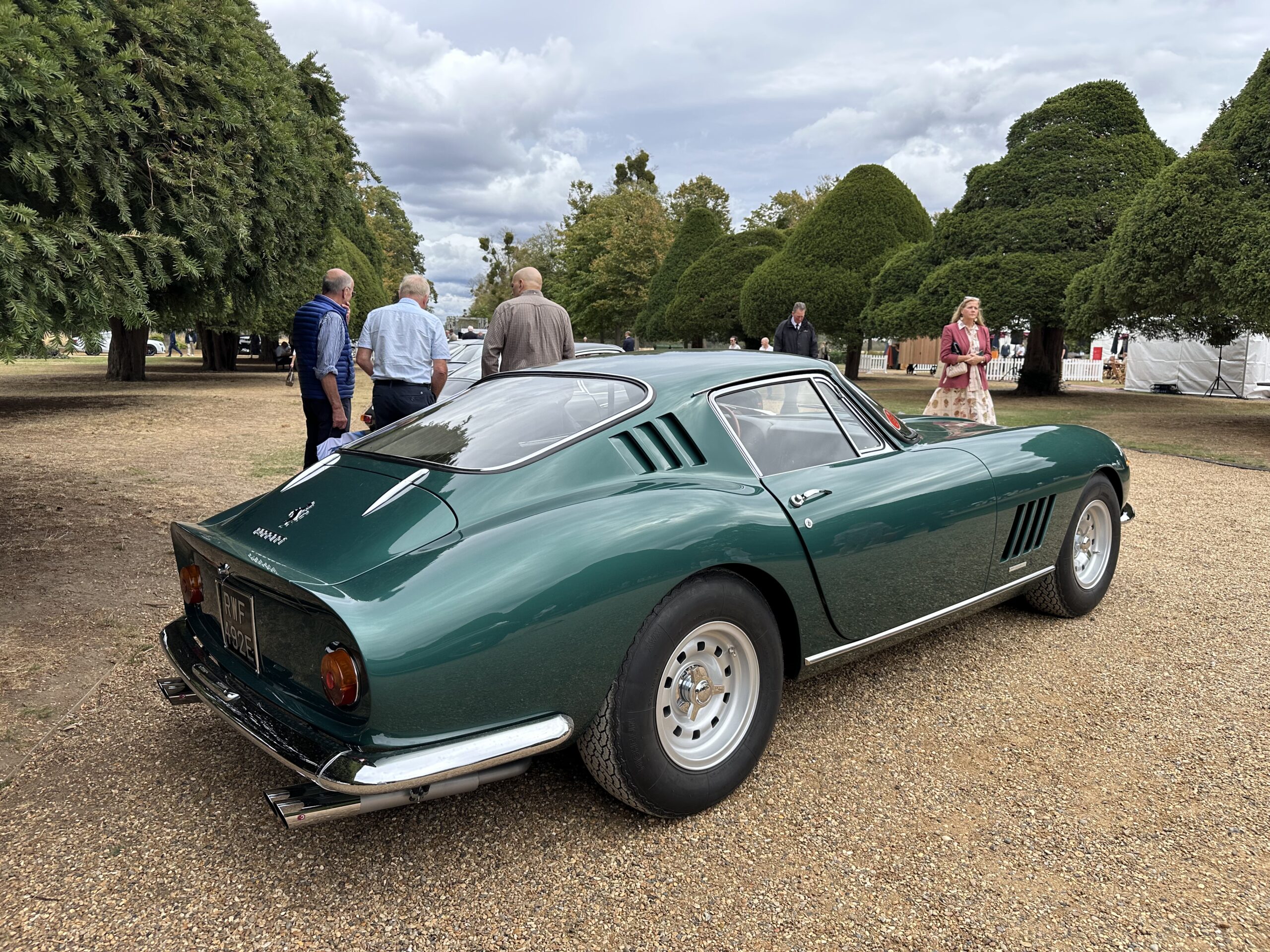
A restoration began at Ferrari of Atlanta in 1993. The body was stripped to bare metal before Bo Pirkle repainted it in its original colour. The work preserved the factory combination of Verde Pino paint and Nero leather, while retaining the numbered engine and gearbox recorded with the car. Following restoration, Fierman continued to own 10413 until March 2021.
Tom Hartley Jnr Ltd purchased the Ferrari directly from Fierman, ending the longest period of ownership in its recorded history. At that time, the car retained its matching chassis, body, engine and gearbox, with 34,695 miles on the clock. Tom Hartley Jnr sold the car to Eric Heerema in February 2022.
Before restoration began, the car’s identity and chronology were established through records by marque historian Marcel Massini. These confirmed the June 1967 dispatch of the frame to Scaglietti, its September delivery in Bologna and its later presence with Genghini. The sequence also allowed the restoration teams to work from the car’s original specification.
Heerema then commissioned a full concours restoration in Italy. From September 2022 until June 2026, Quality Cars of Pianiga, near Venice, restored the Scaglietti body and returned it to its original Verde Pino finish. Autofficina Sauro in Bologna rebuilt and restored the mechanical components, including engine 1824, while the interior was completed in Nero leather. The four-year programme returned 10413 to the colour scheme in which it had left Ferrari in September 1967.
ENGINE: 3286cc/V12/naturally aspirated/DOHC
TRANSMISSION: Five-speed manual, RWD
POWER: 296 bhp
TORQUE: 217 lb ft
TOP SPEED: 166 mph
0-60MPH: Roughly 5.5–6.0 seconds
WEIGHT: 1100 kg
NO OF CARS MADE: 30
More 1967 Ferrari 275 GTB/4 articles here.
So today you have our top 10 + 3 super rare cars that we saw at the Concours of Elegance 2026. Which is your favourite car here? Let us know in the comments below.
Lovely cars, lovely venue. I hope you enjoyed our article. What car do you love the most of the care highlighted above?
I strongly suggest you read our Concours of Elegance 2026 review here.
I strongly advise you to find us and follow us on our social media channels, we are on X, Facebook, Instagram, TikTok, and YouTube. I also strongly suggest that you subscribe to our newsletter. By doing this, you will be notified regularly of competitions that we’re running and you could win, complementary tickets to car shows like the Concours of Elegance 2026 and many more.

The post Super Rare Cars that We Loved at the Concours of Elegance 2026 appeared first on My Car Heaven.