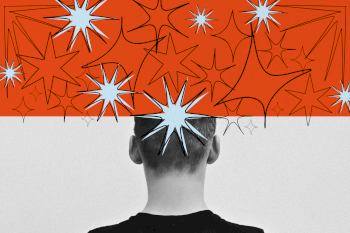

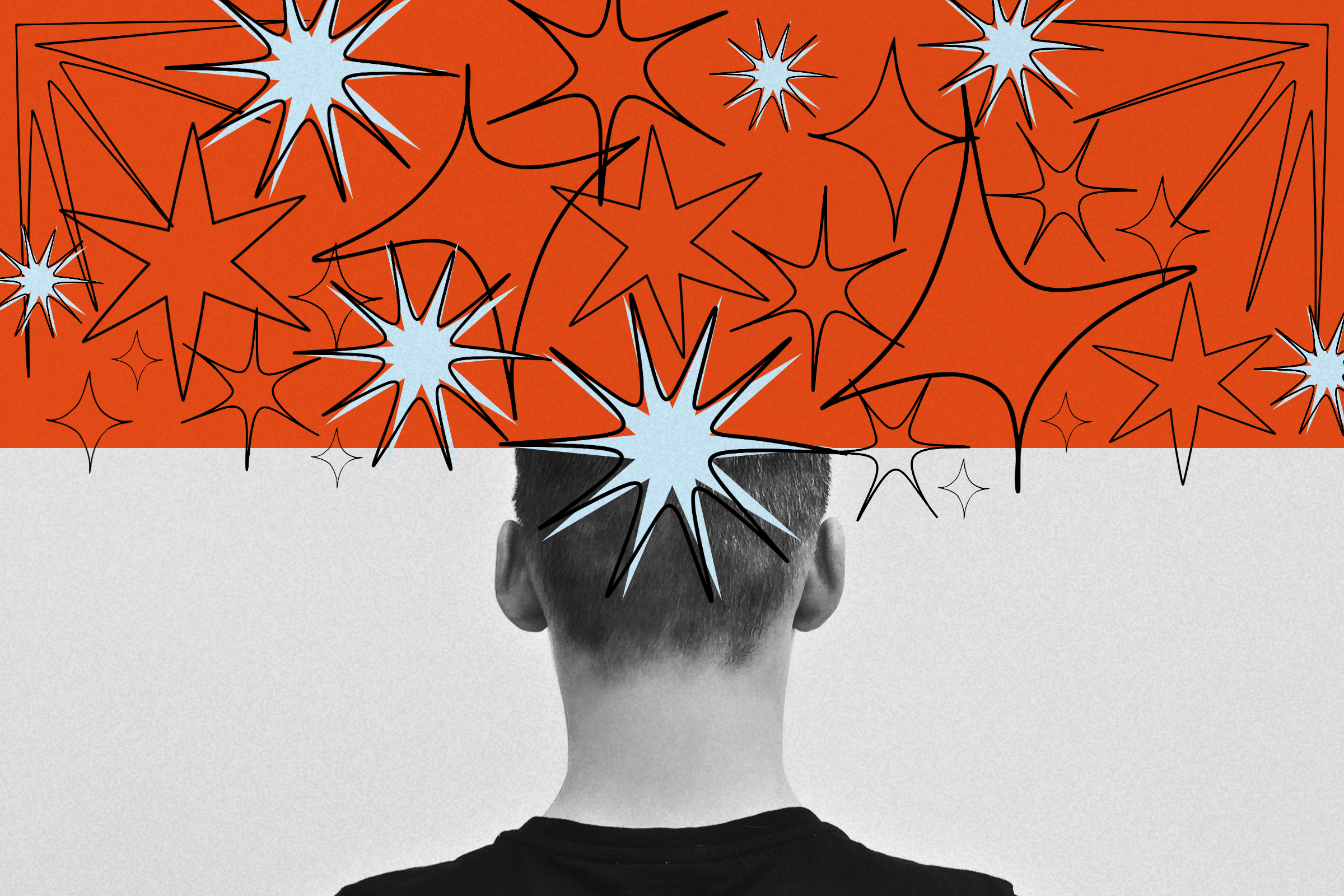
Living with the unknown isn’t always easy. Not knowing if layoffs are headed your way or whether you’ll be able to afford rent would be difficult for anyone. But when the pressure of the unknown becomes so intense it interferes with daily life, this “intolerance of uncertainty,” as psychologists call it, becomes a risk factor for mental-health disorders, primarily anxiety and depression.
Now, in a paper in JAMA Psychiatry, psychologists find that this trait rose in North America from 1992 to 2023. Using data on college students in about 140 studies, the researchers found a gradual rise at first, then a steeper one starting around 2012. The results mirror increasing trends of symptoms of anxiety and depression among young people, suggesting that they are linked not just to rising awareness of mental illness but also to a change in our underlying ability to handle uncertainty about the future.
Rates of anxiety and depression in young people in the U.S. and the U.K. have been rising for some time, studies have found. Some researchers have suggested that increased awareness of mental-health disorders has contributed to increased diagnoses. Others have speculated that economic hardship or social media have played a role.
“Some authors have argued that 2012 was an inflection point, in part because mobile phone technology became so widespread among young people in the early 2010s,” says Jeroen van Baar, an epidemiology researcher at Boston University School of Public Health and an author of the new paper. One idea is that smartphones insulate us from uncertainty, to some extent, by providing information on demand. Spending time on a smartphone can also be a coping strategy to deal with the discomfort of uncertainty, but might be only of limited reassurance in reality.
While the hypothesis that phones are involved needs more investigation before it’s clear whether it explains the trend, he says, “what our paper adds to this discussion is that it's not just the anxious or depressive symptoms that change around that time. It's also this underlying process of intolerance of uncertainty.”
Intolerance of uncertainty is assessed using questionnaires asking people to rate how much they relate to statements like “I can’t stand being taken by surprise” or “I always want to know what the future has in store for me.” Psychologist Mark Freeston of Newcastle University in the U.K., who was part of the group behind the first questionnaires, still remembers the conversation more than 30 years ago in Montreal when he and his colleagues discussed the idea that intolerance of uncertainty could be a vulnerability factor of its own.
They were wondering about the cognitive underpinnings of generalized anxiety disorder. “Current wisdom at the time was that worry was problem solving gone wrong,” he says, “and we'd come to the conclusion that people with generalized anxiety disorder, dominated obviously by worry, knew how to solve problems.” They didn’t reach the point of acting on that knowledge, however, because they were overwhelmed by trying to cover every possible outcome, for instance.
The concept went on to be used in a stream of studies over the next few decades. Psychologists and other researchers found that intolerance of uncertainty reflected an important aspect of mental health that transcends individual diagnoses. “Then the pandemic came along,” says Freeston, “and suddenly the rest of the world discovered that the world is not certain. As if it ever had been—but everyone was under the belief, particularly in first-world countries, at least, that people had control over their lives.” A new wave of research assessed how intolerance of uncertainty affected people’s health during a highly uncertain time.
The new study does not cover the effects of the pandemic in detail, says van Baar. “We only have one, two, maybe three years of potential COVID effect in the data.” But work from other groups suggests that this period had a substantial impact on the mental health of young people in particular.
Freeston, who was not involved in the new study, speculates that the rise it documents has to do with a different kind of change, one that started much earlier. “I don't actually believe that the world got objectively worse in a North American context at the time when you start seeing those increases,” he says. “I'm not convinced that the world certainly became more dangerous or more threatening. I think people had access to more information, and they relied less on their own [experience].”
For his part, in future work, van Baar hopes to continue exploring how a natural human behavior—trying to predict what happens next, and suffering when accurate predictions are difficult—interacts with the features of the world we live in. “I think there are signs from macroeconomics, from geopolitics, and from other domains like the job market under AI and so on, that suggest that the world that young people grow up in today is quite uncertain, potentially more uncertain than it was, say, in the '90s. This is a contentious claim, but I think there's some evidence pointing toward that,” he says.
“One of the things that we learned during the pandemic is that you cannot ‘information’ your way out of uncertainty,” says Freeston. “As soon as you have more information, you haven't eliminated uncertainty. You've just moved what you're uncertain about.” That means more information can lead to a great sense of anxiety: Reassurance seems forever out of reach.
He divides information into four categories, with the first being things you actually need to know today, like whether the grocery store is open and whether your flight is canceled. The second is information about the bigger picture behind current events, which you can get from journalists and experts but which will also bring some additional uncertainty to the table. “You may feel more informed, but you're less certain. It comes at a cost,” he says.
“The third category of information is essentially probably the great majority of the digital world, and this is clickbait, it's hooks. This is people ostensibly providing information, but it's for their benefit. So it's not about you; it's about them…that is a category you really don't need,” he says.
The fourth category is what he calls “rebalancing information”: the kind that’s closer to home or involves causes you’re close to. During the pandemic, he explored regional newspapers and found something interesting. “What you found if you looked at those news sources, even in the worst part of the pandemic, was the local petty criminals were still being petty criminals, and animals were still being rescued. Children were winning prizes. Charities were doing amazing things.”
Consuming more information from this category—and less from people you don't know or trust online—may be one way to ground yourself in an unpredictable world. “I think one of the ways that we can dial down the impact of uncertainty is people becoming more selective in their use” of information, Freeston says.